TasteAtlas ranks Vietnamese chili garlic dipping sauce among world’s top three

In the "34 Best Dipping Sauces in the World" ranking, updated on September 15, Vietnam's chili garlic fish sauce scored 4.3 out of 5 to place third.

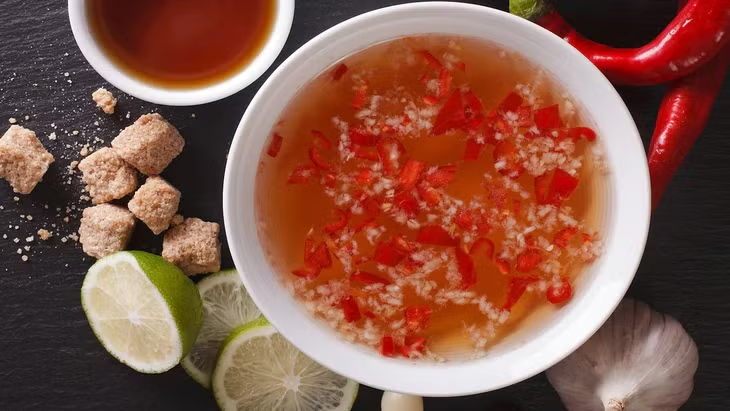
Vietnam's chili garlic fish sauce (Photo: Shuttlestock)

Hanoi (VNA) – Food website TasteAtlas has updated its list of the world's best dipping sauces, and Vietnam's chili garlic fish sauce made the cut.

In the "34 Best Dipping Sauces in the World" ranking, updated on September 15, the sauce scored 4.3 out of 5 to place third.

The ranking drew on 1,800 ratings from readers and food experts, with more than 1,550 verified as valid.

TasteAtlas said the ubiquitous sauce, in its basic form, combines lime juice, or optionally vinegar, sugar, water and fish sauce for a sour base. Common add-ins include finely sliced chili, garlic, shallots, spring onions, ginger and fresh herbs.

The sauce comes in many regional varieties, and the final composition may also depend on the type of meal which it accompanies. It typically goes with "cha gio" (spring rolls), "banh xeo" (crispy pancakes), meat and seafood dishes, noodles and soups.

Vietnam had a second entry: "mam nem" (fermented fish dipping sauce), ranking 15th with a score of 3.9 out of 5.

TasteAtlas described "mam nem" as a traditional sauce made from fermented anchovies, far more pungent than other fish sauces. Regular fish sauce is strained to extract only the salty liquid, while "mam nem" uses the whole fish.

In dishes, "mam nem" is usually blended with sugar, chili, lime juice, pineapple and garlic, which heighten its aromas and flavors. TasteAtlas recommends pairing it with beef, such as "bo nuong vi" (Vietnamese lemongrass grilled beef)./.
VNA

See more

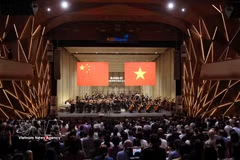
The second Cultures of the World Festival runs from October 1 to 4, featuring the participation of 50 countries and international organisations. (Photo: VNA)

Cultures of the World Festival opens in Hanoi

Vietnam views culture as both the spiritual foundation of society and an important goal, driving force and resource for national development. The country is working to build an advanced culture imbued with national identity while actively absorbing the cultural quintessence of humanity and expanding international cultural exchange and cooperation.

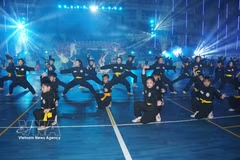
A performance at the Thang Long - Hanoi Festival 2025 (Photo of the organising board)

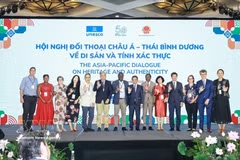
Asia-Pacific dialogue – a showcase of Vietnam-UNESCO cooperation: Official

It also gave countries a platform to hear Vietnam outline its culture and heritage policies and its approach to tying cultural development to sustainable development. Participants discussed Vietnam's contributions to global efforts, including its proposal for an International Decade of Culture for Sustainable Development for 2027-2036.

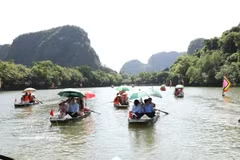
The UNESCO delegation visits the Trang An Landscape Complex by boat. (Photo: VNA)

UNESCO delegation explores Trang An heritage complex in Ninh Binh

The visit provided an opportunity for Ninh Binh to introduce and promote the outstanding landscape, natural, cultural and historical values of the Trang An Landscape Complex, a UNESCO World Cultural and Natural Heritage Site, as well as its people and outstanding universal value.

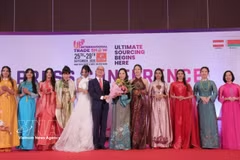
Vietnamese Ambassador to India Trinh Minh Manh (sixth, left) poses for a photo with designer Nguyen Thi Doan Trang (seventh, left) at the show. (Photo: VNA)

Vietnamese ao dai collection shines at UPITS 2026

Inspired by this enduring beauty, “Sac Viet” blends nature, people and the Vietnamese spirit. Each ao dai is a “moving painting,” featuring carefully selected and subtly arranged motifs symbolising Vietnam's land and skies.

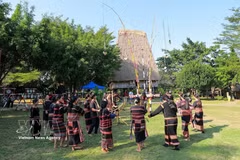
A performance at the Great National Unity Festival 2025 held at the Vietnam National Village for Ethnic Culture and Tourism (Photo: VNA)

Vietnam to hold Vietnamese Culture Day alongside National Great Unity Festival

Politburo Resolution No. 80-NQ/TW dated January 7, 2026 on developing Vietnamese culture designated November 24 each year as Vietnamese Culture Day to honour traditional cultural values, foster patriotism, national solidarity and pride, and affirm culture as the spiritual foundation, endogenous resource and driving force for national development.

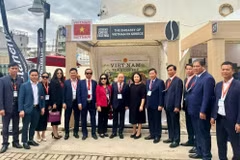
The Phu Tho delegation visits Vietnamese Embassy in Greece. (Photo published by VNA)

Vietnamese tea, cuisine promoted in Greece

Vietnamese Ambassador to Greece Pham Thi Thu Huong highlighted opportunities for cooperation between Phu Tho and Greek localities in areas including cultural heritage preservation and promotion, education, labour, logistics and agricultural products.

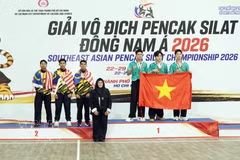
Titih Hayati, head of the Technical Committee of the International Pencak Silat Federation, presents awards to athletes competing in the men’s team performance event at the 2026 Southeast Asian Pencak Silat Championships. (Photo: VNA)

Vietnam top Southeast Asian Pencak Silat Championships

Vietnamese athletes won 20 gold, nine silver and one bronze medal to finish first overall. Malaysia placed second with six gold, 17 silver and three bronze, followed by Singapore with three gold, one silver and six bronze.

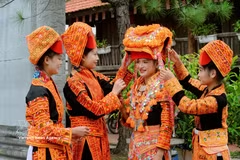
Red Dao girls in Van Son commune, Bac Ninh province, are dressed in traditional attire. (Photo: VNA)

Digital transformation key to preserving, promoting ethnic cultural values

Training local young people in filming, audio recording, digital storytelling, data preservation and responsible use of AI can help build a new generation of cultural custodians. This, in turn, can help transform cultural heritage into a resource for economic development while contributing to the country’s broader development.

Tourism breathes new life into craft villages

Tourism breathes new life into craft villages

More than 5,400 craft villages and villages with craft activities provide a rich and distinctive resource for Vietnam’s tourism sector, especially as interests are shifting from sightseeing and shopping to exploring local lifestyles.However, simply attracting visitors or adding destinations to tours is only a first step. Craft village tourism is sustainable only when local artisans and residents benefit from it, and it breathes new life into the places where the crafts originated.