Vietnam top Southeast Asian Pencak Silat Championships

Vietnamese athletes won 20 gold, nine silver and one bronze medal to finish first overall. Malaysia placed second with six gold, 17 silver and three bronze, followed by Singapore with three gold, one silver and six bronze.

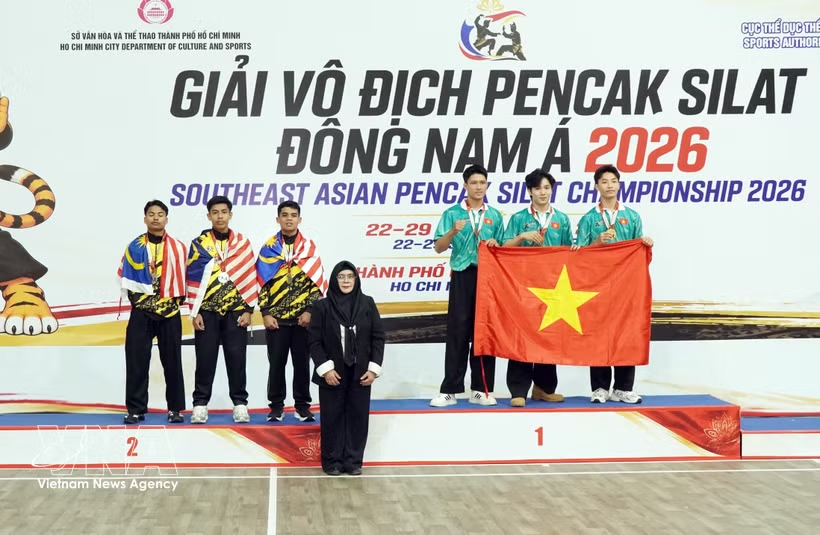
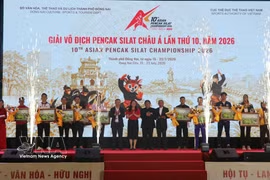
Titih Hayati, head of the Technical Committee of the International Pencak Silat Federation, presents awards to athletes competing in the men’s team performance event at the 2026 Southeast Asian Pencak Silat Championships. (Photo: VNA)

Ho Chi Minh City (VNA) – Vietnam topped the medal table at the fifth Southeast Asian Pencak Silat Championships 2026, which concluded in Ho Chi Minh City on September 29.

Vietnamese athletes won 20 gold, nine silver and one bronze medal to finish first overall. Malaysia placed second with six gold, 17 silver and three bronze, followed by Singapore with three gold, one silver and six bronze.

Held from September 24-29, the championships brought together nearly 150 athletes from Vietnam, Laos, Malaysia, Myanmar and Singapore, competing in 30 events.

Vietnam reached the finals in 29 events. In the performance category, the team won two gold, four silver and one bronze medal, while its fighters secured 16 golds in combat events. Vietnam also claimed gold in both women’s 85-100kg and over-100kg classes.

Head coach Nguyen Van Hung said the tournament provided an important test for the national squad, particularly young athletes, and helped the coaching staff assess the team ahead of upcoming competitions, including the 34th SEA Games in Malaysia.
vnanet-potal-viet-nam-gianh-ngoi-nhat-toan-doan-giai-vo-dich-pencak-silat-dong-nam-a-2026-9056622-2.jpg
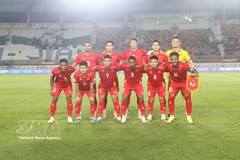
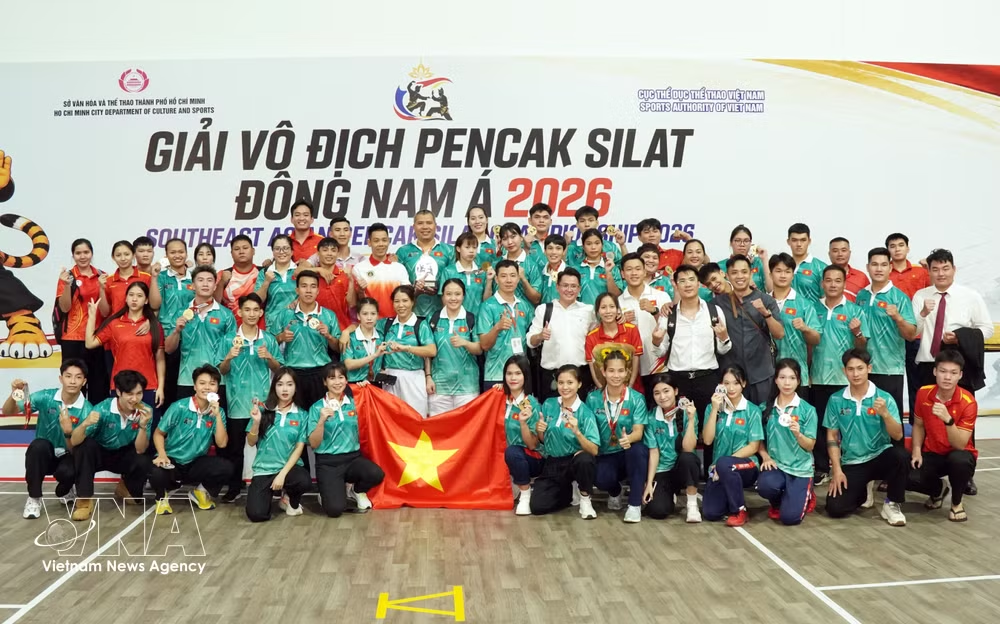
Vietnamese athletes celebrate their top finishes at the 2026 Southeast Asian Pencak Silat Championships. (Photo: VNA)

The championships also gave Vietnamese athletes valuable experience with new competition rules, allowing them to adjust their techniques and tactics ahead of the 10th National Sports Games.

The event was jointly organised by the Ho Chi Minh City Department of Culture and Sports and the Vietnam Sports Authority under the Ministry of Culture, Sports and Tourism as part of preparations for the 21st World Pencak Silat Championships in Uzbekistan in December./.
​

source

See more

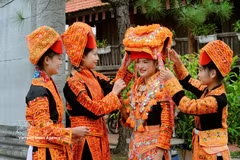
Red Dao girls in Van Son commune, Bac Ninh province, are dressed in traditional attire. (Photo: VNA)

Digital transformation key to preserving, promoting ethnic cultural values

Training local young people in filming, audio recording, digital storytelling, data preservation and responsible use of AI can help build a new generation of cultural custodians. This, in turn, can help transform cultural heritage into a resource for economic development while contributing to the country’s broader development.

Tourism breathes new life into craft villages

Tourism breathes new life into craft villages

More than 5,400 craft villages and villages with craft activities provide a rich and distinctive resource for Vietnam’s tourism sector, especially as interests are shifting from sightseeing and shopping to exploring local lifestyles.However, simply attracting visitors or adding destinations to tours is only a first step. Craft village tourism is sustainable only when local artisans and residents benefit from it, and it breathes new life into the places where the crafts originated.

The second World Culture Festival in Hanoi will be expanded in both scale and scope of activities. In the photo: The first World Culture Festival in Hanoi. (Photo: VNA)

World Culture Festival brings vibrant global showcase to Hanoi

The second Cultures of the World Festival in Hanoi 2026 is expected to create a vibrant meeting point for Hanoi and cultures from around the world, connecting traditional heritage with new forms of cultural expression and bringing cultural stories closer to the public.

Political-artistic programme “Fatherland in Our Hearts”, jointly organised by Nhan Dan Newspaper and the Ho Chi Minh City People’s Committee. (Photo: nhandan.vn)

Vietnam eyes building national brands for cultural industries

This is the first time a Party document has set specific quantitative targets for cultural brands and cultural industries. With thousands of tangible and intangible heritage assets and the rich cultural life of 54 ethnic groups, Vietnam has a strong foundation for achieving these goals. However, turning cultural resources into recognised brands requires determination and systematic approaches.

Mo Muong is a national intangible cultural heritage closely associated with the spiritual life of the Muong ethnic minority community (Photo: VNA)

Digital transformation helps preserve Mo Muong cultural values

Digital transformation is emerging as an important solution to preserve and promote traditional cultural values at risk of fading, including Mo Muong, a national intangible cultural heritage closely associated with the spiritual life of the Muong ethnic minority community.

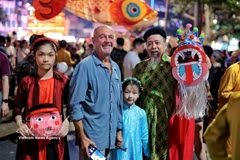
An international tourist joins the Mid-Autumn Festival atmosphere by Hoan Kiem Lake, surrounded by colourful traditional toys. (Photo: VNA)

Thang Long cultural symbols featured in Mid-Autumn lantern parade around Hoan Kiem Lake

The lantern parade featured familiar Mid-Autumn lanterns and folk art forms alongside distinctive images of Thang Long-Hanoi, including paper doctors, the Pen Tower and Ink Slab. According to the organisers, these symbols evoke the tradition of valuing education and knowledge, as well as the hopes that previous generations have placed in children.

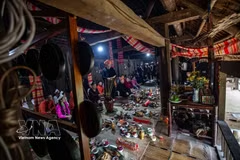
A visitor learns about the traditional culture of the Mong ethnic community. (Photo: VNA)

Vietnamese identity finds new expression in creative design

From traditional knowledge and craftsmanship, contemporary design draws inspiration from Vietnamese cultural identity and passes it on through the language of a new era. Linking knowledge, design, production, and markets can help turn cultural resources into sustainable economic value and create more creative design brands with a distinct Vietnamese identity.