Vietnam 'banh mi' festival 2026 held for first time in Japan

The organisers hoped the festival will become an annual event, providing a friendly venue for Japanese people to discover Vietnamese cuisine and for the Vietnamese community to share flavours from their homeland.

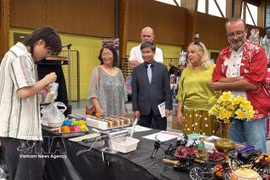
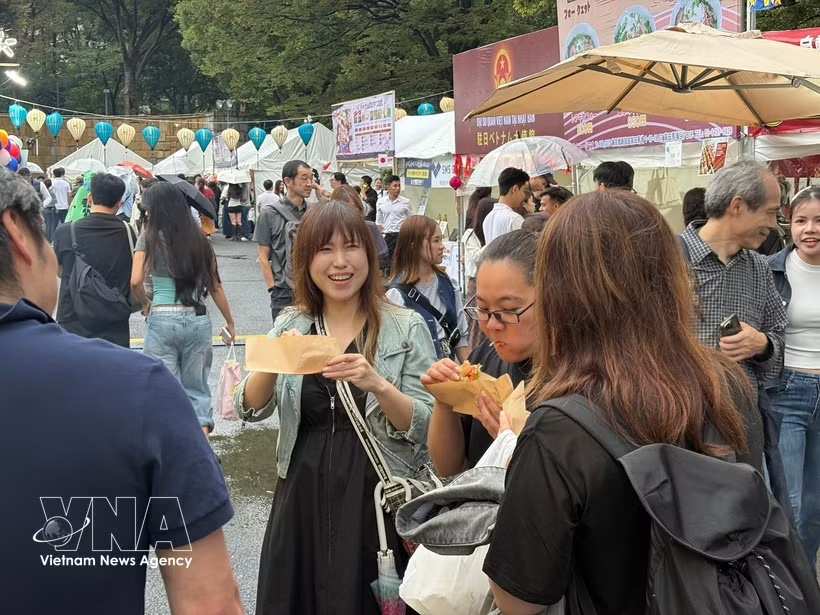
Japanese diners enjoy Vietnamese banh mi (Photo: VNA)

​Tokyo (VNA) – The Vietnam Banh Mi (Baguette) Festival 2026 opened at Fun More Time Square in Tokyo on September 26, offering a space for local people and the Vietnamese community to connect through Vietnamese cuisine.

The two-day event is the first festival in Japan to feature Vietnamese 'banh mi' as its main theme.

Addressing the opening ceremony, Minister-Counsellor of the Vietnamese Embassy in Japan Nguyen Sau said 'banh mi' and coffee are two familiar and distinctive Vietnamese specialties that are increasingly popular in Japan and around the world.

He said visitors to the festival could not only enjoy Vietnamese food and drinks but also experience a part of the country’s culture, people and identity.
vnanet_banhmi2.jpg
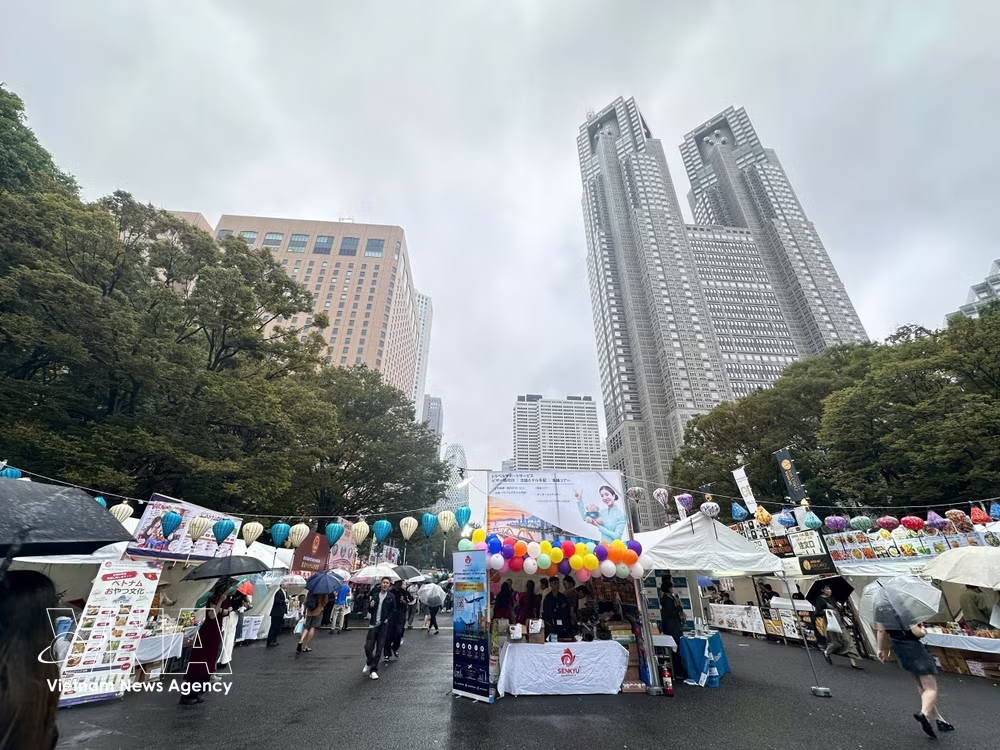
The first Vietnam Banh Mi Festival 2026 in Japan takes place in central Tokyo, near the Shinjuku Twin Towers. (Photo: VNA)

The diplomat noted that this year’s festival coincides with the Mid-Autumn Festival, providing an opportunity for Vietnamese and Japanese families to join cultural activities together.

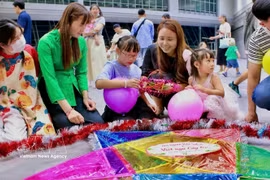
He expressed his hope that through activities such as lantern processions, lion dances and mooncake tasting, Japanese children would learn more about Vietnamese culture, while Vietnamese children in Japan would have opportunities to experience and preserve traditional customs from their homeland.

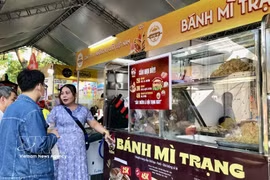
Despite the rain on the opening day, thousands of visitors came to explore and enjoy Vietnamese cuisine. Many stopped at food stalls to choose 'banh mi' or hot dishes before continuing to discover other Vietnamese flavours.

The organisers hoped the festival will become an annual event, providing a friendly venue for Japanese people to discover Vietnamese cuisine and for the Vietnamese community to share flavours from their homeland./.
​

VNA

See more

Mo Muong is a national intangible cultural heritage closely associated with the spiritual life of the Muong ethnic minority community (Photo: VNA)

Digital transformation helps preserve Mo Muong cultural values

Digital transformation is emerging as an important solution to preserve and promote traditional cultural values at risk of fading, including Mo Muong, a national intangible cultural heritage closely associated with the spiritual life of the Muong ethnic minority community.

An international tourist joins the Mid-Autumn Festival atmosphere by Hoan Kiem Lake, surrounded by colourful traditional toys. (Photo: VNA)

Thang Long cultural symbols featured in Mid-Autumn lantern parade around Hoan Kiem Lake

The lantern parade featured familiar Mid-Autumn lanterns and folk art forms alongside distinctive images of Thang Long-Hanoi, including paper doctors, the Pen Tower and Ink Slab. According to the organisers, these symbols evoke the tradition of valuing education and knowledge, as well as the hopes that previous generations have placed in children.

A visitor learns about the traditional culture of the Mong ethnic community. (Photo: VNA)

Vietnamese identity finds new expression in creative design

From traditional knowledge and craftsmanship, contemporary design draws inspiration from Vietnamese cultural identity and passes it on through the language of a new era. Linking knowledge, design, production, and markets can help turn cultural resources into sustainable economic value and create more creative design brands with a distinct Vietnamese identity.

A delegation from the Vietnam Federation of UNESCO Associations (VFUA) led by Deputy Secretary General Nguyen Le Hang, has a meeting with the Vietnamese Embassy in Greece. (Photo courtesy of the embassy)

Vietnam, Greece hold cultural dialogue

Cultural exchanges such as “Ode to Peace” contributed to promoting the role of culture, enhancing understanding among nations, and advancing peace and sustainable development.

Vietnamese Ambassador to Japan Pham Quang Hieu meets with 30 Vietnamese content creators and key opinion leaders in Japan on September 23 (Photo: VNA)

Vietnamese KOLs in Japan encouraged to strengthen community ties

Speaking at a meeting in Tokyo on September 23 with around 30 Vietnamese content creators and key opinion leaders (KOLs) in Japan, Vietnamese Ambassador to Japan Pham Quang Hieu said their ability to deliver information quickly and reach large audiences enables them to make practical contributions to strengthening bilateral ties and building a united Vietnamese community in Japan.

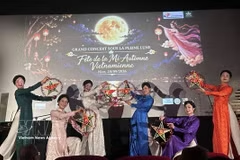
Children join a Mid-Autumn lantern procession. (Photo: VNA)

2026 Mid-Autumn Festival celebrates childhood, traditional culture

Since the 1990s, Mid-Autumn celebrations at Van Ho have become a memorable part of childhood in the capital, characterised by warmth, simplicity and traditional cultural values. Even when material conditions were limited, children's joy was kindled by candlelit handmade lanterns, drumbeats, laughter and moments spent with family and friends.

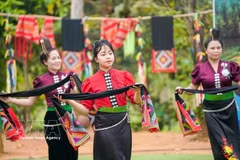
Thai ethnic women perform at a cultural activity at the Vietnam National Village for Ethnic Culture and Tourism. (Photo: VNA)

Vietnam Culture Day expected to become national cultural brand

People, communities, artists, intellectuals, businesses and young people should be placed at the centre as both participants and creators, as well as direct beneficiaries of cultural achievements during activities marking Vietnam Culture Day, according to Deputy PM Pham Thi Thanh Tra.

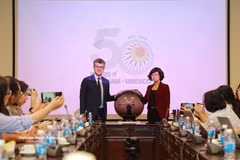
A visual identity marking the 50th anniversary of Vietnam-UNESCO cooperation is unveiled at the conference (Photo: VNA)

Vietnam to host Asia-Pacific dialogue on heritage, authenticity

Co-organised by the Vietnam National Commission for UNESCO, the Hanoi municipal People’s Committee and the Ninh Binh provincial People’s Committee, the dialogue serves as an important policy forum to discuss approaches to safeguarding heritage authenticity amid urbanisation, climate change and tourism development.