Digital transformation helps preserve Mo Muong cultural values

Digital transformation is emerging as an important solution to preserve and promote traditional cultural values at risk of fading, including Mo Muong, a national intangible cultural heritage closely associated with the spiritual life of the Muong ethnic minority community.

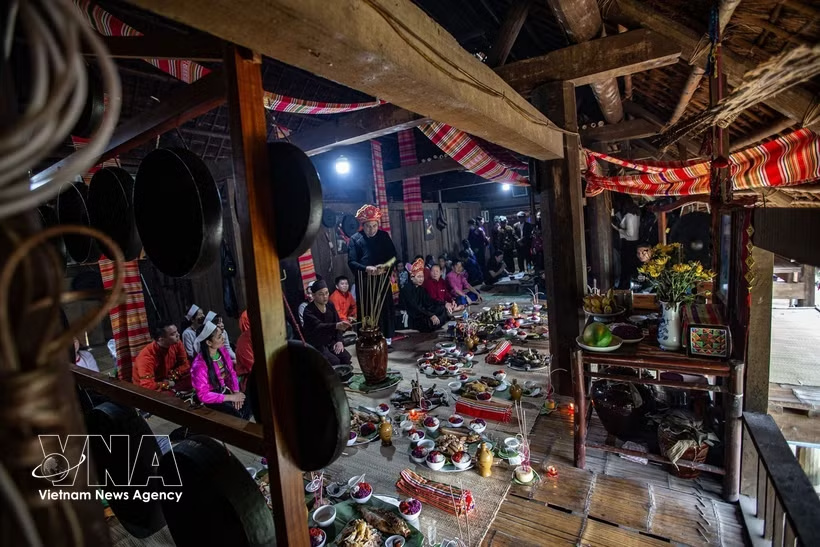
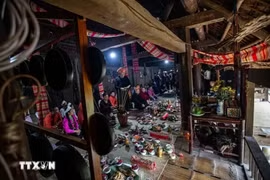
Mo Muong is a national intangible cultural heritage closely associated with the spiritual life of the Muong ethnic minority community (Photo: VNA)

Phu Tho (VNA) – Digital transformation is emerging as an important solution to preserve and promote traditional cultural values at risk of fading, including Mo Muong, a national intangible cultural heritage closely associated with the spiritual life of the Muong ethnic minority community.

Risk of fading

The Political Bureau’s Resolution No. 80-NQ/TW on the development of Vietnamese culture sets the goal of digitising all nationally recognised cultural heritages by 2026 and further completing the process by 2030. The policy provides a clear direction for bringing traditional cultural values into the digital space and enhancing heritage preservation and promotion.

In Muong areas of the northern province of Phu Tho, including Thuong Coc and Dai Dong communes and localities formerly belonging to the Muong Vang and Muong Dong regions, Mo Muong remains a part of the local cultural and spiritual life. Recited during traditional rituals, Mo verses carry not only spiritual significance but also folk knowledge about the community's history, customs, and the ways of life of the Muong people passed down through generations.

People’s Artisan Bui Van Minh in Thuong Coc commune said that for the Muong people, Mo chants are more than ritual prayers, serving as repositories of the community’s cultural memory. Artisans therefore place great importance on preserving both the chants and the spaces where they are practised.

However, most Mo chants continue to be transmitted orally, while many knowledgeable artisans are elderly and have few young successors. Changes in the social life have also reduced the frequency of traditional rituals, limiting opportunities to practise and perform Mo Muong.

Minh said these are major challenges to Mo Muong preservation, as much valuable folk knowledge remains largely preserved through the memory and experience of artisans.

In response, many localities in Phu Tho have stepped up the collection, recording, filming and archiving of materials related to Mo Muong. The application of digital technology is expected to help preserve traditional cultural values while enabling wider public access to the heritage.

Taking heritage into digital space

Many artisans are now proactively using smartphones and recording equipment to document rituals. The resulting images and videos are stored or shared on digital platforms, helping promote and spread the heritage while enabling more people to learn about and access Muong culture.

Minh said recording rituals and sharing them on platforms such as Zalo and Facebook not only helps preserve and archive materials but also provides those interested in learning Mo Muong practices with additional reference resources. This helps spread the traditional cultural values of the Muong community more widely.

Beyond promotion, digitisation can create data resources for future research, study and transmission of the heritage. However, the process faces difficulties as many artisans who directly preserve and practise the heritage lack adequate digital knowledge and skills.

Mo Muong artisan Bui Van Hung in Dai Dong commune said training and guidance provided by the culture sector and specialised agencies have helped artisans gradually access digital technology to preserve and promote Mo Muong.

Experts said heritage digitisation should go beyond recording and filming and be carried out systematically and scientifically while ensuring the originality and authenticity of the heritage. This is an important basis for building a long-term database serving the management, research, preservation and promotion of cultural values.

Folklore researcher Bui Huy Vong said the digitisation of Mo Muong should be treated as a long-term task to preserve and promote traditional cultural values in modern life. He called for greater focus on digitising the ritual to ensure its valuable heritage is passed on to future generations./.
VNA

See more

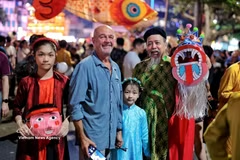
An international tourist joins the Mid-Autumn Festival atmosphere by Hoan Kiem Lake, surrounded by colourful traditional toys. (Photo: VNA)

Thang Long cultural symbols featured in Mid-Autumn lantern parade around Hoan Kiem Lake

The lantern parade featured familiar Mid-Autumn lanterns and folk art forms alongside distinctive images of Thang Long-Hanoi, including paper doctors, the Pen Tower and Ink Slab. According to the organisers, these symbols evoke the tradition of valuing education and knowledge, as well as the hopes that previous generations have placed in children.

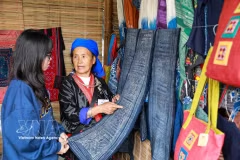
A visitor learns about the traditional culture of the Mong ethnic community. (Photo: VNA)

Vietnamese identity finds new expression in creative design

From traditional knowledge and craftsmanship, contemporary design draws inspiration from Vietnamese cultural identity and passes it on through the language of a new era. Linking knowledge, design, production, and markets can help turn cultural resources into sustainable economic value and create more creative design brands with a distinct Vietnamese identity.

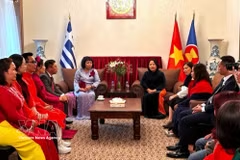
A delegation from the Vietnam Federation of UNESCO Associations (VFUA) led by Deputy Secretary General Nguyen Le Hang, has a meeting with the Vietnamese Embassy in Greece. (Photo courtesy of the embassy)

Vietnam, Greece hold cultural dialogue

Cultural exchanges such as “Ode to Peace” contributed to promoting the role of culture, enhancing understanding among nations, and advancing peace and sustainable development.

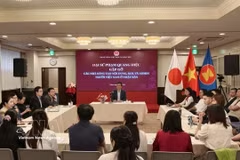
Vietnamese Ambassador to Japan Pham Quang Hieu meets with 30 Vietnamese content creators and key opinion leaders in Japan on September 23 (Photo: VNA)

Vietnamese KOLs in Japan encouraged to strengthen community ties

Speaking at a meeting in Tokyo on September 23 with around 30 Vietnamese content creators and key opinion leaders (KOLs) in Japan, Vietnamese Ambassador to Japan Pham Quang Hieu said their ability to deliver information quickly and reach large audiences enables them to make practical contributions to strengthening bilateral ties and building a united Vietnamese community in Japan.

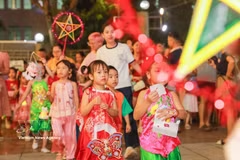
Children join a Mid-Autumn lantern procession. (Photo: VNA)

2026 Mid-Autumn Festival celebrates childhood, traditional culture

Since the 1990s, Mid-Autumn celebrations at Van Ho have become a memorable part of childhood in the capital, characterised by warmth, simplicity and traditional cultural values. Even when material conditions were limited, children's joy was kindled by candlelit handmade lanterns, drumbeats, laughter and moments spent with family and friends.

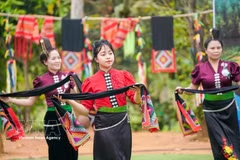
Thai ethnic women perform at a cultural activity at the Vietnam National Village for Ethnic Culture and Tourism. (Photo: VNA)

Vietnam Culture Day expected to become national cultural brand

People, communities, artists, intellectuals, businesses and young people should be placed at the centre as both participants and creators, as well as direct beneficiaries of cultural achievements during activities marking Vietnam Culture Day, according to Deputy PM Pham Thi Thanh Tra.

A visual identity marking the 50th anniversary of Vietnam-UNESCO cooperation is unveiled at the conference (Photo: VNA)

Vietnam to host Asia-Pacific dialogue on heritage, authenticity

Co-organised by the Vietnam National Commission for UNESCO, the Hanoi municipal People’s Committee and the Ninh Binh provincial People’s Committee, the dialogue serves as an important policy forum to discuss approaches to safeguarding heritage authenticity amid urbanisation, climate change and tourism development.