Hanoi (VNA) – The combination of contemporary needs and cultural heritage is giving rise to products with a distinct Vietnamese identity, as local brands draw on traditional materials, craftsmanship and cultural stories to develop fashion, furniture and consumer goods.
However, experts say that unlocking the full potential of cultural resources requires closer links among research, production and markets as part of a broader strategy.
Turning local heritage into contemporary products
The use of traditional knowledge and craftsmanship in modern products is opening new opportunities for Vietnam’s design sector. Many brands are working with artisans and artists to incorporate local culture into products while creating their own identities and bringing Vietnamese cultural values to international markets.
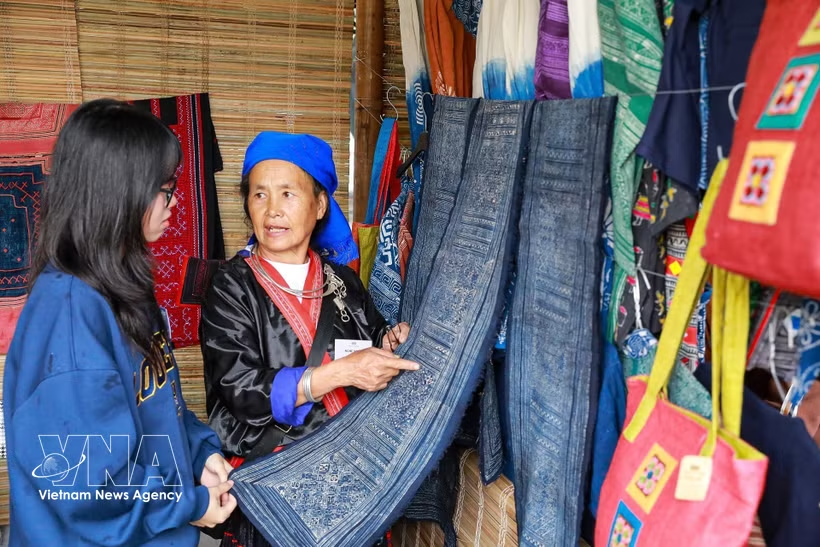
Fashion brand Kilomet109 has built close links among material-producing areas, craft practitioners and designers, with a focus on sustainable fashion. It works with Nung, Mong and Thai artisans in different regions through a production process covering cultivation, spinning, weaving and natural dyeing.
Drawing on techniques such as weaving, indigo dyeing, stone polishing and beeswax painting, the brand has developed its own design language, combining traditional craftsmanship with contemporary forms.
Souvenir and lifestyle brand TiredCity uses modern visual language to explore Vietnamese images and stories. Working with young artists and illustrators, it has brought their works to T-shirts, bags, prints and other souvenirs, helping bring cultural images closer to younger consumers and into everyday life.
In furniture, Viet Furniture combines traditional materials with modern design and production methods. Its “Ganh Ganh Gong Gong” collection is inspired by the traditional shoulder pole and earthenware jars once commonly used in Vietnamese daily life. Materials including rattan, bamboo and Bat Trang ceramics are used to create objects associated with the lives of Vietnamese workers.
Designer Luu Viet Thang, co-founder of Viet Furniture, said Vietnam has not only a rich heritage of traditional crafts but also a vast collection of cultural stories, patterns and motifs that can provide creative material for designers.
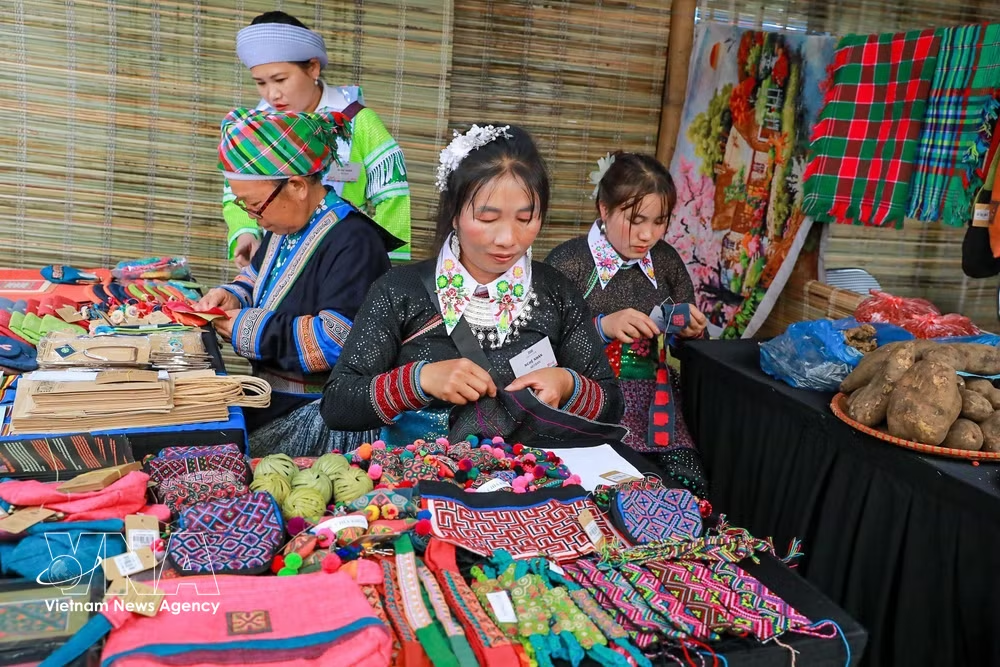
Dr. Lu Thi Thanh Le, a lecturer at the Faculty of Cultural Industries and Heritage under the School of Interdisciplinary Sciences and Arts at Vietnam National University, Hanoi, said traditional craftsmanship could be transformed into high-value products, increasing the commercial value and market potential of craft villages and improving livelihoods.
Building a co-creative ecosystem
The experience of these brands shows that combining local knowledge, creative thinking, technology, production capacity and market demand can create products suited to contemporary life.
Experts, however, note that such links have largely emerged from individual initiatives. At a broader level, the development of the cultural industries in design requires a co-creative ecosystem connecting research, production and markets.
Such an ecosystem could enable the knowledge of artisans to meet design thinking, technology and production capabilities, expanding opportunities for product development and market access. It could also increase the economic value of cultural products, support community livelihoods and strengthen the competitiveness of Vietnamese cultural brands.
The origins of cultural resources and the rights of their owners must be clearly identified, while benefit-sharing mechanisms should be transparent and fair. Producers and investors should protect the legitimate rights and interests of communities when using their cultural heritage in design.
Tran Tuyet Lan, General Director of social enterprise Craft Link, which has worked with artisan groups and ethnic minority communities for three decades, said each traditional pattern, technique or cultural story should have a clear mechanism for identifying its origin, recognising rights holders and acknowledging artisans’ knowledge and contributions.
Communities should also have a say in how their cultural values are used, she said, adding that economic development must go hand in hand with social responsibility and respect for cultural origins.
Craft Link attaches information materials and QR codes showing the origin and production process of its products. Each year, the company also allocates part of its business profits to support communities in strengthening their capacity and developing new products.
From traditional knowledge and craftsmanship, contemporary design draws inspiration from Vietnamese cultural identity and passes it on through the language of a new era. Linking knowledge, design, production, and markets can help turn cultural resources into sustainable economic value and create more creative design brands with a distinct Vietnamese identity./.