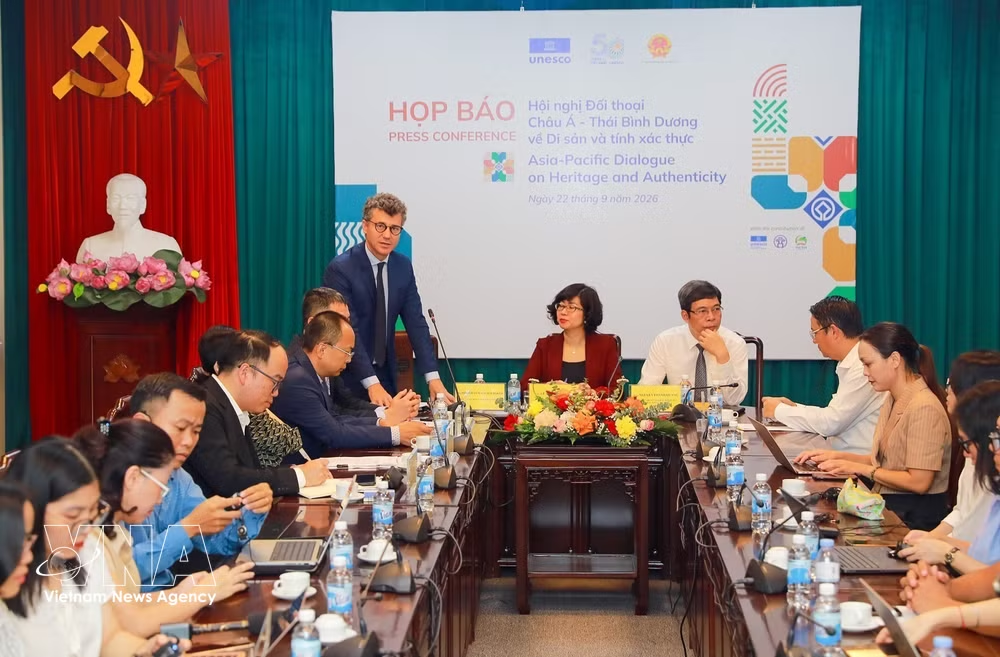
Hanoi (VNA) – The Asia-Pacific Dialogue on Heritage and Authenticity will take place from September 27 to October 1 in Hanoi and Ninh Binh, bringing together around 250 Vietnamese and regional delegates, as heard at a press conference on September 22.
Co-organised by the Vietnam National Commission for UNESCO, the Hanoi municipal People’s Committee and the Ninh Binh provincial People’s Committee, the dialogue serves as an important policy forum to discuss approaches to safeguarding heritage authenticity amid urbanisation, climate change and tourism development.
Participants will include UNESCO leaders, Lazare Eloundou Assomo, Director of the UNESCO World Heritage Centre, the Chairperson of the 49th session of the World Heritage Committee, ambassadors, representatives of the International Council on Monuments and Sites (ICOMOS), and leading heritage experts and managers.
Speaking at the press conference, Le Thi Hong Van, Director General of the Department of Foreign Affairs and Cultural Diplomacy under the Ministry of Foreign Affairs and Secretary-General of the Vietnam National Commission for UNESCO, underscored the fundamental importance of authenticity in world heritage conservation.
Under the 1972 Convention Concerning the Protection of the World Cultural and Natural Heritage, three key elements determine whether a heritage site is recognised: outstanding universal value, integrity and authenticity. As the world faces the impacts of urbanisation, climate change, natural disasters and socio-economic development pressures, principles for assessing authenticity need to be continuously updated, she said.
Van highlighted the strategic significance of Vietnam hosting the dialogue, saying it will help advance the country’s cultural development and cultural diplomacy policies and concretise strategic decisions on culture, tourism and heritage diplomacy.
It will also affirm Vietnam’s role as an active and responsible member of the World Heritage Committee, while demonstrating its capacity to shape major cultural policies at regional and global levels. The event will provide an opportunity to share Vietnam’s management of the Thang Long Imperial Citadel and Trang An Landscape Complex, both UNESCO World Heritage sites.
UNESCO and the World Heritage Centre have regarded Vietnam as a global example of balancing heritage conservation with economic development and improved livelihoods, Van said.
The dialogue will also enable Vietnam to consult leading international experts, ICOMOS representatives and the World Heritage Centre director on technical support for the conservation and restoration dossier of Kinh Thien Palace and other heritage dossiers being developed by the country.
Van said the dialogue is expected to adopt the Hanoi Document on Heritage and Authenticity, marking an important milestone following the Venice Charter (1964), Nara Document (1994) and Nairobi Document (2025) in the evolution of world heritage conservation.
Jonathan Wallace Baker, UNESCO Representative to Vietnam, said authenticity is fundamental to identifying and protecting world heritage and should be understood within the cultural context in which heritage exists.
The Asia-Pacific region has rich experience in living heritage, continuity, reconstruction, traditional knowledge and community-heritage relationships. The dialogue will help turn these experiences into clearer, evidence-based approaches, he said.
Highlighting 50 years of Vietnam-UNESCO cooperation (1976-2026), Baker affirmed that Vietnam is not only effectively applying international standards, but also proactively contributing its own experience, practices and initiatives to global cultural development.
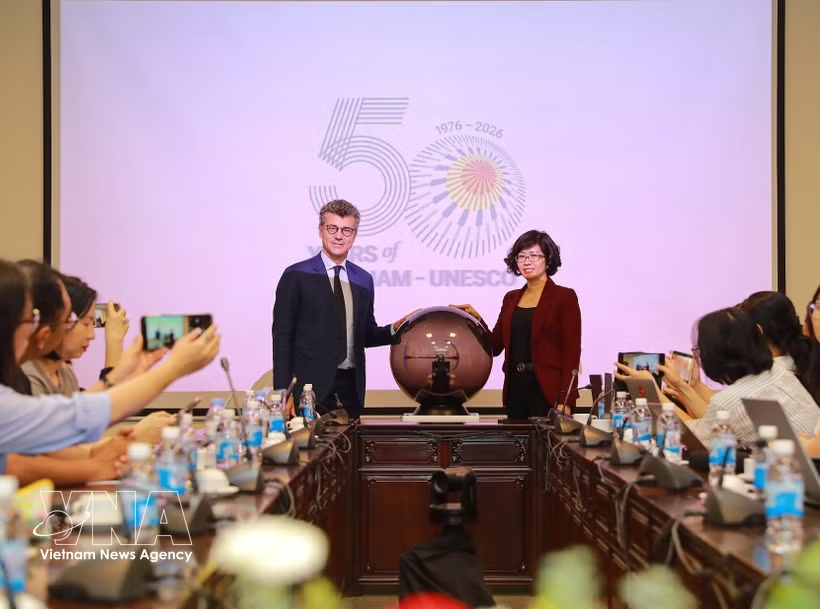
The organising board also unveiled a visual identity marking the 50th anniversary of Vietnam-UNESCO cooperation, inspired by the iconic Vietnamese conical hat, cultural diversity and the Sustainable Development Goals.
A groundbreaking ceremony for the conservation, restoration and reconstruction project of Kinh Thien Palace is scheduled for September 29 at the Thang Long Imperial Citadel. It will be a notable field activity held as part of the dialogue.
Nguyen Thanh Quang, Director of the Thang Long-Hanoi Heritage Conservation Centre, said 15 years of continuous archaeological research since the citadel was recognised as a World Heritage site in 2010 have uncovered the entire foundation system of Le Dynasty palaces in the central area.
He said the archaeological evidence provides a solid scientific basis for reconstructing Kinh Thien Palace while ensuring the highest possible level of authenticity.
The project, approved by Hanoi authorities, requires strict protection of archaeological cultural layers underground and prohibits intervention in or construction over original architectural remains, Quang said.
The restored palace is expected to enhance heritage interpretation, enabling domestic and international visitors to better experience the grand ceremonial space and historical value. It will also serve as a cultural resource supporting the capital’s socio-economic development./.