Coastal tourism turns local livelihoods into attractions

When local people remain the custodians of their resources, tourism can become a reason for them to stay, maintain their livelihoods, and renew community value rather than replacing it.

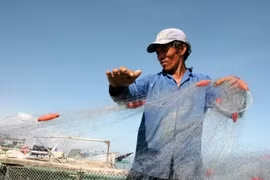
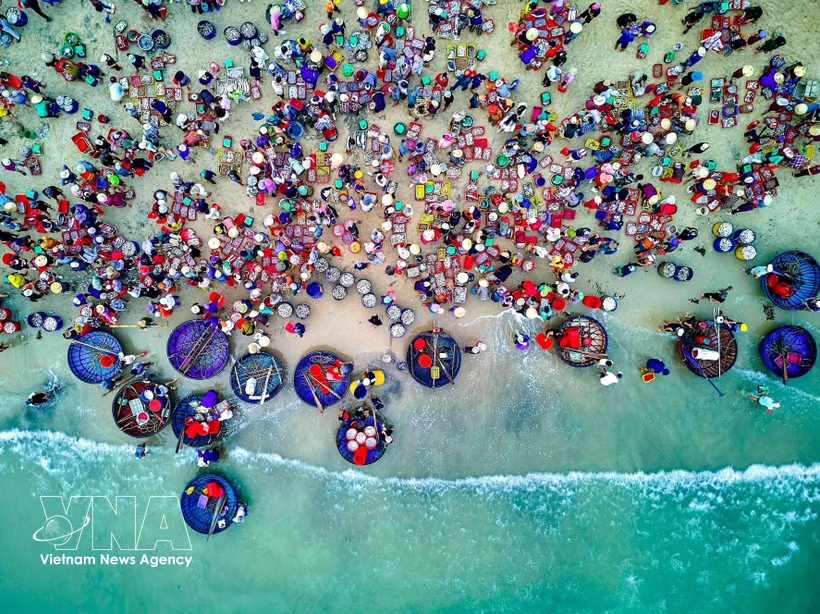
Fishermen, traders, and buyers gather at Tam Tien fish market in Tam Xuan commune, Da Nang city. (Photo: VNA)

Da Nang (VNA) – In some coastal villages in central Vietnam, tourism is being built not around large resorts or major infrastructure, but around what communities already have: fish markets, fishing, local food, cultural traditions and interaction between residents and visitors.

From the Tan Thanh community tourism area in Hoi An to Tam Tien fish market in southern Da Nang, these experiences show that tourism can become more sustainable when local people directly benefit from the resources and livelihoods of their hometowns.

From fish market to tourist attraction

Every afternoon, fishing boats return to Tam Tien fish market in Tam Xuan commune, Da Nang, laden with fish, squid, shrimp and other seafood.

Once mainly a wholesale market operating in the morning, it now has an afternoon session for tourists, creating an additional outlet for seafood and allowing fishermen to sell directly to visitors.

Tourists can choose their own seafood, enjoy fresh squid banh xeo (Vietnamese savoury pancakes), join fishermen in pulling nets or learn about life in the coastal village. Some homestays prepare seafood bought directly from the market for an additional fee of 80,000-120,000 VND.
vnanet_khong-chi-la-noi-giao-thuong-hai-san-cho-ca-tam-tien-con-phan-anh-sinh-dong-doi-song-cua-cong-dong-cu-dan-mien-bien.jpg
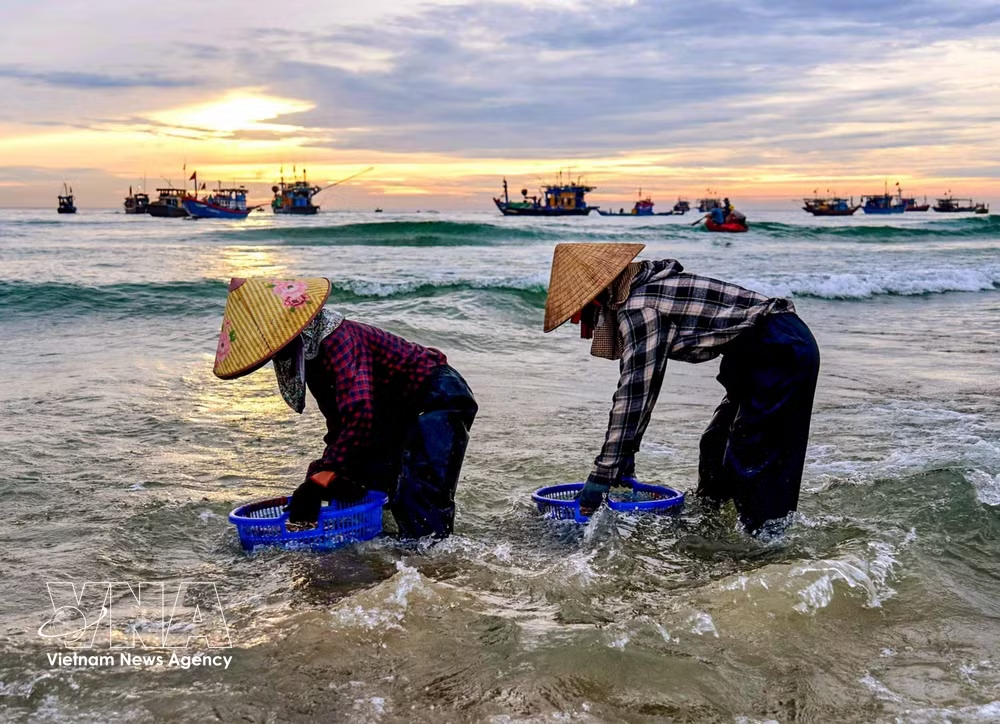
More than just a seafood trading hub, Tam Tien fish market vividly reflects the lives of the coastal community. (Photo: VNA)

Le Thi Bich Hang, who runs a chain of homestays and restaurants in Tam Tien, said that about 80% of her guests are cross-country backpackers. They come not only to stay but also to experience the fish market, fishing activities and a 64ha protected coral reef in the area.

Tourism has therefore not replaced fishing but added new links to the local value chain. Fishermen continue to go to sea and bring their catches ashore, while tourism provides another local market for their products.

Local residents have also invested in most homestays, restaurants and other tourism services, helping keep ownership in the community.

According to local tourism operator Tran Thi Nhung, the area remains largely run by local residents rather than being dominated by outside investment.

This helps preserve the coastal landscape and way of life. Some households have sold part of their beachfront land to improve their living conditions or provide capital for their children, while retaining land further inland and continuing to live and work in the area.
vnanet_khong-chi-la-noi-giao-thuong-hai-san-cho-ca-tam-tien-con-phan-anh-sinh-dong-doi-song-cua-cong-dong-cu-dan-mien-bien-2.jpg
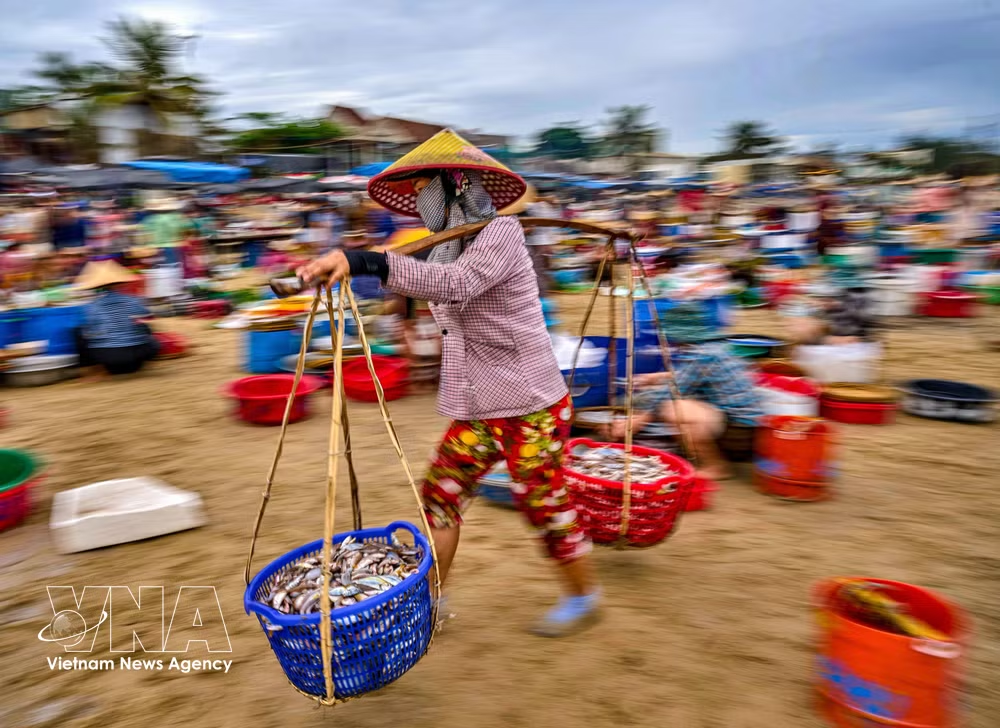
A woman carries seafood at Tam Tien fish market. (Photo: VNA)

Tourism operators have also contributed to improvements in shared infrastructure, including embankment upgrades, lighting to help fishermen locate their boats at night, and fresh water supplies for people working at sea.

Connecting cultural communities

At Tan Thanh beach in Hoi An, community tourism has developed in another direction by connecting different cultural regions.

For about six years, events such as the Tan Thanh Market and Tan Thanh Block Fest have provided a space for highland communities to bring agricultural products, traditional culture, gong performances and dances to the coast, where they meet local residents and international visitors.

Luong Thuy Ha, manager of a villa accommodation chain in Tan Thanh, said the activities create links between communities rather than limiting tourism to one destination.

Visitors may come to Hoi An and Tan Thanh for the beach, she said, but exposure to highland culture can encourage them to explore the places where those traditions originated.

For highland communities, the exchange also provides opportunities to gain confidence and develop tourism skills.

Cotu woman Bh'nuoch Thi Lach, who performs at events in Tan Thanh, said people in mountainous areas have fewer opportunities to interact with international visitors. Performing at the coast has allowed her to share her culture, practise communication and improve her English.

The two above-said models demonstrate the same principle: tourism can create value without separating itself from local life. When communities benefit from tourism, it can help preserve traditional livelihoods while giving them new value.

As coastal areas face growing pressure from urbanisation, investment and commercial development, the challenge is not simply to build more homestays or attract more visitors. It is to ensure that more tourism revenue remains with local communities and that cultural traditions and livelihoods can continue in new forms.

When local people remain the custodians of their resources, tourism can become a reason for them to stay, maintain their livelihoods, and renew community value rather than replacing it./.
VNA

See more

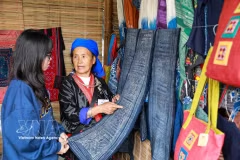
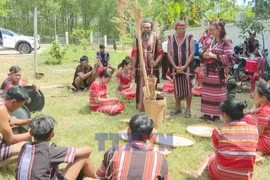
A visitor learns about the traditional culture of the Mong ethnic community. (Photo: VNA)

Vietnamese identity finds new expression in creative design

From traditional knowledge and craftsmanship, contemporary design draws inspiration from Vietnamese cultural identity and passes it on through the language of a new era. Linking knowledge, design, production, and markets can help turn cultural resources into sustainable economic value and create more creative design brands with a distinct Vietnamese identity.

A delegation from the Vietnam Federation of UNESCO Associations (VFUA) led by Deputy Secretary General Nguyen Le Hang, has a meeting with the Vietnamese Embassy in Greece. (Photo courtesy of the embassy)

Vietnam, Greece hold cultural dialogue

Cultural exchanges such as “Ode to Peace” contributed to promoting the role of culture, enhancing understanding among nations, and advancing peace and sustainable development.

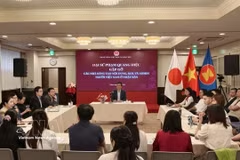
Vietnamese Ambassador to Japan Pham Quang Hieu meets with 30 Vietnamese content creators and key opinion leaders in Japan on September 23 (Photo: VNA)

Vietnamese KOLs in Japan encouraged to strengthen community ties

Speaking at a meeting in Tokyo on September 23 with around 30 Vietnamese content creators and key opinion leaders (KOLs) in Japan, Vietnamese Ambassador to Japan Pham Quang Hieu said their ability to deliver information quickly and reach large audiences enables them to make practical contributions to strengthening bilateral ties and building a united Vietnamese community in Japan.

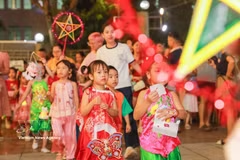
Children join a Mid-Autumn lantern procession. (Photo: VNA)

2026 Mid-Autumn Festival celebrates childhood, traditional culture

Since the 1990s, Mid-Autumn celebrations at Van Ho have become a memorable part of childhood in the capital, characterised by warmth, simplicity and traditional cultural values. Even when material conditions were limited, children's joy was kindled by candlelit handmade lanterns, drumbeats, laughter and moments spent with family and friends.

Thai ethnic women perform at a cultural activity at the Vietnam National Village for Ethnic Culture and Tourism. (Photo: VNA)

Vietnam Culture Day expected to become national cultural brand

People, communities, artists, intellectuals, businesses and young people should be placed at the centre as both participants and creators, as well as direct beneficiaries of cultural achievements during activities marking Vietnam Culture Day, according to Deputy PM Pham Thi Thanh Tra.

A visual identity marking the 50th anniversary of Vietnam-UNESCO cooperation is unveiled at the conference (Photo: VNA)

Vietnam to host Asia-Pacific dialogue on heritage, authenticity

Co-organised by the Vietnam National Commission for UNESCO, the Hanoi municipal People’s Committee and the Ninh Binh provincial People’s Committee, the dialogue serves as an important policy forum to discuss approaches to safeguarding heritage authenticity amid urbanisation, climate change and tourism development.

The Vietnamese athletes perform in the women's team kata event in karate at ASIAD 2026 on September 22. (Photo published by VNA)

ASIAD 2026: Karate claims first gold for Vietnam

Demonstrating precise execution, flawless synchronisation, and exceptional artistic impression in their team form performance, the Vietnamese athletes outshone their opponents to claim the top spot on the podium.

A Vietnamese dance is performed as part of the programme in France. (Photo: VNA)

Vietnamese cultural events impress audiences in Paris

The weekend programme featured an art show, Vietnamese films, a photo exhibition and the reenactment of a traditional Vietnamese market, offering visitors different ways to explore the country’s culture, people and landscapes.