German expert highlights opportunities for Vietnam-Germany tech cooperation

To gain deeper access to the German market, Vietnamese companies should understand customers, compliance requirements and sector-specific characteristics, while strengthening consulting and communication capabilities.

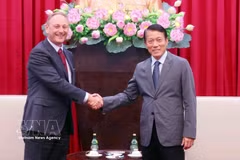
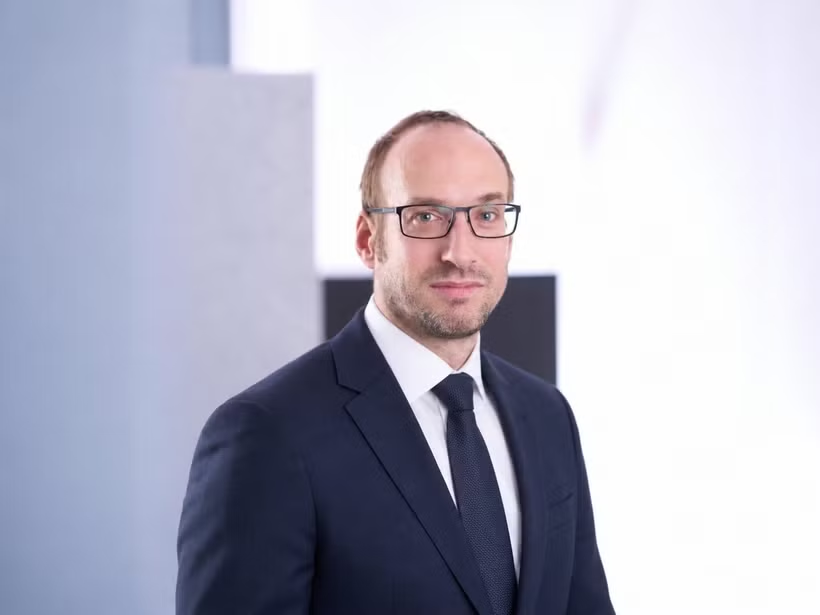
Alexander Schonl, CEO, Founder & Principal Microsoft Dynamics 365 Business Central Advisor at Solid Scale Solutions (Photo published by VNA)

​Berlin (VNA) – Vietnamese businesses have significant opportunities to leverage their existing strengths to engage deeply in technology cooperation with German companies, according to a German expert.

In an interview with Vietnam News Agency (VNA) correspondents in Berlin, Alexander Schonl, CEO, Founder & Principal Microsoft Dynamics 365 Business Central Advisor at Solid Scale Solutions, based in Bavaria, said Germany has a strong small- and medium-sized enterprise (SME) sector that is accelerating digital transformation and increasingly seeking to connect business operations on digital platforms.

Germany is facing a shortage of nearly 80,000 IT specialists, increasing demand for professionals who can combine technical expertise with a strong understanding of business processes.

​He noted that Vietnam has increasingly skilled STEM (science, technology, engineering and mathematics) human resources, as well as considerable experience in delivering IT services to international clients.

Beyond technical capabilities, Schonl highlighted the importance of cultural understanding and mutual trust between the two countries. Vietnam-Germany economic ties have been strengthened over decades through trade, the growing presence of German businesses in Vietnam and the increasingly vibrant Vietnamese community in Germany.

Citing German education statistics, he said that in the 2013-2014 school year, about 64% of students of Vietnamese origin attended Gymnasium schools, compared with around 47% of German students. He described this as an important human-resource foundation, noting that strategic technology partnerships ultimately rely on expertise and mutual trust.

In practice, German companies are no longer working with Vietnamese teams only on basic software outsourcing, but are increasingly engaging them in software engineering, product development and other more complex technology work.

Against this backdrop, the expert said the key question is no longer whether Vietnam has sufficient technical capabilities, but how Vietnamese businesses can move further up the value chain. Instead of simply receiving a specific development task and delivering the product, companies should understand their customers’ operations, jointly identify problems, develop solutions, and gradually take responsibility for outcomes, he said.

From the perspective of German businesses, customers are not simply looking for additional programmers. They need partners with technical expertise and business knowledge, strong legal compliance, high cybersecurity standards, transparent communication and the ability to build long-term relationships.

This is particularly important in enterprise resource planning (ERP) system implementation projects, where technology is directly linked to core business operations.

To gain deeper access to the German market, Vietnamese companies should therefore understand customers, compliance requirements and sector-specific characteristics, while strengthening consulting and communication capabilities, Schonl said.

English can serve as a common language, but German proficiency is an advantage for positions involving regular consulting and direct customer interaction.

He suggested increasing joint consultancy projects, in which Vietnamese and German experts work together to implement projects while gaining practical experience. He said this approach is more effective than theoretical training or working entirely remotely, particularly as the time difference limits common working hours.

Schonl stressed that cooperation is a two-way process. While Vietnamese businesses need to gain a deeper understanding of the German market, German companies should also improve their understanding of Vietnam’s business environment and culture.

On that basis, Vietnamese businesses can combine domestic technological capabilities with connections to customers in Germany, gradually shifting from manpower provision to technology partnerships and jointly solving business challenges, he added./.​

VNA

See more

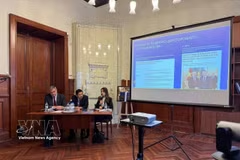
Speakers at the thematic session on economic cooperation at the St. Petersburg Chamber of Commerce and Industry on October 16. (Photo: VNA)

Vietnam-Russia trade at structural turning point: report

The report adopts a practical approach, focusing on how businesses operate rather than relying solely on diplomatic assessments. Its aim is to identify ways to translate the two countries’ political goodwill and longstanding trust into tangible economic cooperation.

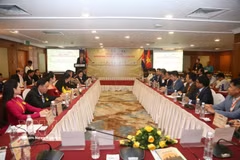
An overview of the Vietnam-Cambodia International Commerce & Culture Forum 2026. (Photo: VNA)

Vietnam-Cambodia Int’l Commerce & Culture Forum promotes business ties

Alongside the positive growth in bilateral economic and trade ties, Vietnamese Ambassador to Cambodia Nguyen Minh Vu highlighted regular cultural exchange activities, including culture weeks and days, artistic performances and photo exhibitions, which have helped introduce each country’s culture to the people of the other.

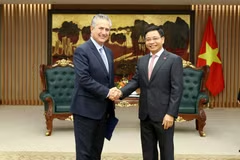
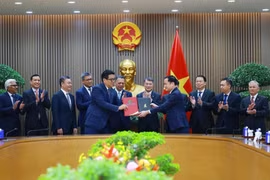
Prime Minister Le Minh Hung (C) witnesses the exchange of the Strategic Alliance Agreement between Petrovietnam and PETRONAS. (Photo: VNA)

Prime Minister backs PETRONAS’ further investment expansion in Vietnam

Prime Minister Le Minh Hung praised PETRONAS and the Vietnam National Industry-Energy Group (Petrovietnam) for maintaining a strong partnership for more than 30 years, with joint efforts supporting Vietnam’s energy security, sustainable development and economic growth, as well as those of the Asian region.

The central province of Nghe An holds an investment promotion conference in Seoul on October 15. (Photo: VNA)

Nghe An seeks stronger tech, clean energy ties with RoK

A Nghe An official affirmed the province's commitment to providing a fair and favourable investment environment, preparing cleared land in the expanded Southeast Nghe An Economic Zone, streamlining administrative procedures, and ensuring clean energy infrastructure for investment projects.

Deputy Minister of Foreign Affairs Nguyen Minh Hang (right) meets with US Deputy Assistant Secretary of Commerce for Asia and Acting Executive Director of SelectUSA Kelly Coldiron in Hanoi on October 15, 2026. (Photo: baoquocte.vn)

Vietnam, US propel economic, trade, investment ties

Vietnam considers the US one of its leading strategic partners and wants to continue advancing the Comprehensive Strategic Partnership in a stable, substantive, and effective way for the benefit of its citizens and enterprises, said Deputy Minister of Foreign Affairs Nguyen Minh Hang.

Deputy Foreign Minister Nguyen Minh Hang (R) receives Pamela Phan, former Deputy Assistant Secretary for Asia at the US Department of Commerce, in Hanoi on October 15, 2026. (Photo: baoquocte.vn)

Vietnam, US look to strengthen business, investment ties

Vietnam and the US should further promote business connections and practical cooperation in trade and investment, Deputy Foreign Minister Nguyen Minh Hang told Pamela Phan, former Deputy Assistant Secretary for Asia at the US Department of Commerce, in Hanoi on October 15.

Shoppers at Winmart (Photo: VNA)

National brand programme drives Vietnamese corporate competitiveness

Vietnam’s national brand value reached 462.28 billion USD in 2026, up 45.14% from 2020 and ranking 32nd among 193 countries, according to Brand Finance. The challenge, however, goes beyond climbing the rankings or scaling up. It is turning those gains into lasting competitiveness and getting Vietnamese firms deeper into global value chains.

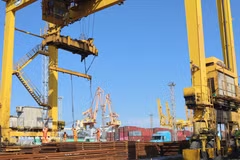
Loading and unloading steel products at Hoang Dieu–Chua Ve Port, Hai Phong city (Photo: VNA)

Hai Phong city seeks to boost inland waterway transport

According to the Hai Phong Maritime Administration, inland waterways carry coal, agricultural products, ores, stone, cement and other bulk cargoes, helping ease pressure on roads, particularly those connecting seaports and industrial parks.