Thailand considers plan to end 60-day visa-free stay

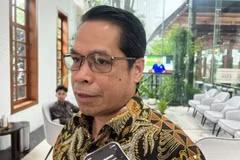
According to Minister of Tourism and Sports Surasak Panjaroenworakul, the policy, currently applied to citizens from 93 countries and territories, may be scrapped following a review of its effectiveness.

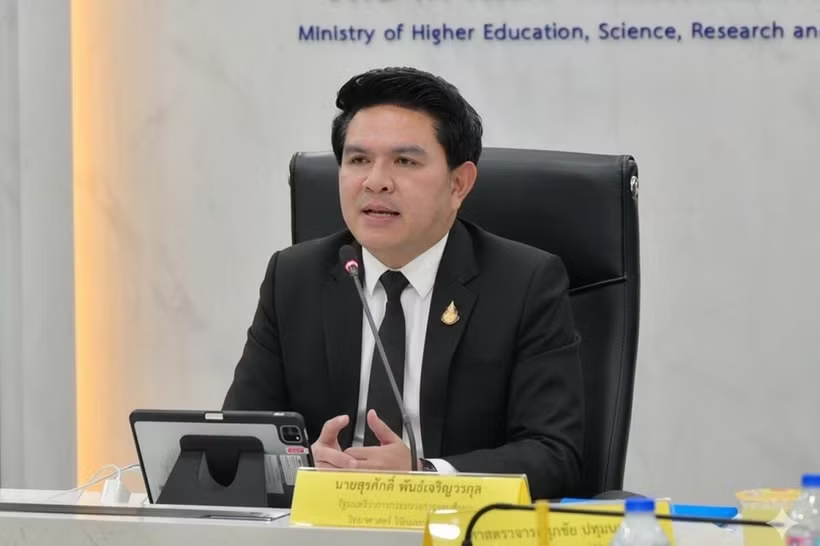
Thai Minister of Tourism and Sports Surasak Panjaroenworakul (Photo: bangkokpost.com)

Bangkok (VNA) - The Thai Government is considering ending its 60-day visa exemption scheme to curb misuse by visitors overstaying or working illegally, while supporting more sustainable tourism growth.

​According to Minister of Tourism and Sports Surasak Panjaroenworakul, the policy, currently applied to citizens from 93 countries and territories, may be scrapped following a review of its effectiveness. The proposal is expected to be submitted to the Cabinet soon.

​Authorities noted that around 90% of visitors stay between one and 30 days, while only about 10% remain longer. Officials said extended stays may not reflect genuine tourism purposes, with some cases linked to illegal work or activities, prompting consideration of shorter permitted stays.

​The ministry also plans to restructure the tourism sector toward sustainability, higher value and quality, prioritising revenue over visitor numbers to strengthen Thailand’s image as a safe and premium destination.

​The minister also backed the idea of an entry fee, citing examples such as Japan, where similar measures have not reduced arrivals but supported stable growth.

​The 60-day visa-free policy was introduced in 2024 under the administration of former Prime Minister Srettha Thavisin./.

VNA

See more

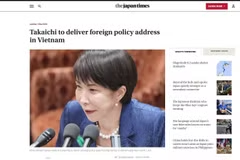
A screenshot of an article on Prime Minister Takaichi Sanae’s upcoming May 1-3 visit to Vietnam published by The Japan Times.

Japanese media highlight importance of economic security cooperation with Vietnam

Japanese media viewed Prime Minister Takaichi Sanae’s visit as a positive and strategic step, not only for deepening bilateral relations but also for reinforcing Japan’s role in shaping a rules-based regional order, in which Vietnam is seen as a central partner in building a sustainable and flexible economic-security cooperation network amid today’s global uncertainties.

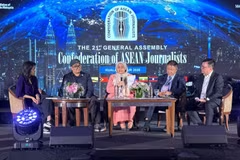
Speakers discuss at the 21st General Assembly of the Confederation of ASEAN Journalists (CAJ-21) in Kuala Lumpur. (Photo: VNA)

ASEAN journalists urged to blend AI power with human values

The Vietnamese delegation, led by Editor-in-Chief of Nhan dan (People) newspaper and President of the Vietnam Journalists Association Le Quoc Minh, actively contributed to discussions and received positive feedback from participants.

Thailand intensifies crackdown on nominee businesses

Thailand intensifies crackdown on nominee businesses

Since January 1, 2026, risk groups have been required to submit additional financial evidence before registration, resulting in a 60% reduction in nominee-risk companies in Q1 2026 to 1,373 companies from 3,511 in the same period last year.

Indonesia boosts special economic zones with skilled labour push

Indonesia boosts special economic zones with skilled labour push

Coordinating Minister for Economic Affairs Airlangga Hartarto said the government has allocated funding for vocational training programmes tailored to the demand of enterprises operating in SEZs and national strategic projects. He stressed that synchronising labour supply and demand is essential to rapidly building a job-ready workforce.

Malaysian Prime Minister Datuk Seri Anwar Ibrahim at at the 80th anniversary celebration of the Road Transport Department on April 25, 2026. (Photo: theedgemalaysia.com)

Malaysia considers cutting road tax for diesel vehicles

Prime Minister Datuk Seri Anwar Ibrahim said he has asked the Transport Ministry to identify a suitable mechanism to implement the reduction, taking into account the impact of higher diesel prices on users, particularly sectors that still rely on diesel vehicles.