Thailand shortens visa-free stay to 30 days from September 15

Thailand's reduction of the visa-free stay period to 30 days applies to visitors from 60 countries and territories, including China, the US and 27 EU countries.

Tourists in Bangkok, Thailand. (Photo: Xinhua/VNA)

Hanoi (VNA) - Thailand will halve the visa-free stay period for tourists from dozens of countries and territories to 30 days, effective from September 15, according to the country’s Ministry of Foreign Affairs.

Tourism is vital to the Southeast Asian nation’s economy, but officials say the move is part of an effort to curb crime involving foreign nationals, AFP reported.

Under Thailand’s current tourism scheme, travellers from more than 90 countries and territories, including the 29-nation Schengen Area, China, India, the US and several South American countries, are eligible to stay for up to 60 days without a visa.

The reduction to 30 days applies to visitors from 60 countries and territories, including China, the US and 27 EU countries. The visa-free status of around 20 other countries remains unclear.

Visitors from Peru, Brazil and the Republic of Korea will be granted 90-day visa-free stays, up from 60 days previously.

In May, when the Thai cabinet approved the new visa-free policy, a Thai government spokesperson said tourists would be able to extend their stays once, at the discretion of an immigration officer.

Thailand has welcomed 20.9 million foreign tourists since the beginning of the year, down 3% from the same period in 2025, statistics showed./.
​

VNA

See more

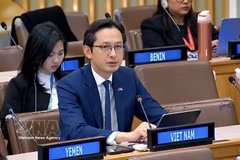
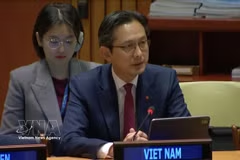
Ambassador Do Hung Viet, Permanent Representative of Vietnam to the UN, speaks at the general debate of the Third Committee of the 81st session of the UN General Assembly in New York on October 6, 2026. (Photo: VNA)

Vietnam, ASEAN highlight inclusive social development at UN

ASEAN will continue to work closely with the UN under the ASEAN–UN Plan of Action for 2026–2030, helping translate commitments to social development into concrete and sustainable outcomes and bring tangible improvements to people's lives, particularly those of vulnerable groups, Ambassador Do Hung Viet affirmed.

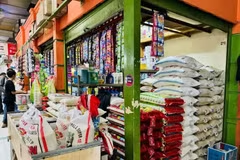
Indonesia expand carbon market incentives

Indonesia expand carbon market incentives

Coordinating Minister for Food Zulkifli Hasan outlined three primary sectors open to green investment, including sustainable agriculture through low-emission rice cultivation, waste-to-energy processing, and marine conservation through blue carbon development.

A shop in Jakarta, Indonesia (Photo: VNA)

Indonesia, Timor-Leste uphold new economic potential

Addressing the Bali–Timor-Leste Business Forum in Denpasar, Bali, last weekend, Bali Governor Wayan Koster said the two sides are well-placed to develop sectors where their respective strengths can complement each other.

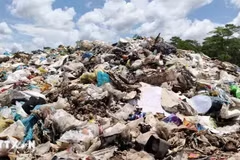
Malaysia calls on ASEAN to jointly tackle haze

Malaysia calls on ASEAN to jointly tackle haze

Malaysian Minister of Natural Resources and Environmental Sustainability Arthur Joseph Kurup said on October 6 as host of the 28th Sub-Regional Ministerial Steering Committee (MSC) Meeting in 2027, Malaysia would use its chairmanship to translate the ASEAN Agreement on Transboundary Haze Pollution (AATHP) into concrete action by enhancing data sharing, improving law enforcement and cross-border cooperation.

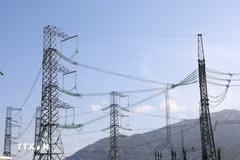
Singapore proposes boosting the ASEAN power grid. (Illustrative photo: VNA)

Singapore outlines priorities for 2027 ASEAN Chairmanship

Singapore’s Minister for Sustainability and the Environment Grace Fu said at the recent launch of the Southeast Asia Climate Outlook Survey 2026 that ASEAN should focus on building up its regional power grid, boosting climate finance and increasing its resilience against climate change impacts.

Thailand, Laos push for single inspection plan at border

Thailand, Laos push for single inspection plan at border

Under the proposed model, customs authorities and other relevant agencies from Thailand and Laos, and potentially China, would coordinate inspections at a single location. Goods would undergo customs and other procedures only once instead of separate procedures by each side, significantly reducing the time and costs for businesses.

Thailand deploys AI system to manage agricultural supply

Thailand deploys AI system to manage agricultural supply

The system integrates data on production, prices and local conditions to forecast when and where crops will enter the market and estimate their volumes. It can also identify areas at risk of supply gluts and price pressure, allowing authorities to prepare timely responses.

Philippines faces drought risk nationwide

Philippines faces drought risk nationwide

In its October 2026 to March 2027 outlook, the state science agency indicated that drought could begin as early as October in some areas and persist until the last week of March 2027.

Thailand puts immigration procedures on mobile app

Thailand puts immigration procedures on mobile app

The launch of THIM is a strategic step in the immigration authorities’ comprehensive digital transformation roadmap, Pol Lt Gen Panumas Boonyalug, commissioner of the Immigration Bureau, noted.

The ASEAN Law Enforcement High-level Conference on Cooperation in Combating Criminal Fugitives takes place in Hanoi on September 30. (Photo: VNA)

ASEAN steps up cooperation in fight against criminal fugitives

Participants discussed and agreed on strategic solutions to improve cooperation through ASEAN’s multilateral and bilateral mechanisms. They adopted the conference's joint statement and agreed on a draft joint action plan to strengthen cooperation in combating criminal fugitives.

Ambassador Do Hung Viet, Vietnam’s Permanent Representative to the United Nations (Photo: VNA)

Vietnam calls for dialogue among nuclear-weapon states to reduce nuclear risk

Vietnam calls on nuclear-weapon states to sign and ratify the Protocol to the Treaty on the Southeast Asia Nuclear Weapon-Free Zone (SEANWFZ). It will continue to make active contributions to international efforts to promote nuclear disarmament and non-proliferation, strengthen multilateralism and international law, and work towards a world free of nuclear weapons.