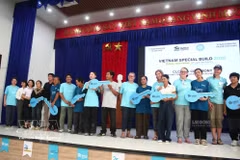
Tokyo (VNA) – The Politburo’s Resolution 23-NQ/TW has introduced a range of new viewpoints, goals and measures aimed at building a united, deeply integrated and sustainably developing overseas Vietnamese (OV) community, while effectively harnessing its resources for national development and global engagement.
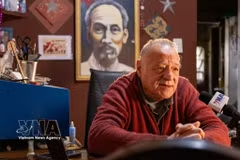
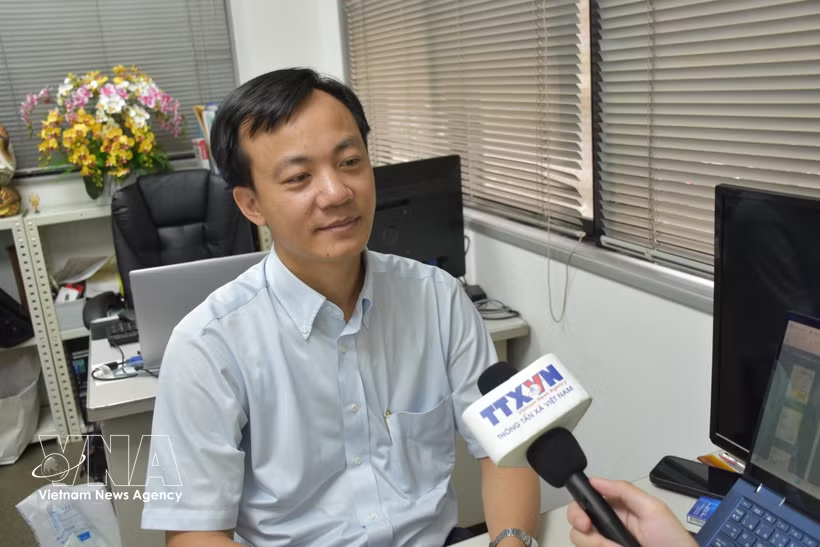
Cao Thanh Dinh, founder and CEO of ANPz Co. (All Nippon Partners), with experience in community work and promoting Vietnam-Japan business cooperation, said the shift from “pooling, bringing together and providing care” to “accompanying, creating mechanisms and mobilising resources” marks a major change in the OV policy.
In Japan, he said the community has no shortage of persons with expertise and willingness to contribute. What is missing is a mechanism that clarifies Vietnam’s needs, identifies where people can contribute to and assigns agencies to follow up through completion.
The immediate priority is to convert broad policies into specific projects and establish focal points to receive, standardise and match needs with resources. Networking that stops at meetings will have little lasting effect; only concrete projects can turn policies into results, he said.
According to him, Vietnam’s community in Japan is growing rapidly and becoming more diverse, spanning workers, students, engineers, experts, entrepreneurs and long-term residents. But Vietnamese in Japan still face language barriers, limited access to accurate legal and administrative information, and difficulty integrating into the host society.
Clearer coordination is needed among Vietnamese representative agencies, Japanese local authorities and community organisations. Representative agencies should guide and provide consular protection; local authorities have the systems and authority to act; community groups are the closest to residents and can detect problems early.
Effective coordination will allow many issues to be resolved as they emerge, rather than after they escalate into serious cases, he said.
On preserving the Vietnamese language and identity among younger generations, Dinh said efforts must go beyond language classes to give young people direct cultural exposure and pride. The Lunar New Year Festival, Mid-Autumn Festival, music, cuisine, traditional games and exchanges with Japanese students create natural settings for that.
In Hiroshima, Vietnamese cultural activities have been incorporated into broader local exchange events. A child who can confidently introduce a Japanese friend to Vietnamese food, music or traditions becomes a “cultural ambassador”, he said. Sustaining that requires stronger links among families, communities, schools and local authorities.
Vietnam has talent but lacks effective mechanisms to connect it, Dinh stated. Vietnam needs technology, management, investment and labour, while Japan has experts, businesses and Vietnamese capable of contributing. The two pools do not always meet at the right time or match the right needs.
One reason is that Vietnam’s needs are often defined too broadly, leaving overseas experts unsure where to contribute. After meetings, no one is accountable for follow-up. An intermediary coordination mechanism is needed to assess demand, standardise challenges, identify resources and turn connections into pilot projects.
OV organisations must serve two functions at once. First, they should support integration, information, cultural identity and younger generations, while also becoming active members of host societies and bridges to Vietnam.
The key is not simply pooling OV resources, but effectively mobilising them to address the country’s specific challenges, he said./.