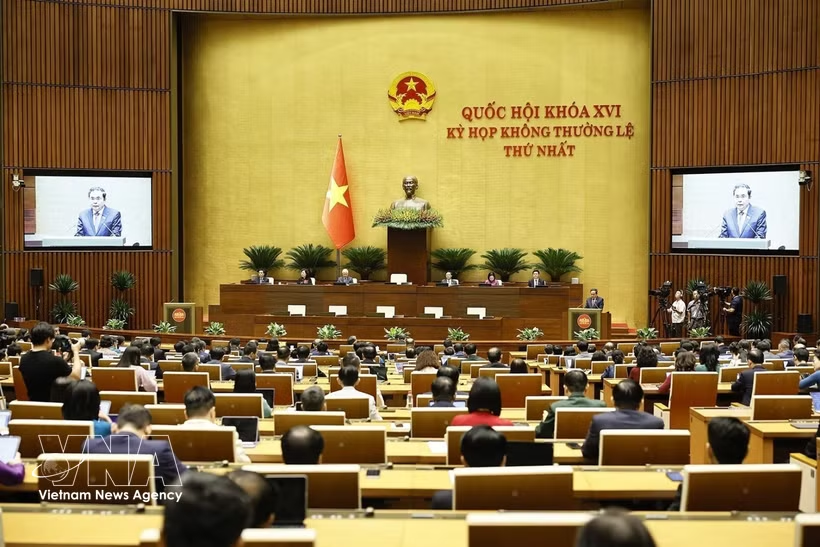
Vientiane (VNA) – Pasaxon, the official newspaper of the Lao People’s Revolutionary Party Central Committee, has hailed the success of the 16th National Assembly’s first extraordinary session, saying that it offers important lessons to Laos.
In a recently-published editorial, it said the August 3-24 session in Hanoi focused on clearing institutional bottlenecks and building a legal framework for socio-economic development, national defence and security.
The editorial said the session carried strategic significance, showing innovation in legislative and supreme oversight work and underscoring the NA’s proactive role in accompanying the Government. It laid a solid institutional foundation for socio-economic development goals in the new period.
The session was proactive and flexible. Over 17 consecutive working days, including weekends, lawmakers handled 33 major items and tackled urgent institutional blockages immediately rather than waiting for the regular sitting.
Amendments to key laws, including the Investment Law and the Petroleum Law, along with broader authority for local authorities, unlocked resources and cut compliance costs for companies, marking a breakthrough in institutional reform and deeper decentralisation, according to the editorial.
The session also showed a long-term development vision by adopting resolutions to establish two centrally-run cities, Quang Ninh and Bac Ninh, and approving major transport projects such as Ring Road No. 5 and the Lao Cai-Hai Phong railway. Those projects are expected to create new momentum for economic regions and accelerate urbanisation.
The legislature also moved quickly to introduce special mechanisms for Phu Quoc to support preparations for APEC 2027 Economic Leaders’ Week, signaling readiness to host major international events.
The editorial also flagged challenges. Passing many laws and resolutions at once requires the Government, ministries and agencies to issue guiding decrees and circulars promptly so policies can take effect quickly and avoid “laws awaiting decrees”. It also warned that decentralisation creates risks as when more powers are transferred to local authorities and post-inspection mechanisms are expanded, monitoring, inspection and oversight must be strengthened to prevent violations and wasteful use of resources.
It concluded that Laos could draw several important lessons from the session and apply them to modernising its legislative bodies and driving infrastructure and socio-economic development./.