Thailand’s commercial banking sector faces difficulties

In the second quarter of 2025, total outstanding loans in the banking sector contracted by 0.9% year-on-year, following a 1.3% decline in the previous quarter, according to Suwannee Jatsadasak, the central bank's assistant governor for the supervision group.

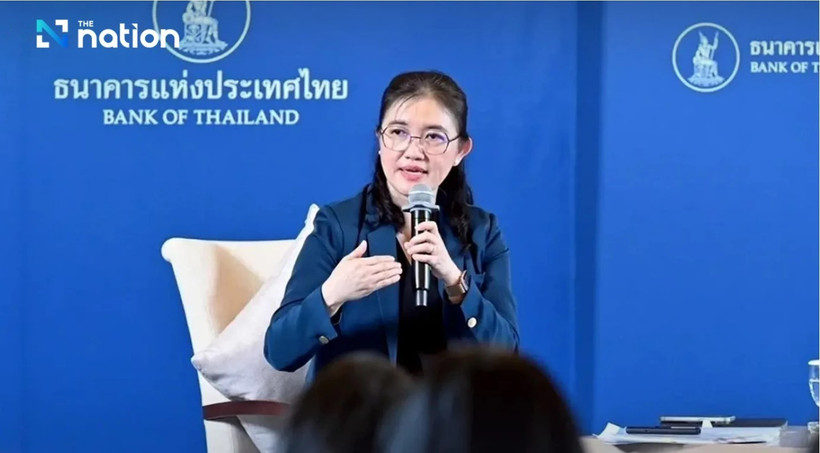
Suwannee Jatsadasak, Assistant Governor of the BOT's Financial Institutions Policy Group. (Photo: nationthailand.com)

Bangkok (VNA) - The Bank of Thailand (BOT) expects loan contraction in the banking industry to continue in the third quarter of this year, driven by ongoing debt deleveraging.

In the second quarter of 2025, total outstanding loans in the banking sector contracted by 0.9% year-on-year, following a 1.3% decline in the previous quarter, according to Suwannee Jatsadasak, the central bank's assistant governor for the supervision group.

According to the central bank's data, the banking sector has posted negative loan growth for four consecutive quarters.

The contraction began in the third quarter of 2024 with a 2% decline, followed by a 0.4% drop in the fourth quarter.

Suwannee said that although the pace of loan contraction in the second quarter was slower than in the past three quarters, the BOT does not expect loans to turn positive in the third quarter due to continued debt deleveraging.

Meanwhile, small and medium-sized enterprises (SMEs) continue to bear the brunt of tightened credit conditions, as banks maintain cautious lending practices and focus primarily on existing clients with strong repayment records and sufficient collateral.

This approach has made it increasingly difficult for new businesses to secure financing, contributing to a rise in non-performing loans (NPLs) in the corporate sector, which climbed to 2.91% in Q2.

According to the BOT's report, a notable shift has also emerged in consumer behavior. Households earning more than 50,000 THB (around 1,500 USD) per month have become more cautious in their spending, reflected in a 1.9% decline in credit card loans, primarily among higher-income groups./.

VNA

See more

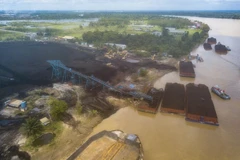
An aerial photo shows heavy vehicles and machinery being operated to collect coal along the coast of Peunaga Cut Ujong, Meureubo district, Aceh, on January 9, 2026. (Photo: Antara)

Indonesia plans coal export tax from April

The planned levy comes as Indonesia faces mounting fiscal pressure from higher global oil prices, which are driving up energy subsidy costs and raising the risk of a wider budget deficit.

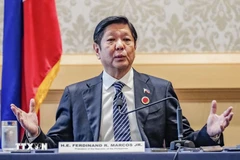
Philippine President Ferdinand Romualdez Marcos Jr. (Photo: Kyodo/VNA)

ASEAN leaders to discuss oil, food and migrant labour

The Philippines holds the ASEAN Chairmanship in 2026 under the theme “Navigating our future, together,” with three key priorities: strengthening peace and security, enhancing economic connectivity, and empowering people.

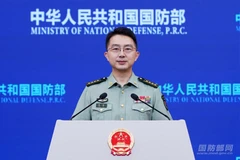
Spokesperson of the Chinese Ministry of National Defence and Deputy Director-General of its Information Office Col. Jiang Bin. (Photo: VNA)

China, Vietnam bolster military cooperation

Colonel Jiang Bin, spokesperson of the Chinese Ministry of National Defence and Deputy Director-General of its Information Office, described China-Vietnam ties as “profound”, noting the two countries are socialist neighbours working to build a China-Vietnam Community with a shared future of strategic significance. Military exchanges and collaboration have broadened in recent years, with new strides in high-level visits, joint training and border defence cooperation, he added.

Illustrative Image (Photo: Bangkokpost)

Thailand extracts bio-calcium from fish waste

Researchers at Rajamangala University of Technology, Thanyaburi (Thailand) developed a method to extract calcium from discarded parts of blackchin tilapia, including heads, bones, scales and tails - materials typically treated as waste and a source of pollution.

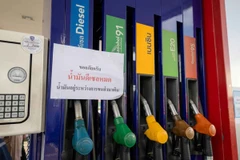
Philippines receives first Russian oil shipment in five years

Philippines receives first Russian oil shipment in five years

On March 24, Philippine President Ferdinand Marcos Jr. declared a national energy emergency through an executive order, allowing the government to fast-track fuel procurement, make advance payments for fuel contracts, and ensure the availability of fuel and other essential goods amid rising prices.