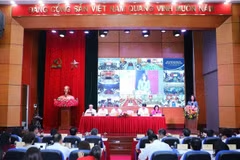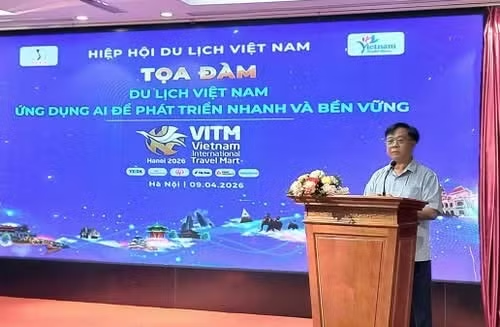
Hanoi (VNA) – Artificial intelligence (AI) is fast becoming one of the most powerful levers for growth, helping companies run faster, smarter, and better, according to a seminar in Hanoi on April 9.
Backed by the Politburo’s resolutions pushing smart, green, and low-emission tourism and digital transformation, businesses are moving past the hype. They now see AI not as a fad but as new operational infrastructure that unlocks growth opportunities.
AI reshaping tourism industry
Global tourism largely returned to pre-pandemic levels in 2025, while Vietnam’s tourism sector rebounded strongly, with nearly 21.2 million foreigners and 137 million domestic visitors. The total tourism revenue hit an estimated 1 quadrillion VND (38.4 billion USD).
But rapid growth brings pain. Pham Van Thuy, Deputy Director of the Vietnam National Authority of Tourism (VNAT), warned of mounting pressure on infrastructure, environment, service quality, and governance. For Vietnamese tourism to grow faster, more sustainably, and stay competitive, he said, it must ditch the old extensive growth model and embrace technology, data, innovation, and smart management.

Vu The Binh, Chairman of the Vietnam Tourism Association (VITA), said AI opens up new possibilities, including market trend analysis, personalised products, sharper marketing and promotion, better service, revenue management, visitor flow forecasting, capacity management, enhanced customer care, and a gradual move toward a smart tourism ecosystem.
More critically, when deployed wisely, digital transformation and AI can do more than drive growth. They can help protect natural resources, save energy, reduce costs and emissions, and make destination management sustainable.
How are firms embracing AI?
Pham Ha, Chairman and CEO of LuxGroup, put it bluntly that digital transformation and green growth are not two parallel choices. They are two sides of the same strategy: responsible and smart growth.
In an age of rapid tech change, competition is no longer just between destinations. The real competition is between more productive systems that decide faster, run more sustainably, and engage customers deeper. In that fight, AI is the most powerful productivity tool tourism has ever seen.
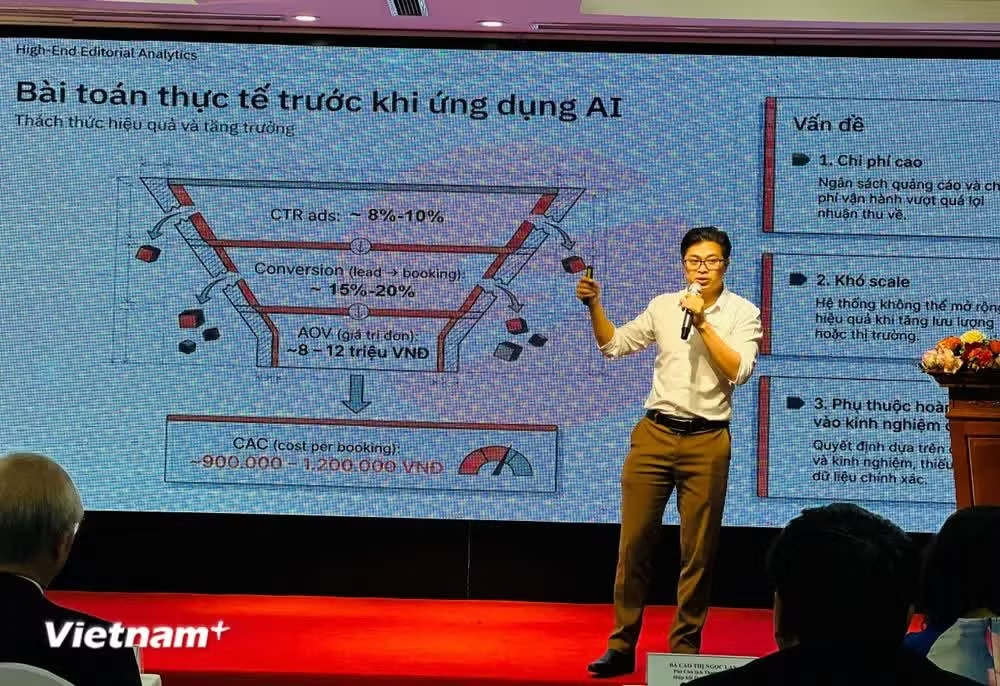
Bui Thanh Tu, Marketing Director of BestPrice Travel, said his company doesn't treat digital transformation as a tech exercise. Instead, it focuses on data and operations to improve customer experience.
The firm uses AI to analyse search and booking behaviour, recommend itineraries based on needs, budgets, and preferences, and enable flexible customisation from the first consultation. As a result, travellers are no longer locked into fixed packages, but can design their own trips with tech support.
LuxGroup, meanwhile, has opted for a "House of Small Giants" model, an ecosystem of small, agile companies with specialised expertise. Each unit moves fast, targets a clear segment, and adopts the right technology. Linked by data and digital platforms, they form a system that is quick, efficient, and highly scalable.
He said customers are increasingly seeking personalisation, cultural depth, and meaningful experiences. AI enables businesses to gain a deeper understanding of their customers – who they are, what interests them, the pace of travel that suits them, and the emotions that make a journey memorable. As a result, each trip is no longer a mass-market product but a uniquely crafted story tailored to the individual traveler.
Therefore, industry representatives believed that elevating Vietnam’s tourism sector in the coming years requires three clear pillars: comprehensive digital transformation; the adoption of AI in operations, sales, and customer experiences; and sustainable development aligned with green growth. Vietnam’s tourism industry is standing at a pivotal moment with tremendous opportunities for breakthrough growth. “However, these opportunities can only be realised if we transform the way we work and innovate our approach,” they said.
Thuy affirmed that VNAT will keep studying, proposing, and refining policies to help companies and localities with digital transformation, green transition, and AI adoption, while staying closely coordinated with VITA and local authorities./.