Victories affirm leadership role of CPV, President Ho Chi Minh: CPP spokesperson

Sous Yara said that since its establishment in February 1930, the CPV has been the supreme political force, pursuing the goal of building a modern socialist country with a socialist-oriented market economy, guided by Marxism-Leninism and its own revolutionary theories.

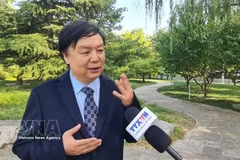
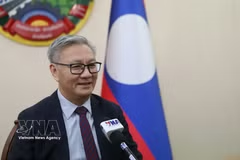
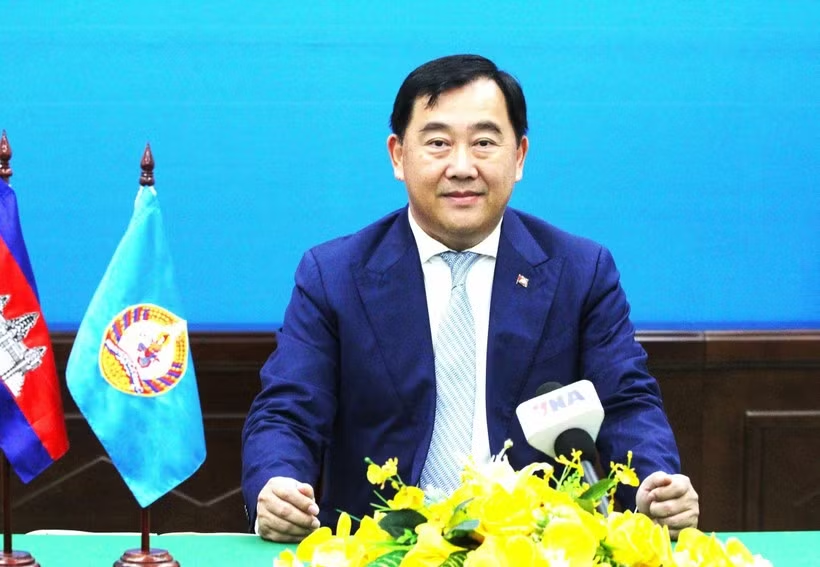
Sous Yara, spokesperson for the Cambodian People’s Party (CPP) and First Vice Chairman of the CPP’s External Relations Commission (Photo: VNA)

Phnom Penh (VNA) – The success of the August Revolution (August 19, 1945) and National Day (September 2, 1945) affirmed the historic leadership role of the Communist Party of Vietnam (CPV) led by President Ho Chi Minh, while realising the aspirations of the Party, State, and people, according to Sous Yara, spokesperson for the Cambodian People’s Party (CPP) and First Vice Chairman of the CPP’s External Relations Commission.

In an interview with the Vietnam News Agency (VNA)'s resident correspondent in Phnom Penh on the occasion of Vietnam’s 80th National Day, Sous Yara, who is also Chairman of the Commission on Foreign Affairs, International Cooperation, and Information of the Cambodian National Assembly, said that since its establishment in February 1930, the CPV has been the supreme political force, pursuing the goal of building a modern socialist country with a socialist-oriented market economy, guided by Marxism-Leninism and its own revolutionary theories.

According to the official, the CPV not only led the people in the Xo Viet-Nghe Tinh movement of workers and peasants but also carried out decisive tasks between 1941 and 1945 to achieve independence. The 1945 victory ended the colonial and feudal rule, expelled the colonialists, and affirmed the sovereignty and pride of the Vietnamese people.

Sous Yara noted that the CPV did not rest on these achievements but continued to lead the nation through historic campaigns, including the Border Campaign in 1950 and the Dien Bien Phu Campaign in 1954. These victories culminated in the Geneva Accords, which recognised Vietnam’s independence, sovereignty, and territorial integrity.

The CPV has not only provided spiritual leadership and decision-making but also set forth strategic orientations and inspired the determination for national reunification, he said.

He highlighted Vietnam’s dual strategy after 1945: building socialism in the North while waging the struggle for liberation in the South. This policy helped strengthen military and economic power, ultimately leading to the historic victory of the 1975 Ho Chi Minh Campaign and national reunification.

These triumphs brought pride to Vietnam before the world, marking the end of war and proving the CPV’s comprehensive leadership in overcoming the challenges of a poor nation to recover socio-economic development while safeguarding independence and sovereignty, the CPP official stressed.

He also praised the CPV’s landmark decision at the 6th National Congress in 1986 to embark on the Doi moi (Renewal) process, a comprehensive reform that deepened integration with the region and the world. Vietnam’s bold decision to open its economy has improved people’s lives and steadily elevated the country’s international role and prestige, Sous Yara said.

Sous Yara underscored that Vietnam’s development path has always been linked to firm independence and sovereignty, showing that the CPV has continued to exercise strong leadership with the principle of putting the people first. He expressed his admiration for Vietnam’s achievements in poverty reduction, noting that the country has drastically lowered the poverty rate each year under the CPV’s leadership. This is clear proof of the Party’s success and of President Ho Chi Minh’s noble ideals, he stated.

The official further highlighted Vietnam’s strategic direction in expanding trade ties worldwide, which has transformed the country into one of the region’s “dragons.”

Looking ahead, Sous Yara voiced his confidence that under the sound leadership of the CPV, especially Party General Secretary To Lam, and with the steadfast trust of the people, Vietnam will further strengthen its image, prestige, and influence in the region and the world./.
VNA

See more

National Assembly President Tran Thanh Man leaves Hanoi on October 11 for an official visit to China. (Photo: VNA)

National Assembly President departs for official visit to China

The visit aims to further implement the foreign policy set out at the 14th National Party Congress, enhance the effectiveness of cooperation between Vietnam’s National Assembly and the National People’s Congress of China, and reaffirm the pivotal role of parliamentary cooperation in the overall Vietnam-China comprehensive strategic cooperative partnership.

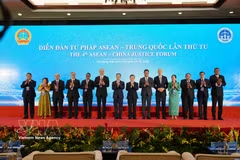
Officials pose for a group photo at the opening ceremony of the fourth ASEAN–China Justice Forum in Da Nang on October 10, 2026. (Photo: VNA)

Da Nang hosts fourth ASEAN–China Justice Forum

The forum offers a venue for participants to share experience in handling cross-border criminal cases and civil and commercial disputes, as well as to explore ways for more effective cooperation in line with national laws and international treaties.

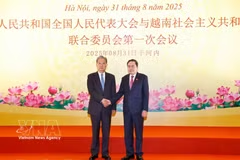
President of the National Assembly Tran Thanh Man (right) and Chairman of the Standing Committee of the National People’s Congress of China Zhao Leji at the first session of the Cooperation Committee between the two legislative bodies in Hanoi on August 31, 2025 (Photo: VNA)

Top legislator’s visit to step up Vietnam–China parliamentary ties

NA President Tran Thanh Man's visit is expected to mark further progress in cooperation between the two Parties and countries, as well as between their parliaments, helping to further develop the Comprehensive Strategic Cooperative Partnership and the Vietnam–China community with a shared future that carries strategic significance.

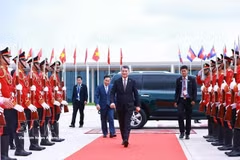
Prime Minister Le Minh Hung leaves Phnom Penh at noon October 10, concluding the wo-day official visit to Cambodia. (Photo: VNA)

PM Le Minh Hung wraps up official visit to Cambodia

PM Le Minh Hung’s first official visit to Cambodia as head of the Vietnamese Government is an important diplomatic activity, demonstrating the high priority that the Party, State and Government of Vietnam attach to relations with Cambodia.

Prime Minister Le Minh Hung meets with staff of the Vietnamese Embassy and representatives of the Vietnamese community in Cambodia on October 10, 2026. (Photo: VNA)

PM pledges continued support for Vietnamese community in Cambodia

Sharing the difficulties facing Vietnamese-origin people in Cambodia, PM Le Minh Hung said the Vietnamese Government will continue to urge Cambodia to provide favourable conditions for the community to stabilise their lives and secure sustainable livelihoods.

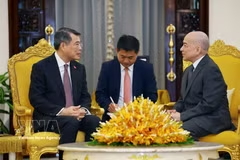
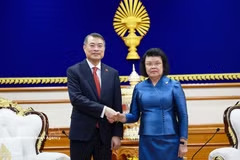
Prime Minister Le Minh Hung meets with Cambodian King Norodom Sihamoni at the Royal Palace in Phnom Penh on October 10, 2026. (Photo: VNA)

Vietnamese PM pays courtesy visits to Cambodian King, Queen Mother

King Norodom Sihamoni voiced firm confidence that under the leadership of the Communist Party of Vietnam, headed by General Secretary and President To Lam, and through the dedicated efforts by the Vietnamese Government, National Assembly, and people, the country will continue to achieve even greater accomplishments in its national construction and development.

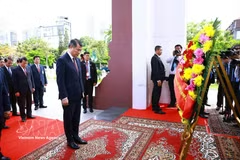
Prime Minister Le Minh Hung pays tribute to late Cambodian King Norodom Sihanouk (Photo: VNA)

PM pays tribute to King Norodom Sihanouk, lays wreaths at Cambodian monuments

Prime Minister Le Minh Hung’s official visit to Cambodia on October 9-10, at the invitation of Prime Minister Hun Manet, marks a particularly significant diplomatic milestone. It underscores the consistent priorities of Vietnam’s foreign policy in the new term, including proactive engagement, strengthened political trust and a stronger focus on translating bilateral commitments into tangible outcomes.

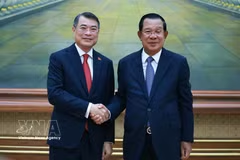
Prime Minister Le Minh Hung (left) and CPP President and President of the Cambodian Senate Hun Sen ( Photo: VNA)

Prime Minister meets with Cambodian People's Party, Senate leader

To further advance bilateral ties in the new era, the two leaders agreed to continue making full use of existing cooperation mechanisms across all channels, including meetings between the two Parties, promote exchanges between young leaders and youth from both countries, and expand cooperation between their legislative, executive and judicial bodies, people’s organisations and localities.

Prime Minister Le Minh Hung holds talks with his Cambodian counterpart Hun Manet in Phnom Penh on October 9. (Photo: VNA)

Vietnam, Cambodia seek to bolster all-round ties

The two PMs expressed their satisfaction with the positive development of Vietnam-Cambodia relations in recent years. Political ties have continued to be consolidated, with political trust strengthened through regular high-level visits and contacts.