Vietnam a balancing force amid shifting regional order: Malaysian expert

Assessing Vietnam's foreign policy at regional and international forums, Collins Chong Yew Keat said the country's multilateral diplomatic approach demonstrates the importance of strategic autonomy and practical multilateralism in an increasingly fragmented regional and global order.

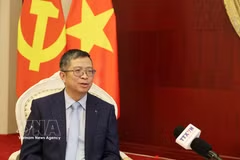
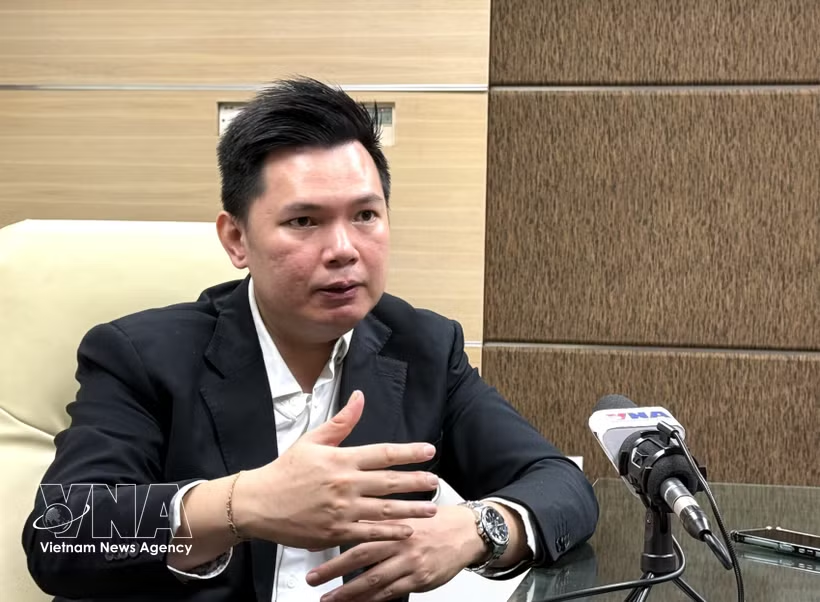
Collins Chong Yew Keat, a foreign policy, security and strategic affairs analyst at the University of Malaya (Photo: VNA)

Kuala Lumpur (VNA) – Vietnam is playing an increasingly important diplomatic role in maintaining regional stability and strategic balance amid intensifying geopolitical competition, while helping ASEAN preserve its autonomy and central role in regional affairs, according to Collins Chong Yew Keat, a foreign policy, security and strategic affairs analyst at the University of Malaya.

Talking to the Vietnam News Agency ahead of the 49th ASEAN Summit in Manila, the Philippines, Chong highlighted Vietnam's strategic diplomatic approach, saying it not only protects the country's national interests but also helps ease geopolitical competition pressures across the region.

Assessing Vietnam's foreign policy at regional and international forums, he said the country's multilateral diplomatic approach demonstrates the importance of strategic autonomy and practical multilateralism in an increasingly fragmented regional and global order.

Amid complex geopolitical developments worldwide, Vietnam recognises that the greatest threat to ASEAN is not simply the intensifying competition among major powers, but also the gradual weakening of the bloc's ability to shape its own strategic environment, he noted.

Against this backdrop, Vietnam has gradually established itself as an increasingly influential diplomatic actor in the region.

Chong said Vietnam has successfully combined its longstanding principles of independence, self-reliance and non-alignment with a more active role in regional institution-building, economic integration and international engagement.

Its policy of maintaining and diversifying relations with all major powers, including the US, China, Russia and Japan, as well as other strategic partners, has provided considerable diplomatic flexibility. More importantly, this balanced approach has enabled Vietnam to strengthen its security and economic development interests without becoming overly dependent on any single major power, he commented.

According to the expert, Vietnam's experience offers valuable lessons for ASEAN as strategic competition among major powers intensifies. Countries in the region are facing growing pressure to make difficult choices concerning trade, technology, security arrangements and geopolitical alignments.

Vietnam's experience demonstrates that maintaining strategic autonomy does not require a country to isolate itself or distance itself from major powers. Rather, autonomy lies in the ability to proactively engage and cooperate with all major countries while retaining independent decision-making and safeguarding core national interests.

Looking at ASEAN as a whole, Chong said the real test of the bloc's centrality is no longer simply whether major powers continue to participate in ASEAN-led meetings and forums. Instead, its central role should be measured by its ability to influence the behaviour of major powers, establish meaningful and binding regional rules and prevent external rivalries from determining the region's future.

In this process, Vietnam's contributions are particularly important in helping strengthen ASEAN's practical relevance and diplomatic value through persistent consensus-building, constructive engagement and its commitment to international law and regional institutions. This approach is clearly reflected in the East Sea, where Vietnam consistently emphasises the importance of the 1982 United Nations Convention on the Law of the Sea (UNCLOS), advocates the peaceful settlement of disputes and resolutely protects its sovereign rights.

Vietnam's consistent position helps reinforce the principle that regional stability must be based on commonly recognised international rules rather than the exercise of power or unilateral actions by any party, he said.

On ASEAN unity, the expert cautioned that solidarity should not be measured merely by the bloc's issuance of joint statements. ASEAN member states have different levels of economic dependence, security priorities and perceptions of risk. Genuine unity therefore requires sufficiently deep political trust and sufficiently strong common interests to prevent internal differences from undermining collective decision-making and action.

He also described Vietnam as an increasingly important strategic force in sectors likely to shape the next phase of geopolitical and economic competition. These include emerging technologies, supply chain resilience, digital transformation, strategic resource management, energy transition and food security.

Such sectors are no longer simply economic development priorities but have become central elements of national power, strategic influence and regional security, he said, adding that Vietnam's increasing capabilities and importance in these areas are providing the country with greater diplomatic leverage and a stronger voice in shaping the regional order.

Chong particularly highlighted Vietnam's growing role in maintaining the regional balance of power, especially in narrowing strategic gaps between China and the US. Its ability to maintain constructive and substantive relations with both major powers while firmly safeguarding its strategic independence enables Vietnam to actively contribute to regional balance, reduce the risk of strategic polarisation and preserve ASEAN's collective autonomy.

Although Vietnam cannot independently resolve fundamental differences between Washington and Beijing, its proactive diplomacy and growing strategic weight can help prevent major-power competition from becoming a source of division in Southeast Asia, he said.

The expert concluded that Vietnam's emerging strength is reflected not only in its growing economic or technological importance but also in its practical contributions to a more balanced, stable and strategically autonomous regional order./.
VNA

See more

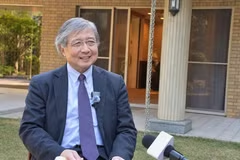
Toshiro Nishizawa, senior fellow at the University of Tokyo and fellow at the Asian Development Bank Institute, grants an interview to Vietnam News Agency (Photo: VNA)

Political trust underpins Vietnam – Japan substantive cooperation: Japanese expert

The most important outcome of General Secretary of the Communist Party of Vietnam Central Committee and President To Lam’s recent official visit to Japan was the Vietnam–Japan Joint Vision Statement, a document that signals deep political trust as both leaders cast the two countries as top-tier, long-term partners that share interests and support each other’s growth.

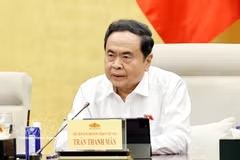
NA President Tran Thanh Man speaks at the session (Photo: VNA)

Lawmakers back post-audit shift in environmental rules

NA President Tran Thanh Man pushed for stronger decentralisation and delegation of authority and a decisive shift from pre-audit to post-audit in the amendments of environmental protection law. He said cutting pre-audit must come with stronger monitoring capacity and clear responsibility for relevant agencies and organisations.

Two Cao Bang officials expelled from Party for violations

Two Cao Bang officials expelled from Party for violations

The individuals are Trinh Truong Huy, from the Research and General Affairs II Party Cell under the Party Organisation of the Cao Bang provincial People's Committee Office, and Nguyen Ngoc Thu, member of the Cao Bang provincial Party Committee and member of a specialised research team advising and assisting the permanent members of the provincial Party Committee.

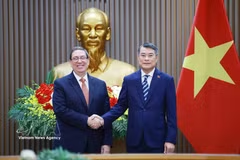
The talks between Politburo Member and Minister of Foreign Affairs Le Hoai Trung and Bruno Rodriguez Parrilla, Politburo Member and Minister of Foreign Affairs of Cuba, in Hanoi on November 13, 2026. (Photo: The Ministry of Foreign Affairs)

Vietnam, Cuba discuss measures to enhance special ties

Minister of Foreign Affairs Le Hoai Trung spoke highly of Cuba’s measures to promote socio-economic transformation and reaffirmed Vietnam’s commitment to supporting the Caribbean nation to the best of its ability.

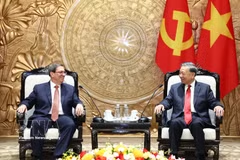
General Secretary of the Communist Party of Vietnam Central Committee and President To Lam (R) meets with Minister of Foreign Affairs and Special Envoy of the Cuban Party and Government Bruno Rodríguez Parrilla in Hanoi on November 13, 2026. (Photo: VNA)

Top Vietnamese leader hosts Cuban Special Envoy

General Secretary of the Communist Party of Vietnam Central Committee and President To Lam affirmed the Vietnamese Party, State and people’s consistent stance of solidarity, support and standing with the fraternal Cuban people.

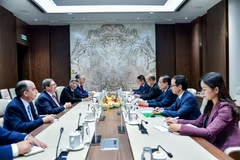
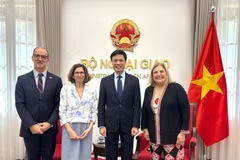
Deputy Minister of Foreign Affairs Dang Hoang Giang (second from right) and EU diplomats at the reception in Hanoi on November 12, 2026 (Photo: Ministry of Foreign Affairs)

Deputy Foreign Minister hosts EU diplomats in Hanoi

Vietnam is always an active contributor and stays ready to work with other ASEAN members to let the EU engage more deeply in ASEAN-led regional mechanisms, Deputy Minister of Foreign Affairs Dang Hoang Giang said.

Vietnamese Ambassador to Chile Nguyen Viet Cuong and Chilean Minister of Foreign Affairs Jose Francisco Perez Mackenna (Photo published by VNA)

Chilean President’s Vietnam visit expected to deepen bilateral ties

The upcoming official visit to Vietnam by Chilean President José Antonio Kast would provide an opportunity for leaders of both countries to review 55 years of relations, set directions for the next stage of their comprehensive partnership and improve the effectiveness of existing cooperation mechanisms.

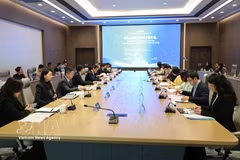
The Vietnam–China dialogue discussing opportunities for the two countries in building an Asia-Pacific community is held in Zhejiang province, China, on November 13. (Photo: VNA)

Vietnam, China explore opportunities in Asia-Pacific community building

Discussions focused on China’s modernisation process, the interconnected development between Vietnam and China, the promotion of their Comprehensive Strategic Cooperative Partnership in the new era, and the enhancement of economic corridor connectivity and cross-border industrial chain cooperation.

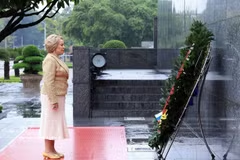
Valentina Matviyenko, Chairwoman of the Federation Council of the Federal Assembly of Russia, pays tribute to President Ho Chi Minh at his Mausoleum (Photo: VNA)

Chairwoman of Russian Federation Council wraps up official visit to Vietnam

Valentina Matviyenko, Chairwoman of the Federation Council of the Federal Assembly of Russia, affirmed the Federation Council's special regard for Vietnam and support for strengthening the Comprehensive Strategic Partnership between the two countries. She also pledged to work with the Vietnamese NA to advance the implementation of high-level agreements, particularly in the fields of economy, trade, energy and oil and gas.

Minister of Science and Technology Vu Hai Quan presents the explanatory report and summary of the revision of the Metrology Law. Photo: VNA

National Assembly adopts amended Law on Metrology

The vote took place during the morning sitting of the 16th legislature’s second session under the chairmanship of National Assembly Vice President Nguyen Hong Dien. The law will take effect on March 1, 2027.

Acting Representative of the International Organisation of La Francophonie (OIF) for Asia-Pacific Rigobert Pinga-Pinga (Photo: VNA)

Vietnam’s development inspires Francophone community: OIF Representative

The IOF official recalled that the Francophonie Summit in Hanoi in 1997 marked a turning point for the organisation, with leaders establishing the position of OIF Secretary-General and placing economic cooperation at the centre of its agenda. Nearly three decades later, the Francophonie Summit is returning to Asia, with Phnom Penh hosting the summit under the theme “Reinvesting in Peace for Shared Prosperity and Lasting Stability”.