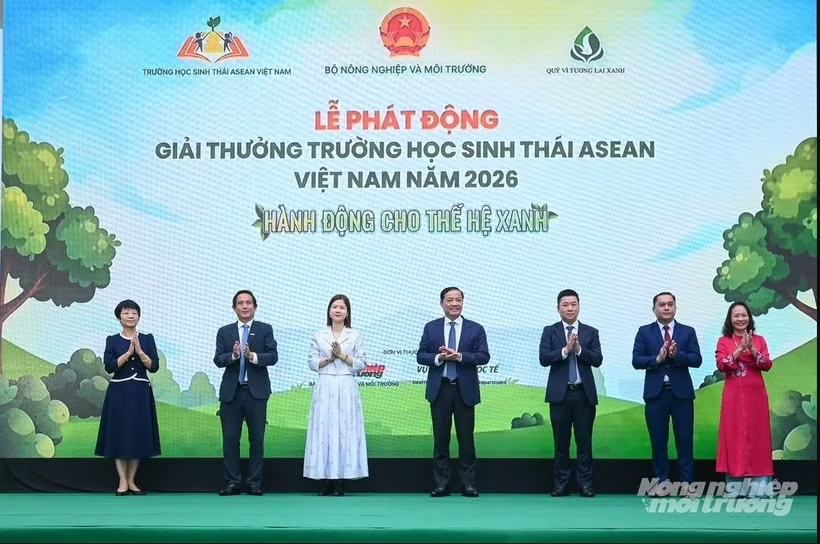
Hanoi (VNA) – The Ministry of Agriculture and Environment launched the 2026 ASEAN Eco-Schools Award and held a meeting of the ASEAN Eco-Schools Network in Vietnam on November 13, aiming to promote environmentally friendly school models nationwide.
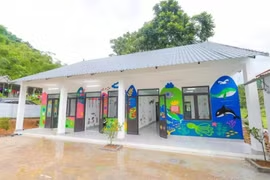
The event, held at Tay Ha Noi Primary and Junior Secondary School in Hanoi's Xuan Phuong commune, focused on the three themes of green schools, reducing plastic waste and safe and efficient water use.
At the launch ceremony, Deputy Minister of Agriculture and Environment Le Trong Yen said schools play an important role in shaping young people's knowledge, character, and habits. Daily practices such as saving electricity and water, sorting waste and caring for trees could help students understand the value of natural resources and their responsibility towards the environment, while spreading positive habits to families and communities.
He stressed that developing eco-schools required integrating environmental protection into both education and school management. Students should be encouraged to observe, practise, propose initiatives and assess results themselves.
The deputy minister called on local education and agriculture-environment authorities to coordinate in publicising the award's criteria and encouraging schools to participate, with particular support for disadvantaged schools in remote, border and island areas.
Schools were also urged to incorporate environmental protection into teaching, extracurricular activities and daily operations, while encouraging students to develop initiatives and maintain green habits both inside and outside school.
Le Thai Ha, Director of the For a Green Future Foundation under Vingroup, said simple actions such as reusing water bottles, turning off taps after use and caring for school gardens can generate meaningful change when practised regularly by students.
She noted that eco-schools did not necessarily require major infrastructure or large budgets. Small initiatives suited to each school's conditions, supported by teachers and students and maintained over time, could deliver practical results.
The foundation welcomed the establishment of the ASEAN Eco-Schools Network in Vietnam, saying it will give schools opportunities to connect, exchange experience, and replicate effective models.
Nong Thuy Hoa, Chairwoman of the Board of Tay Ha Noi Primary and Junior Secondary School, said the school is developing a “Green and Happy School” model to create a safe, friendly learning environment close to nature while fostering students' love and responsibility for the environment.
She stressed that a green school is not simply one with abundant trees or attractive gardens, but one that nurtures a culture of sustainable living, with teachers inspiring change and students actively contributing to environmental protection.
Following the launch, delegates visited the school's eco-friendly facilities, gardens, educational publications and student-led green startup projects.
In 2025, the ASEAN Eco-Schools Award, themed “Schools without Plastic Waste”, received 294 applications, marking its largest and most impactful edition in Vietnam since its launch./.