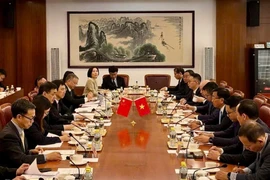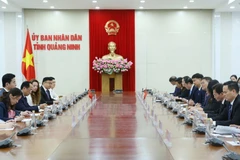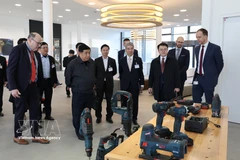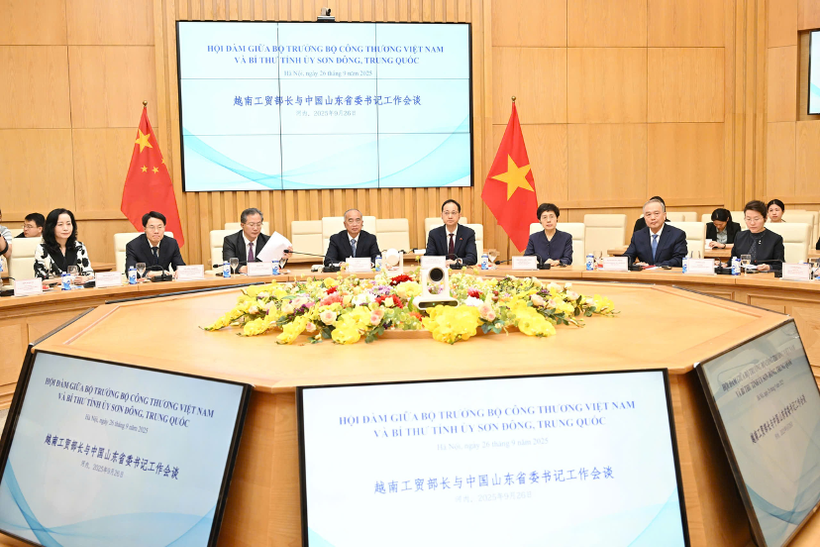
Hanoi (VNA) - Vietnamese Minister of Industry and Trade Nguyen Hong Dien held talks with Secretary of China's Shandong provincial Party Committee Lin Wu in Hanoi on September 26, as part of the latter’s visit to Vietnam to realise common perceptions of senior leaders of the two countries on expanding economic and trade ties.
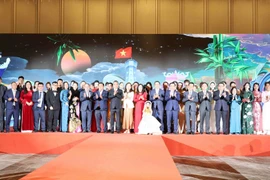
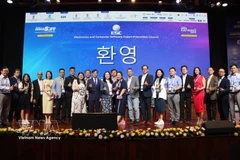
Dien said his ministry attaches importance to Shandong’s role, noting that Lin’s visit and the successful Vietnam – China Trade and Investment Promotion and Business Networking Conference, co-hosted by the ministry and Shandong, showcased the strong demand and potential for deeper cooperation.
Lin, for his part, said Shandong highly evaluates its economic and trade ties with Vietnam. He outlined the province’s focus on developing new production forces tailored to local conditions; accelerating energy transition, fully expanding domestic demand; and coordinating reform, development and stability.
He proposed continuing to realise the memorandum of understanding (MoU) on economic and trade cooperation and advancing key projects, with a focus on industries like rubber tires, apparel, new energy, digital economy, and equipment manufacturing. Expanding trade could be achieved through delegation exchanges, trade fairs, and cross-border e-commerce to increase market access for quality products, Lin said.
Agreeing with Lin’s proposals, Dien noted that Vietnam - Shandong trade reached only 11.6 billion USD in 2024, or about 4.5% of Vietnam–China trade. He urged the effective realisation of the MoU on economic and trade cooperation signed between the ministry and Shandong authorities in August 2024, and encouraged Shandong enterprises to ramp up investment and supply chains for priority industrial products in Vietnam.
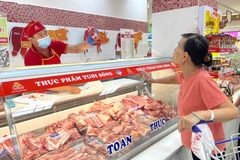
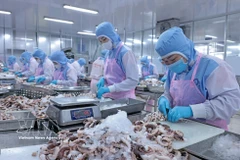
Dien also pushed for increased imports of Vietnamese agricultural goods, sharing of experience in processing and exporting farm produce, and support for Vietnamese firms’ marketing and brand building in Shandong’s major distribution networks.
Shandong is ready to encourage the import of quality Vietnamese agricultural and aquatic products to meet strong local demand, Lin said, suggesting the establishment of distribution centres for Vietnamese goods in Shandong, initially in Qingdao and Jinan. He also committed to coordinating trade promotion events to identify opportunities for Vietnamese agencies and businesses in Shandong.
Lin invited Dien to lead a delegation to Shandong in 2026 to attend the event "Dialogue with Shandong".
The talks concluded with both sides witnessing the handover of a 2025-2027 priority task list to advance their MoU.
Shandong, a coastal industrial powerhouse in eastern China, ranks third in the country in terms of gross regional domestic product (GRDP) and second in population with 100.8 million people in 2024. Its GRDP hit over 9.85 trillion CNY (1.38 trillion USD) in 2024, up 5.7% from 2023.
Chinese customs data showed that Vietnam-Shandong trade totaled 9.12 billion USD in the first eight months of 2025, up 18.86% year-on-year, with Vietnam’s exports to Shandong rising 29.36% to 2.17 billion USD and imports growing 15.93% to 6.95 billion USD. Vietnam ranks as Shandong’s ninth largest trading partner and third within ASEAN, behind Malaysia and Indonesia./.