Hanoi (VNA) - With domestic strengths reinforced, flexible policies in place, and determined efforts to improve institutions and accelerate decentralisation, Vietnam’s economy recorded impressive growth in the first six months of the year.
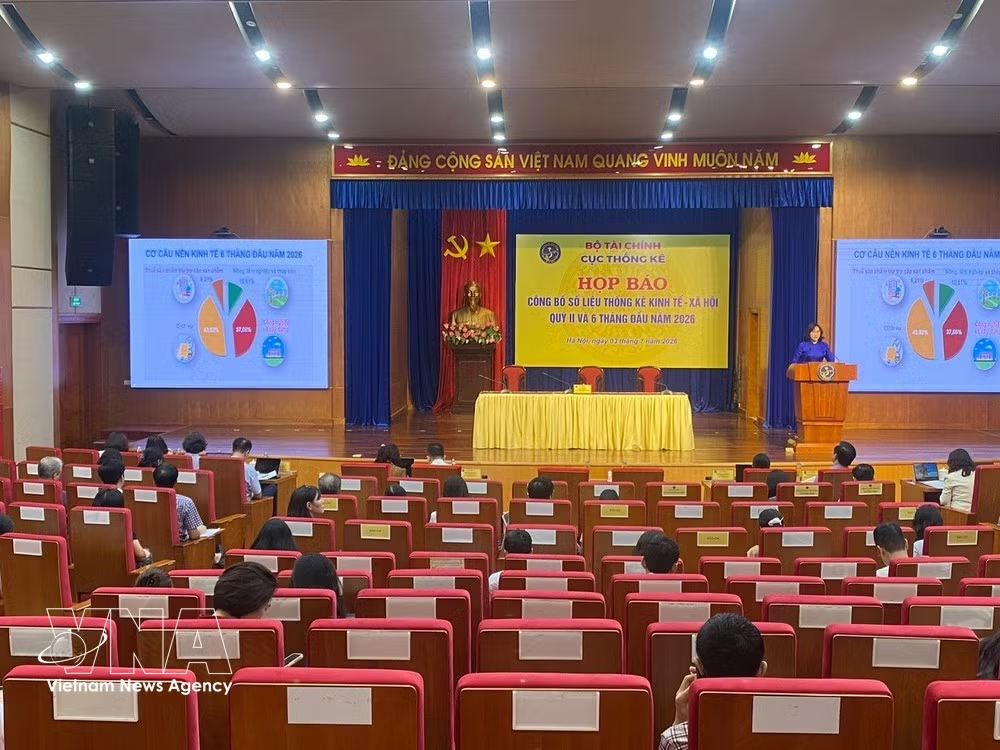
On July 3, the Statistics Office released its socio-economic report, highlighting the economy’s recovery and development. Gross domestic product (GDP) in the second quarter was estimated to grow by a robust 8.39% year on year. The result not only reflected the efforts of the entire political system but also demonstrated the economy’s strong resilience in the face of complex developments in global markets.
Nguyen Thi Huong, head of the Statistics Office, said GDP in the first six months grew by 8.18% year on year, well above the 7.63% recorded in the same period of 2025. Within this overall expansion, the agriculture, forestry and fisheries sector grew by 3.87%, contributing 5.66% to the increase in the economy’s total value added. Industry and construction posted strong growth of 9.81%, contributing 47.20%, while the services sector maintained solid momentum with growth of 8.09%, accounting for 47.14%.
Industrial production drives growth
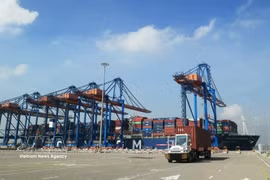
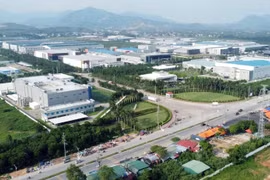
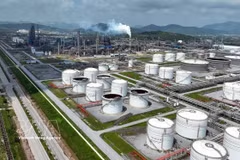
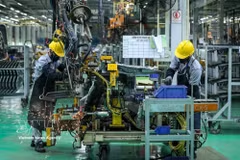
Analysing the key growth drivers, Huong said industry and construction served as the “locomotive” of the economy in the first half of the year. A strong recovery in export orders, combined with the spillover effects of public investment, created significant momentum. The value added of the industrial sector rose by 9.86% year on year in the first six months of 2026, contributing 40.35% to the increase in total value added across the economy.
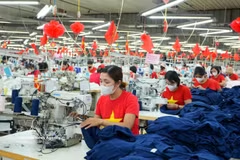
In particular, manufacturing and processing continued to affirm their role as the main growth engine, expanding by 10.23%. According to Huong, this performance was supported by efforts to strengthen supply chains and businesses’ flexible adaptation to new requirements in international markets. Electricity production and distribution grew by 9.34%, water supply and waste treatment by 7.72%, and mining by 6.67%. Construction also expanded by 9.51%, contributing a notable 6.85% to overall growth, reflecting the effectiveness of accelerated public investment disbursement and the gradual recovery of the property market.
Meanwhile, the services sector saw renewed dynamism in trade, transport and tourism. Stronger domestic consumption, together with more active goods circulation, helped value added in services rise by 8.09% year on year in the first half of 2026. Several major market-oriented service industries maintained high growth, with transport and warehousing up 10.18%, wholesale and retail 9.67%, and accommodation and food services 8.05%.
Financial, banking and insurance activities grew by 7.97%, providing an important foundation for capital and service provision to the economy. Administrative and support service activities also increased by 8.99%, reflecting growing professionalisation and demand for business services.
The agriculture, forestry and fisheries sector also contributed to the overall growth structure, continuing to serve as an important “pillar” for food security and social stability. Agriculture maintained steady growth of 3.57%, meeting domestic consumption needs while further expanding export markets. Fisheries grew by 4.88%, supported by a recovery in global demand and greater application of advanced technology in aquaculture and fishing.
In terms of the economic structure in the first half of the year, services remained the largest sector, accounting for 43.52%, followed by industry and construction at 37.66%. Agriculture, forestry and fisheries accounted for 10.61%, down slightly from 11.28% in the same period of 2025, indicating that the economy’s structural shift towards modernisation remains on track.
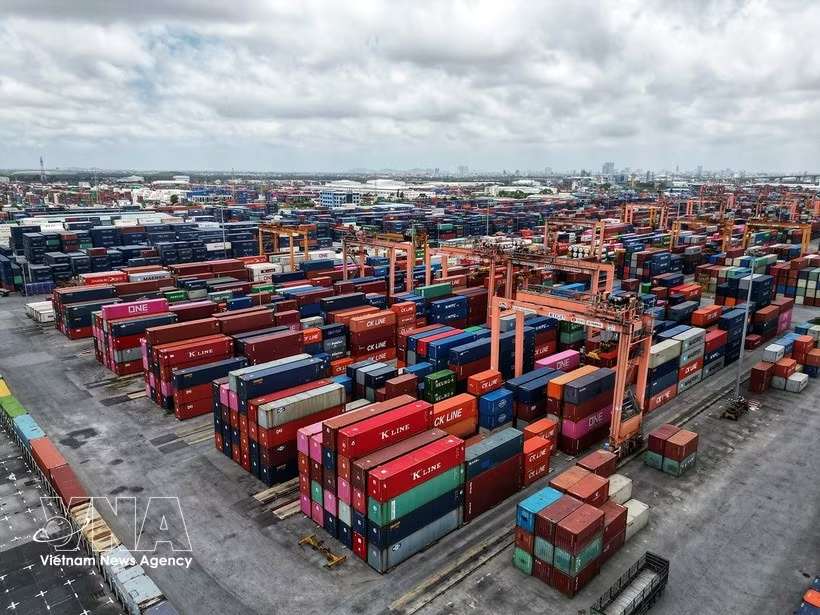
Notably, GDP expenditure data showed several positive signals. Exports of goods and services surged by 20.18%, reflecting the competitiveness of Vietnamese products in international markets. At the same time, gross capital formation rose by 15.2% and final consumption expenditure by 8.15%, demonstrating investor and consumer confidence in the economy’s long-term prospects.
Harnessing internal strengths for a breakthrough
Despite the impressive growth figures, Vietnam’s economic performance cannot be viewed separately from a highly volatile global environment.
Huong noted that the global situation remained complex, unpredictable and difficult to forecast during the first six months of 2026. Prolonged armed conflicts in the Middle East increased risks to global peace and negatively affected supply chains, energy prices and international transport costs.
With global inflation showing signs of picking up again and financial market conditions tightening, several major international organisations revised down their forecasts for global economic growth in 2026. The International Monetary Fund, the United Nations and Fitch Ratings each lowered their forecasts by 0.2 percentage points, while the Organisation for Economic Co-operation and Development and the World Bank reduced theirs by 0.1 percentage points. Forecasts for global growth in 2026 now range at relatively low levels, from 2.4% to 3.1%.
Against this backdrop, international organisations have forecast that Vietnam’s growth will lead Southeast Asia. Indonesia is projected to grow by 4.7-5.2%, Malaysia by 4.2-4.7%, the Philippines by 3.2-4.4%, Singapore by 3.0-3.5%, and Thailand by just 1.5-1.8%, while Vietnam is forecast to achieve growth of 6.5-7.2%. These figures reflect strong international confidence in Vietnam’s economic management and growth potential.
The Government and Prime Minister’s decisive leadership has played a key role in delivering these results. The coordinated implementation of tasks and measures to promote growth, with the aim of achieving double-digit expansion in 2026, has created new momentum across ministries, sectors and localities. One major turning point has been the operation of the two-tier local administration model alongside stronger decentralisation and delegation of authority.
Huong said continued institutional reform and administrative procedure simplification had created “new development space” and strengthened regional connectivity. This has helped mobilise and use resources more effectively, thereby improving the effectiveness and efficiency of State management.
As the global economy undergoes rapid transformation towards digitalisation, artificial intelligence and green transition, Vietnam has moved quickly to seize opportunities to restructure value chains and meet the evolving requirements of global markets./.