Vietnam shifts from vision to action for cultural development

Resolution No. 80-NQ/TW of the Politburo represents a significant milestone in the Communist Party of Vietnam's thinking on the role of culture and people in national development.

Politburo Resolution No. 80-NQ/TW is regarded as a strategic document that opens a new vision for the development of Vietnamese culture. (Illustrative photo: VietnamPlus)

Hanoi (VNA) – Resolution No. 80-NQ/TW of the Politburo represents a significant milestone in the Communist Party of Vietnam's thinking on the role of culture and people in national development. It requires a transition from policy advocacy to concrete action through institutions, legal frameworks, and resource mobilisation, experts said at a national scientific conference in Hanoi on April 15.

The conference, titled "Developing Vietnamese culture in the new era: Theory and practice from Politburo Resolution No. 80-NQ/TW," brought together researchers, policymakers, artists, and business representatives to discuss ways to translate the resolution's vision into practical outcomes.
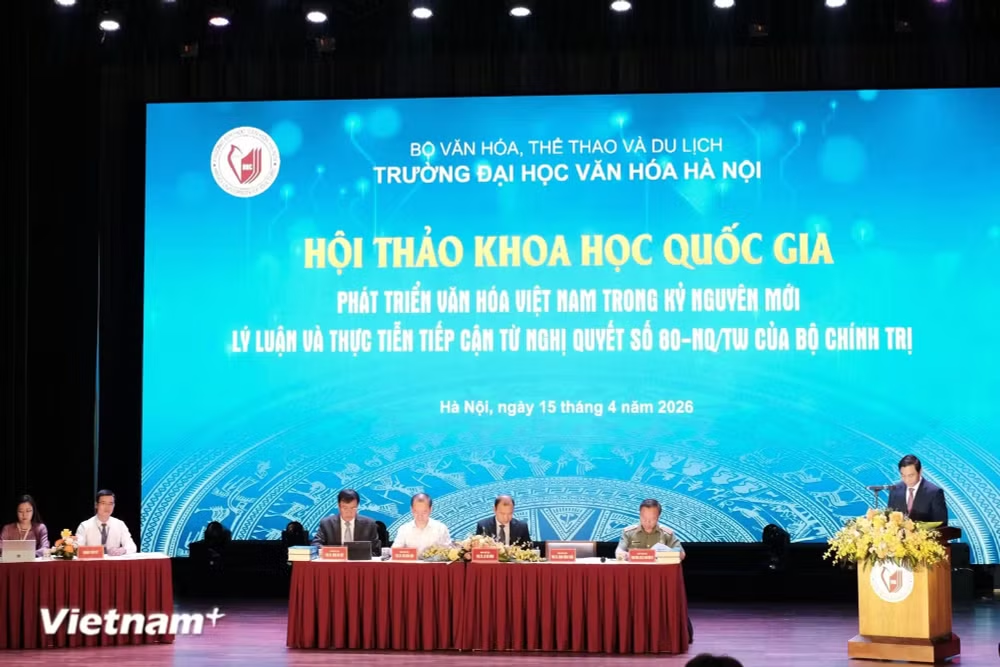
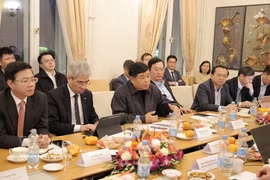
hoithao-7.jpg
Delegates attend the national scientific conference on developing Vietnamese culture in the new era. (Photo: VietnamPlus)

Associate Professor and Dr. Dinh Cong Tuan, Vice Rector of Hanoi University of Culture and head of the conference's organising committee, said the resolution provides a new strategic vision by placing culture at the centre of the country's development strategy rather than treating it as a supporting sector.

He noted that culture is recognised as linked with economic growth, technological innovation, education, tourism, diplomacy, and social governance, making it a key source of sustainable development.

According to Tuan, the current priority is not simply to reaffirm the importance of culture in theory but to institutionalise the resolution's major principles through effective legislation, policies, governance models, and investment mechanisms capable of producing tangible results.

Sharing a similar view, Associate Professor and Dr. Bui Hoai Son, Standing Member of the National Assembly's Committee for Culture and Education, pointed out that cultural development has long faced a paradox, with investment often being among the first areas to suffer budget cuts during periods of financial constraint.
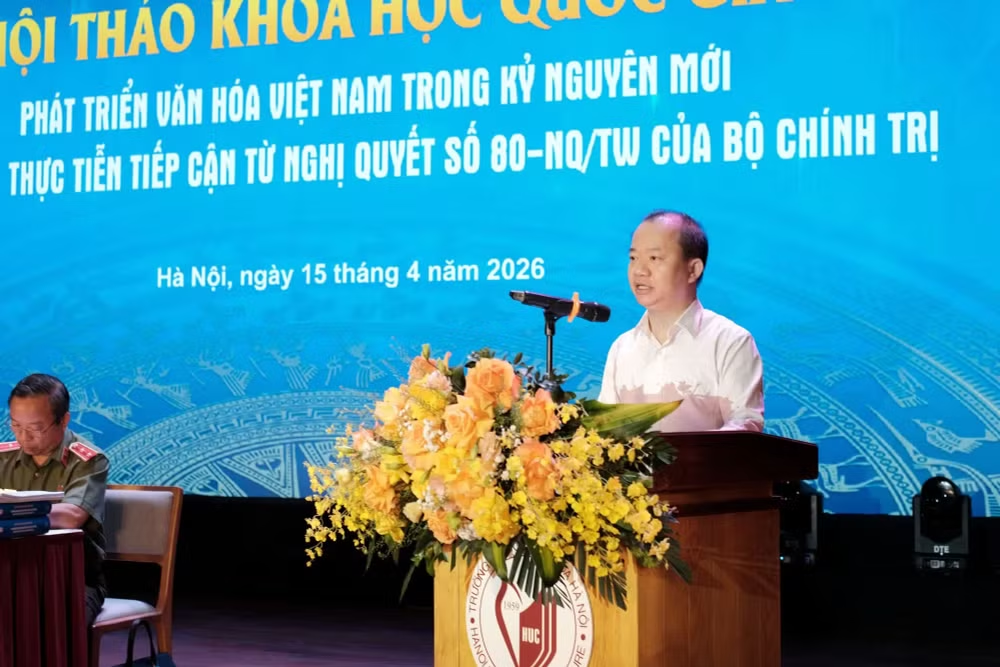
hoithao-11.jpg
Associate Professor, Dr. Bui Hoai Son, Standing member of the National Assembly's Committee for Culture and Education, speaks at the conference. (Photo: VietnamPlus)

He said funding for culture remains limited and fragmented, making Resolution 80 a turning point that requires a shift from encouraging cultural appreciation to building a comprehensive legal framework that guarantees sustainable investment and development.

Rather than relying solely on calls to preserve culture, policymakers should establish practical mechanisms that determine how cultural activities are financed, protected, and promoted through legal and institutional instruments, he said.

Son identified five critical bottlenecks that need to be addressed to unlock the sector's potential. These include mobilising private investment, providing flexible planning and land-use policies for creative spaces, introducing tax and financial incentives to foster a healthy cultural market, expanding public-private partnership models for cultural institutions, and improving policies to attract and retain talented professionals.

He stressed that investing in the nation’s cultural talent should be regarded as a long-term investment in the vitality and competitiveness rather than simply a welfare policy.

Professor and Dr. Nguyen Van Kim of the University of Social Sciences and Humanities under Vietnam National University, Hanoi, argued that cultural heritage should not be preserved in isolation but integrated into modern economic and social ecosystems to generate sustainable value.
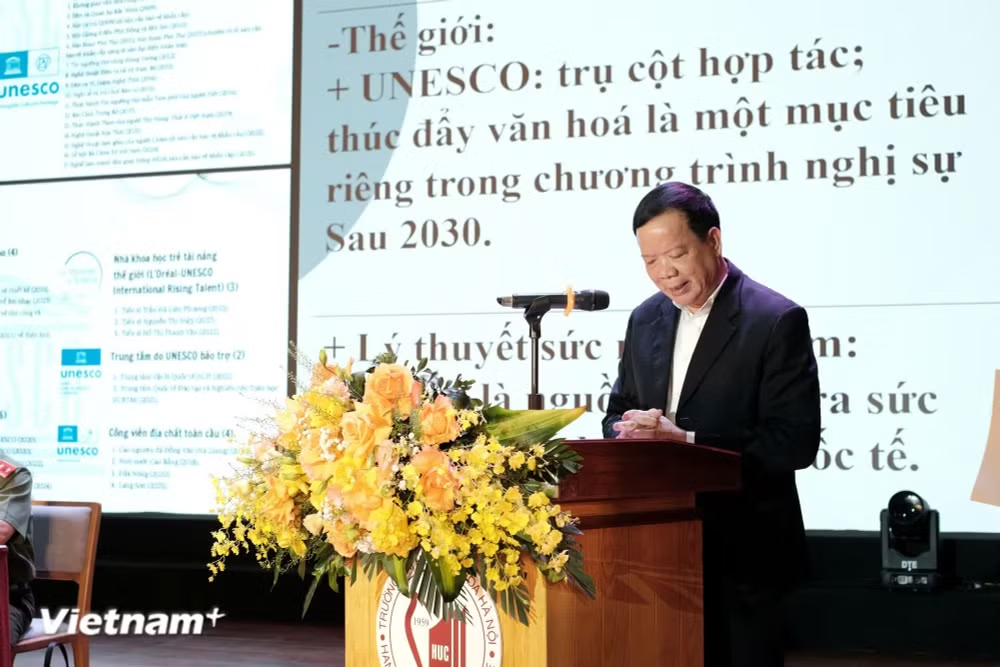
hoithao-9.jpg
Professor, Dr. Nguyen Van Kim of the University of Social Sciences and Humanities under Vietnam National University, Hanoi, delivers a presentation at the conference. (Photo: VietnamPlus)

He cited Trang An Landscape Complex in Ninh Binh province and Ha Long Bay in Quang Ninh province as examples of heritage sites that have created substantial economic benefits while enhancing Vietnam's international image. He added that the country expects cultural industries to contribute around 7% of GDP by 2030.

Kim said that heritage serves as a shared cultural language connecting Vietnam with the international community, which helps strengthen cooperation and enhance the country's soft power.
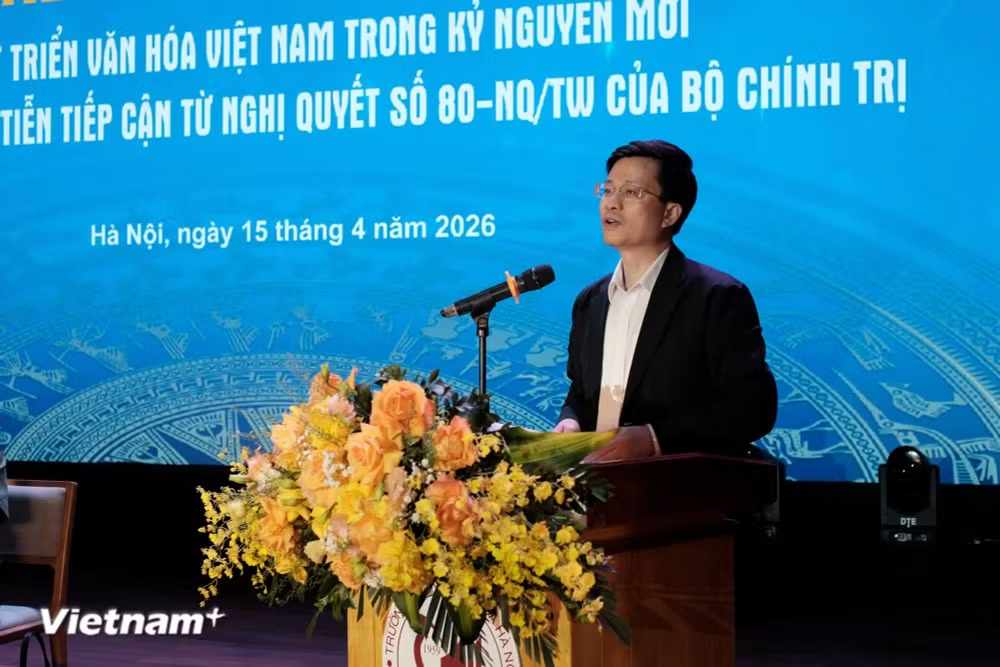
hoithao-10.jpg
Associate Professor and Dr. Do Chi Nghia, member of the National Assembly's Committee for Culture and Education, shares his views at the conference. (Photo: VietnamPlus)

Participants at the conference highlighted the growing role of media in promoting cultural development. Associate Professor and Dr. Do Chi Nghia, a member of the National Assembly's Committee for Culture and Education, said Resolution 80 views communication not merely as a tool for information dissemination but as an integral component of cultural development itself.

In the digital era, he said, media platforms and social networks play a decisive role in bringing cultural values, artistic works, and heritage closer to the public while creating new cultural values through interaction and innovation.
giai-cong-hien-7.jpg
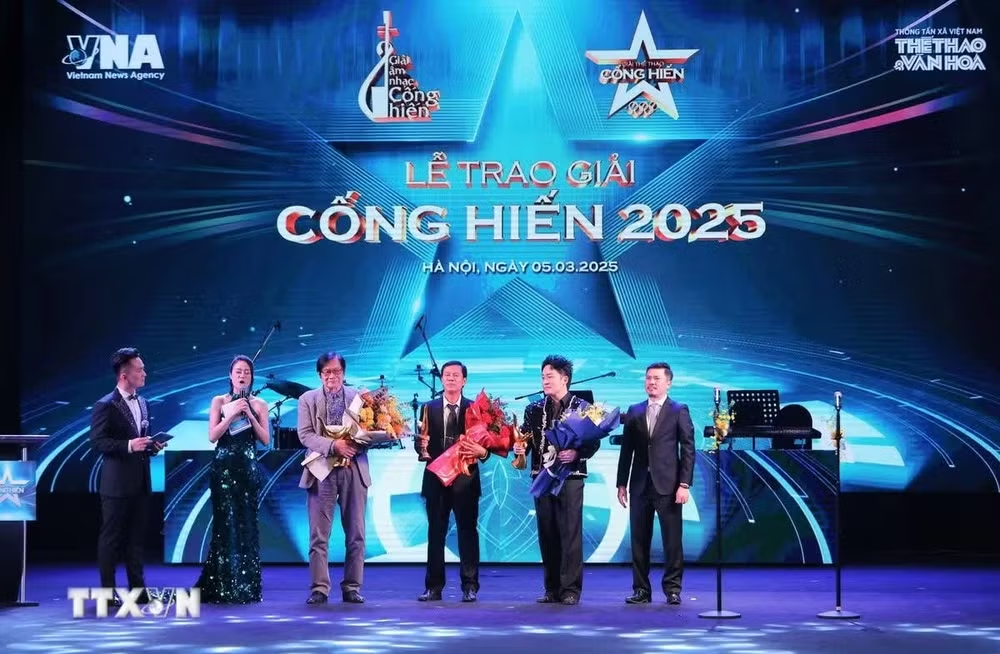
The organisers of the Cong Hien (Devotion) Awards present commemorative medals to composer Duong Thu, singers Tung Duong and My Tam, journalist Ngo Ha Thai - former Deputy General Director of the Vietnam News Agency, and journalist Huu Thinh. (Photo: VietnamPlus)

Nghia also cited cooperation between the Cong Hien (Devotion) Awards, organised by the Vietnam News Agency's The Thao & Van Hoa newspaper, and the Music Awards Japan as an example of cultural diplomacy that promotes artistic exchange and creates opportunities for regional cooperation.
hoithao-8.jpg
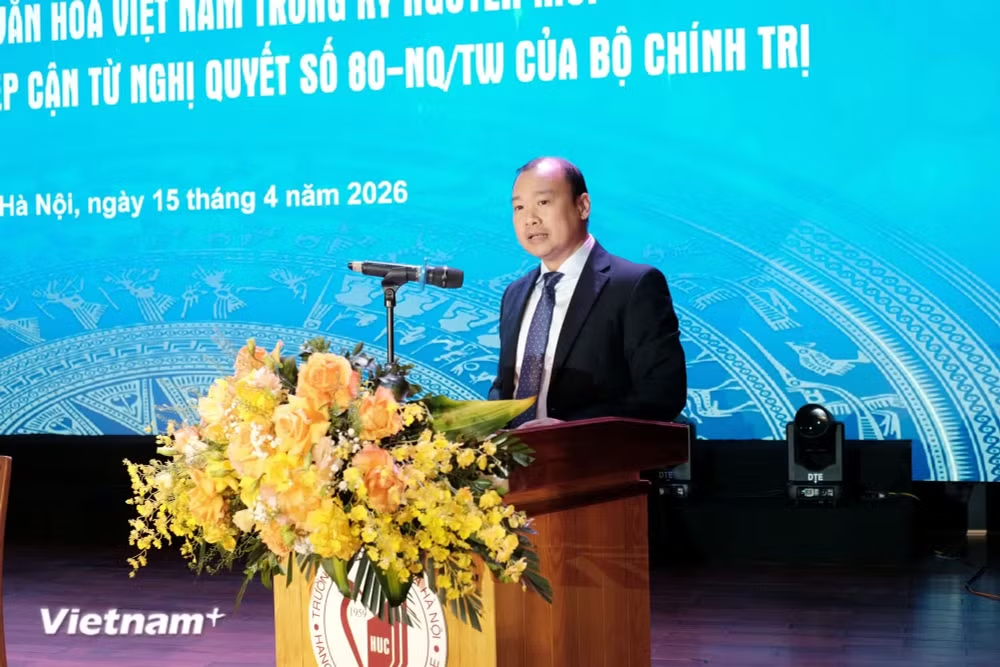
Associate Professor, Dr. Le Hai Binh, member of the Party Central Committee and Permanent Vice President of the Ho Chi Minh National Academy of Politics, delivers the closing remarks at the conference. (Photo: VietnamPlus)

Closing the conference, Associate Professor and Dr. Le Hai Binh, Permanent Vice President of the Ho Chi Minh National Academy of Politics, expressed hope that culture would be placed on an equal footing with economics and politics. This would enable every Vietnamese citizen not only to take pride in the nation's heritage but also to enjoy a richer and more humane cultural life in the new era./.
VNA

See more

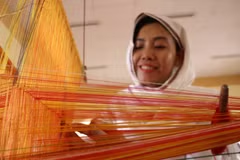
My Nghiep weaving village in Khanh Hoa province strives to keep tradition alive. (Photo: VNA)

Resolution paves way for Vietnam to unleash soft power

The implementation of Resolution No. 06 alongside the cultural diplomacy strategy sends a clear message: by combining its rich cultural heritage with proactive diplomacy, innovation and digital transformation, Vietnam would strengthen its competitiveness on the global stage.

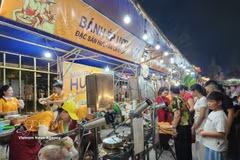
Visitors sample Hue's traditional specialties during the Hue Traditional Cuisine Week 2024. (Photo: VNA)

Hue city named among Asia's top destinations for traditional cuisine

Hue stood out for its imperial cuisine, a culinary tradition rooted in the city's history as the capital of the Nguyen Dynasty. Renowned for its refined flavours, meticulous preparation and artistic presentation, Hue's cuisine reflects centuries of royal and cultural traditions.

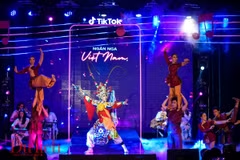
TikTok joins hands to launch the “Ngan Nga Vietnam" campaign, helping promote Vietnamese cultural identity and tourism on digital platforms (Photo: Ho Chi Minh City's Department of Tourism)

Creating Vietnamese cultural identity, sovereignty in digital space

Party General Secretary and State President To Lam has stressed the need to address bottlenecks hindering the transformation of culture into an endogenous resource, soft power and a driver of national development, as the appeal and reach of positive cultural values in the digital environment have yet to keep pace with the rapid growth of digital platforms and content.

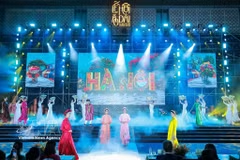
Models present "Ao dai" (Vietnam's traditional long dress) during the opening ceremony of the Hanoi Ao Dai Tourism Festival, a highlight of the capital city's creative journey. (Photo: VNA)

Resolution revitalises urban spaces through cultural resources

Hanoi has recently launched a series of initiatives to realise its vision of becoming a "Civilised – Distinctive – Creative" capital, where culture and innovation serve as key growth engines. Among the most notable are the creative infrastructure development programme and the 2026 creative space design competition, which encourage architects, designers and creative communities to revitalise former industrial sites, relocated facilities, traditional craft villages, parks, squares and other public spaces through innovative yet practical design solutions.

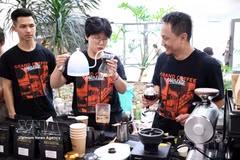
A barista demonstrates coffee brewing for visitors at the event. (Photo: VNA)

Central Vietnam's specialties inspire innovative coffee beverages

Businesses and coffee artisans in Da Nang city are reimagining the central region's signature specialties through creative coffee beverages, offering visitors distinctive flavours while adding value to OCOP (One Commune One Product) items and strengthening links between agriculture, culture, tourism and commerce.

Over 100 young overseas Vietnamese from 32 countries and territories join the Vietnam Summer Camp 2026. (Photo: VNA)

Vietnam Summer Camp 2026 wrapped up

Held from July 12 to 25 across eight cities and provinces, Vietnam Summer Camp 2026 offered a rich array of experiences. Participants explored historical landmarks, visited iconic cultural heritage sites such as the imperial city of Hue, Hoi An ancient town, and the My Son Sanctuary, and engaged in charitable activities valued at over 300 million VND (11,400 USD), including the installation of a "Youth Bookshelf."

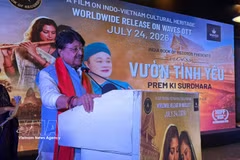
India's Madhya Pradesh Cabinet Minister Kailash Vijayvargiya speaks at the event. (Photo: VNA)

Film inspired by Vietnamese Quan Ho folk singing released globally

Produced by the India Book of Records (IBR) based on an idea by Prof. Dr. Chu Bao Que, "Love Garden" weaves Quan Ho folk singing into a bridge connecting past and present. The storyline follows a young Indian woman from Madhya Pradesh state who travels to the heartland of Quan Ho in northern Vietnam and performance stages in Hanoi to trace memories of her late mother.

A foreigner is drawn to Vietnam's traditional products at the Hanoi Tourism Gift Festival 2025. (Photo: VNA)

Vietnamese souvenirs tell everyday stories, drive creative economy

Today’s souvenirs capture the rhythm of everyday life: a “banh mi” (Vietnamese baguette) lapel pin, a sketchbook of Hanoi’s tangled streets, and illustrations of daily life in Ho Chi Minh City. They work because they paint a Vietnam that feels authentic, approachable and alive. Simple, compelling stories are giving cultural souvenirs a whole new appeal.

The organisers of the Hue Wonderverse Music Fest 2026 hold a press conference on the festival in the central city of Hue (Photo courtesy of the event's Organising Committee)

Hue to host international heritage, music festival

Themed "City Awakening – Awakening Heritage," Hue Wonderverse Music Fest 2026 aims to offer an immersive experience that combines Hue's rich cultural heritage with contemporary music, art and cutting-edge performance technology.

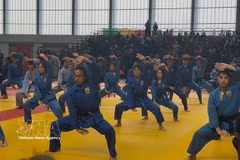
Martial artists perform in a mass demonstration at the opening ceremony. (Photo: VNA)

Ho Chi Minh City international traditional martial arts championship opens

Nguyen Nam Nhan, Deputy Director of the municipal Department of Culture and Sports and head of the organising committee, said Vietnamese traditional martial arts embody the essence of martial arts excellence, fostering a philosophy of life that upholds the values of Truth, Goodness, and Beauty, while continuing to gain recognition among the international community.

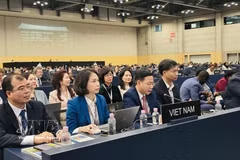
Deputy Minister of Foreign Affairs Ngo Le Van, Chairman of the Vietnam National Commission for UNESCO, addresses the session. (Photo: VNA)

UNESCO endorses vision for restoring Thang Long Imperial Citadel's central axis

The committee commended Vietnam for fulfilling the commitments it has made since the citadel was inscribed on the UNESCO World Heritage List in 2010, as well as for implementing recommendations from the committee and its advisory bodies. It also praised the country's efforts to preserve the site's cultural, historical and social values, transforming the imperial citadel into a space for public engagement, cultural exchange and historical education. The committee further welcomed the long-term vision as an important basis for the proposed restoration of Kinh Thien Palace in line with the approved conservation strategy.