Hanoi (VNA) – Vietnam has made significant progress on child protection, preventing early entry into the workforce and exposure to hazardous working conditions. But child exploitation remains a concern in some localities, particularly rural areas, craft villages, and small-scale household businesses.
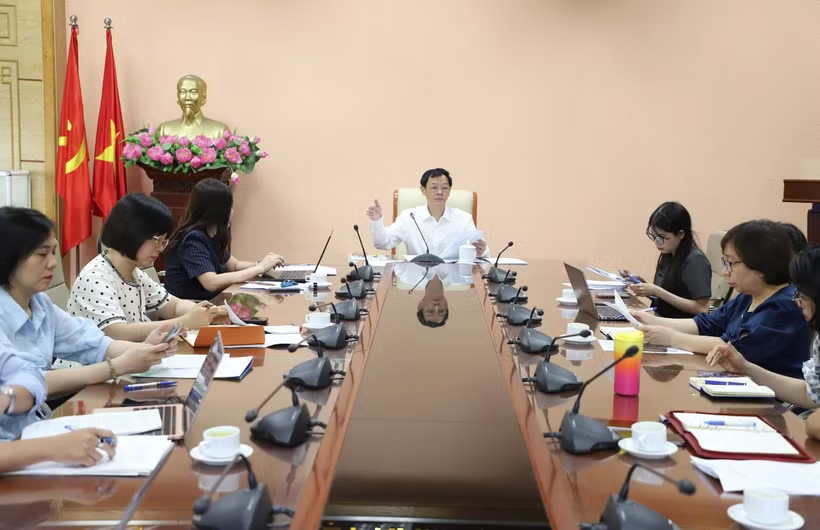
This underscores the need for comprehensive measures to curb child labour. The serious issue was taken up at a meeting of the compiling board for the National Programme on Child Protection and Child Labour Prevention and Reduction for 2026-2030 on June 11.
The programme is designed to fully institutionalise the Party’s guidelines and State policies and laws, as well as international commitments on ensuring children’s rights and protecting their legitimate interests. At the same time, it aims to ensure that children live in a safe, healthy, and equal environment and enjoy comprehensive development in physical, mental, and social aspects.
It also seeks to narrow disparities in access to child protection services among those in different living conditions across regions, particularly ethnic minorities living in remote and disadvantaged areas.
Deputy Minister of Health Nguyen Tri Thuc stressed that the programme should feature early intervention to ensure that children are not subjected to violence, sexual abuse or unlawful labour. Timely intervention and resolution are needed to minimise consequences, while active support should be provided to help affected children recover and reintegrate into the community.
He highlighted the importance of integrating ongoing programmes on child protection and the prevention of violence with new projects, to reduce overlapping activities and fragmented resources.
At the meeting, members of the compiling board discussed the draft decision promulgating the programme, targets through 2030, funding sources, and implementation assigned to ministries, sectors and localities.
The eight groups of tasks and solutions were also reviewed in terms of technical drafting, including reviewing, amending and supplementing laws, policies, procedures, standards and technical regulations on child protection; providing training and capacity building in child protection; and developing child protection service delivery systems. Measures to ensure safe, healthy and child-friendly family and educational environments, cyberspace and communities; prevent and combat violence against and sexual abuse of children and child labour were mulled over, along with promoting international cooperation and digital transformation in child protection.
Thuc said the development of the national programme is an urgent requirement to continue ensuring children's rights and fulfil Vietnam's international commitments.
To complete the draft and submit it to the Government and Prime Minister for promulgation by the end of June, he asked the ministry’s Department of Mothers and Child Health to coordinate with relevant agencies and members of the compiling board in finalising the document.
The draft should be concise, scientific and practical, follow proper procedures, cover all necessary content and closely reflect the relevant fields, he said.
All statistics and information must be scientifically grounded and supported by databases and reference materials, while terminology concerning children must conform to the Law on Children and relevant legal documents, he noted.
Thuc also stressed that prevention must be regarded as a priority in setting targets, with particular attention paid to disadvantaged children and those living in remote, mountainous, and island areas.
The programme must establish a unified coordination mechanism to mobilise the political system to protect children, their physical and mental health, provide access to education and social welfare, and promote sustainable development, he added./.