Vietnam to have 33 airports by 2030

Vietnam plans 33 airports by 2030, adding Mang Den and Van Phong to boost tourism, logistics and regional connectivity, with nearly 19 billion USD in investment to strengthen national infrastructure.

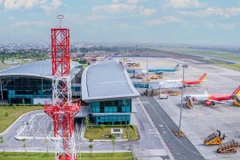
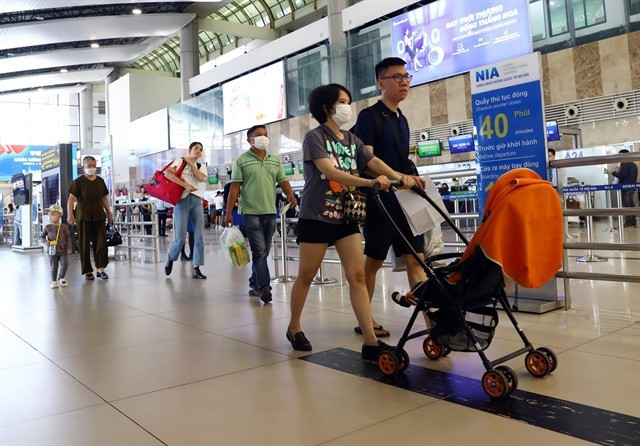
Passengers at Noi Bai International Airport. (Photo: VNA)

Hanoi (VNS/VNA) - Vietnam is set to have 33 airports with a total capacity of 297 million passengers by 2030, according to a newly adjusted master plan from the Civil Aviation Authority of Vietnam (CAAV).

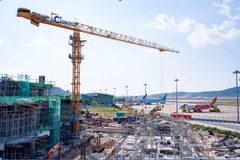
The CAAV’s plan, submitted recently to the Ministry of Construction for review, outlines adjustments to the national airport and seaport system for the 2021-2030 period, with a vision to 2050. It estimates that nearly 500 trillion VND (19 billion USD) will be needed to develop the country’s airport system by 2030, sourced from the State budget, non-budgetary capital and other legal sources.

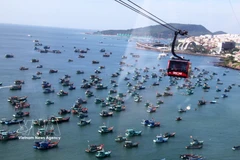
Under the new plan, Mang Den and Van Phong airports will be added to the national system.

Previously, under a planning system approved by the Prime Minister, Van Phong Bay in Khanh Hoa province was designated as a service-logistics centre, while Mang Den town in Quảng Ngai province was identified as a national tourist area, with infrastructure including an airport to connect the Central Highlands and Central Coast.

The planning for Khanh Hoa province allocates land for Van Phong Airport, while Quang Ngai province and the general Mang Den tourist area planning identify Mang Den Airport as a key infrastructure project.

The CAAV said the inclusion of the Mang Den and Van Phong airports in the master plan is necessary to align with national, regional and provincial development goals, attract private investment, support tourism and logistics, strengthen regional connectivity, and bolster national defence and security in the south central and Central Highlands regions.

The Mang Den Airport is estimated to cost nearly 5 trillion VND and cover about 350 hectares, while the Van Phong Airport will require more than 9.2 trillion VND and occupy over 497 hectares./.
VNA

See more

From early December, major retail chains in Ho Chi Minh City have recorded a noticeable increase in shoppers seeking Tet products. (Photo: VNA)

HCM City businesses ramp up production to meet Lunar New Year demand

From early December, major retail chains in the city have recorded a noticeable increase in shoppers seeking Tet products. Many consumers are taking advantage of promotional programmes to purchase gift items with long shelf lives, such as confectionery, soft drinks and processed foods, well ahead of the holiday peak.

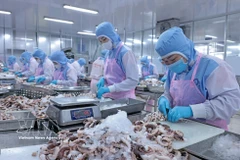
Workers process fish to be tinned for export at KTC Canned Food Factory under Kien Giang Trading JSC. (Photo: VNA)

Vietnam to host seminar on export growth strategies

Vietnam's exports rose 16.1% to 430.2 billion USD in the first 11 months of 2025, while total trade hit 839.8 billion USD during the same period. This strong performance shows that exports remain a key driver of economic growth, boosting Vietnam's standing on the world stage in recent years.

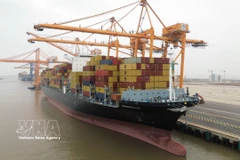
The vessel carrying the 2 millionth TEU arrives at Hai Phong Port. (Photo:VNA)

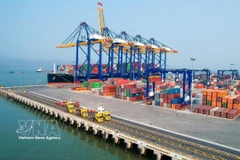
Hai Phong Port reaches 2-million-TEU milestone

Handling the 2 millionth TEU in 2025 not only demonstrates Hai Phong Port’s operational capacity and the collective efforts of its workforce, but also highlights its increasingly important role in regional and global supply chains, the confidence of shipping lines, logistics firms and the business community, and the effectiveness of policies to improve the investment climate and strengthen maritime infrastructure and services.

Melons labelled with traceability codes on display at the Song Van agricultural produce store in Ninh Binh city, Ninh Binh province. (Photo: VNA)

Tracing origins hindered by fragmented data systems

As the Government accelerates the digital economy, establishing a unified national traceability system has become a crucial move to end data fragmentation and disconnection among ministries, sectors and localities.

Hyundai unveils its new Avante Hybrid model in Seoul, the Republic of Korea, on August 13, 2020. (Photo: Yonhap/VNA)

Tax cuts poised to ignite Vietnam’s hybrid vehicle boom from 2026

Experts forecast that 2026-2030 will mark a period of strong growth for hybrid vehicles in Vietnam, a trend that will invigorate the automotive sector while supporting national objectives on emissions reduction, sustainable development and the broader transition to green mobility.

Illustrative image (Photo: VNA)

Vietnam targets 1 billion USD in banana exports

Bananas have been identified as a priority product under the Project for the Development of Key Fruit Crops to 2025, with a vision to 2030, approved in October 2022. Under the plan, banana acreage is projected to reach 165,000–175,000ha by 2030, with output of 2.6–3 million tonnes.

Deputy Minister of Foreign Affairs Nguyen Minh Hang (Photo: VNA)

Event connects Vietnamese businesses with African countries

Deputy Foreign Minister Nguyen Minh Hang held that to develop Vietnam – Africa ties more strongly and substantively, it is necessary to promote the engagement of businesses, and that the Government will create favourable conditions for them to enhance fruitful cooperation.

Deputy Prime Minister Ho Duc Phoc (R) and Independent Non-executive Chairman of AIA Mark Tucker at their meeting in Hanoi on December 12. (Photo: VNA)

AIA Group envisions long-term investment, cooperation in Vietnam

Over 25 years of operation in Vietnam, AIA has achieved positive results. Its premium revenue ranks among the top five life insurers, reaching nearly 14.83 trillion VND (563.71 million USD) in 2024 and an estimated 15.73 trillion VND in 2025, equivalent to around 10% of the market share.

A view of the 2025 Japan business roundtable in HCM City on December 12. (Photo: VNA)

Ho Chi Minh City courts Japanese investment with growth blueprint

Ha underscored the pivotal contributions of Japanese firms, which have long supported local socio-economic progress through major infrastructure projects, industrial zones and workforce training courses. To date, Japanese companies have invested more than 15 billion USD in over 2,200 projects, reflecting sustained confidence and commitment to the market.