Hanoi (VNA) – Vietnam's tourism sector is entering a new stage of development, supported by major Party and Government policies that are creating unprecedented opportunities for growth. However, experts say long-standing bottlenecks must be addressed if tourism is to become a true driver of the national economy.
Recent resolutions issued by the Party Central Committee, the Politburo and the Government have laid a strong foundation for the sector. They include Resolution No. 80-NQ/TW on the development of Vietnamese culture, Resolution No. 57-NQ/TW on breakthroughs in science – technology development, innovation and digital transformation, and Resolution No. 68-NQ/TW on private-sector development.
These policies are expected to accelerate digital transformation, strengthen international integration, attract strategic investors, and foster closer links among tourism, culture, and heritage industries.
Yet tourism professionals believe significant challenges remain.
Long-standing bottlenecks
Nguyen Quoc Ky, Chairman of the Vietravel Holdings, said the industry continues to face several structural weaknesses.
These include investment policies that lack strong incentives, insufficient transport and tourism infrastructure, limited connectivity between airports, seaports and tourism logistics, and inadequate international marketing due to limited resources.
Although Vietnam offers a wide range of tourism products, many lack depth and fail to provide integrated, high-value experiences for visitors, he noted. In addition, the proportion of professionally trained tourism workers remains below the level required for a key economic sector.
From the perspective of local authorities, Nguyen Trung Ngoc, Director of the Tuyen Quang Department of Culture, Sports and Tourism, said the industry's shift from pursuing visitor numbers to improving quality is the right direction.
However, while Vietnam is now capable of welcoming tens of millions of international visitors annually, average tourist spending remains relatively low, he pointed out.
Ngoc noted that in destinations such as Thailand, the Republic of Korea and Japan, where competitive tour packages and airfares are advantages, the majority of revenues comes from shopping, entertainment and other consumption activities of visitors. Vietnam, by contrast, still lacks enough compelling products and services that encourage tourists to spend more during their stay.
Deputy Minister of Culture, Sports and Tourism Ho An Phong said that after nine years of implementing Politburo Resolution No. 08-NQ/TW on developing tourism into a spearhead economic sector, Vietnam has achieved important progress.
However, changing circumstances require a more breakthrough mindset, he noted, adding that the ministry is currently preparing a comprehensive review of the resolution implementation and drafting proposals for a new Politburo resolution to establish a stronger legal framework for the industry's next phase of development.
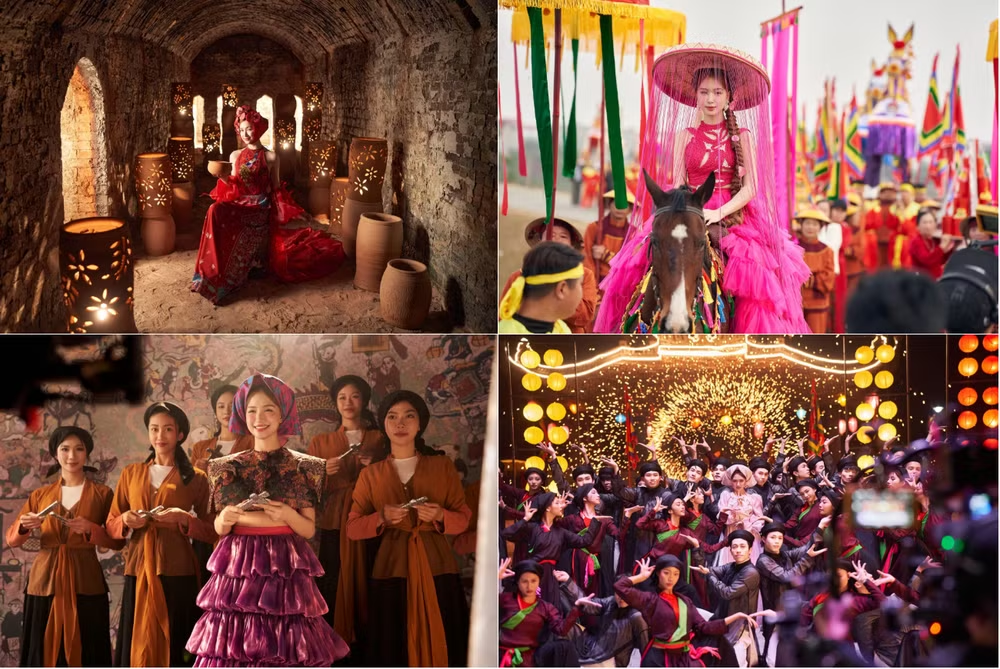
Offering distinctive experiences, not just scenery
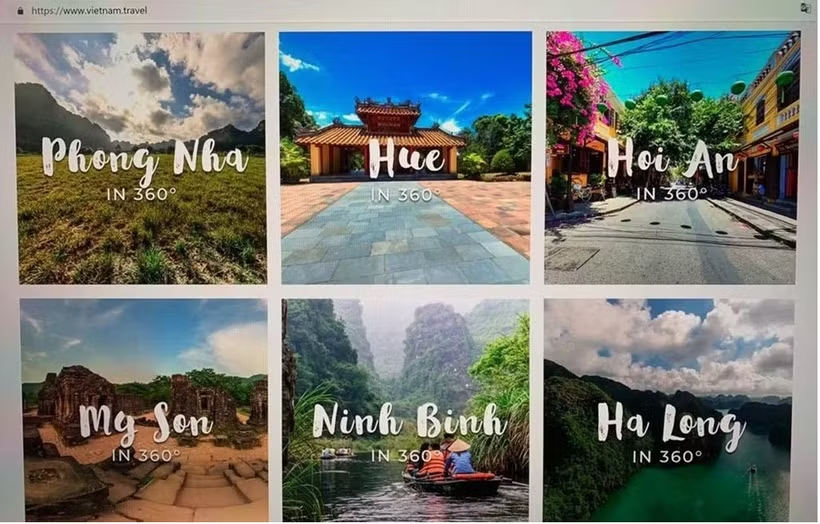
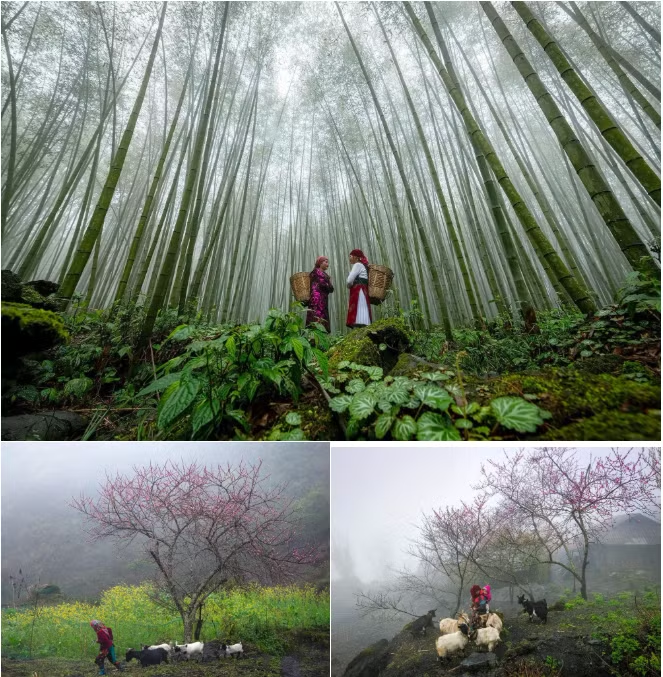
Officials, tourism authorities and business representatives agreed that Vietnam should move beyond simply showcasing scenic landscapes and instead offer distinctive cultural experiences.
They stressed that tourism development must be guided by comprehensive and methodical planning while placing greater emphasis on authenticity, unique visitor experiences and cultural identity to improve competitiveness.
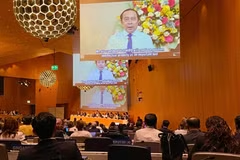
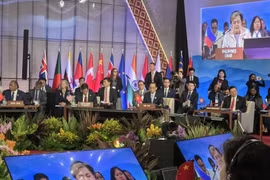
Speaking at a nationwide tourism policy dialogue organised by the Ministry of Culture, Sports and Tourism, Director of the Hue municipal Department of Tourism Tran Thi Hoai Tram proposed special policy mechanisms for heritage cities to facilitate the preservation and promotion of cultural assets for tourism development.
She also called for greater investment in high-end tourism infrastructure, including international airports, expressways, cruise ports and marinas, alongside expanding Vietnam's tourism promotion offices in key overseas markets.
Meanwhile, Ngoc also urged stronger support from central authorities through funding, digital transformation, innovation, workforce training and infrastructure investment to help local destinations unlock their tourism potential.
Representatives from local governments and tourism businesses recommended accelerating the development of a national tourism database to support policymaking, forecasting and destination management. They also called for greater flexibility in regulations governing business operating hours and cultural activities after 10 p.m. to encourage the growth of the night-time economy.
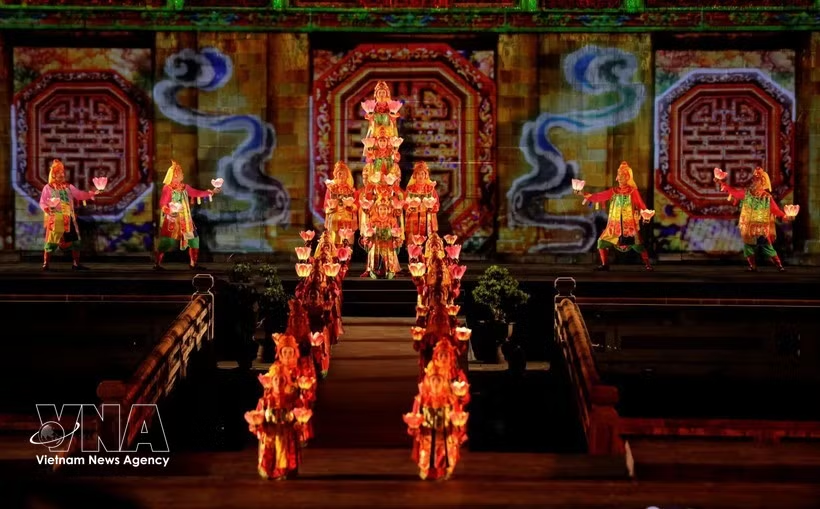
Despite modern infrastructure or spectacular landscapes, tourism cannot thrive if visitors are offered only beautiful scenery without meaningful cultural experiences, experts said.
Nguyen Thuy Yen, Deputy Director of the Quang Ninh provincial Department of Culture, Sports and Tourism, proposed adding another principle to the industry's development strategy. Alongside making culture the foundation and heritage a source of competitiveness, people should be recognised as the centre and driving force of tourism.
She explained that this includes not only tourism professionals but also local residents and visitors.
Ultimately, regardless of how attractive a destination appears, what leaves the deepest impression on visitors is the authenticity, hospitality and cultural identity shared by local communities — the true ambassadors of Vietnam's tourism./.
Eight key solutions for tourism development
A draft project on developing tourism into a spearhead economic sector in the new era is currently being discussed by the drafting team and relevant agencies.
The draft identifies eight key groups of solutions:
• Renewing thinking and raising awareness of tourism development;
• Improving regulations and policies;
• Developing tourism infrastructure;
• Restructuring tourism markets and diversifying products;
• Strengthening tourism promotion the Vietnam tourism brand;
• Developing tourism human resources, enterprises and local tourism communities;
• Accelerating science, technology, innovation and digital transformation; and
• Reforming governance while improving the quality of green, smart, sustainable and safe tourism destinations.