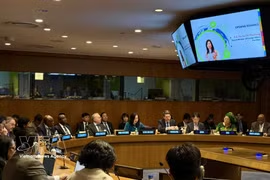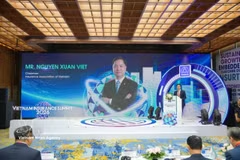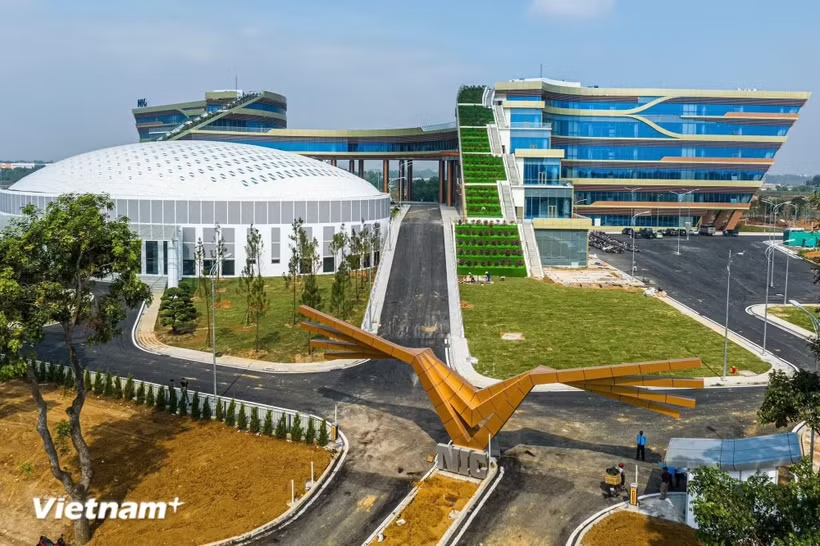
Hanoi (VNA) – The Vietnam-US Innovation Forum on Developing Advanced Energy for Strategic Technology Sectors has reinforced Vietnam's strategic policy agenda while creating new opportunities to expand international cooperation in support of emerging high-tech industries.
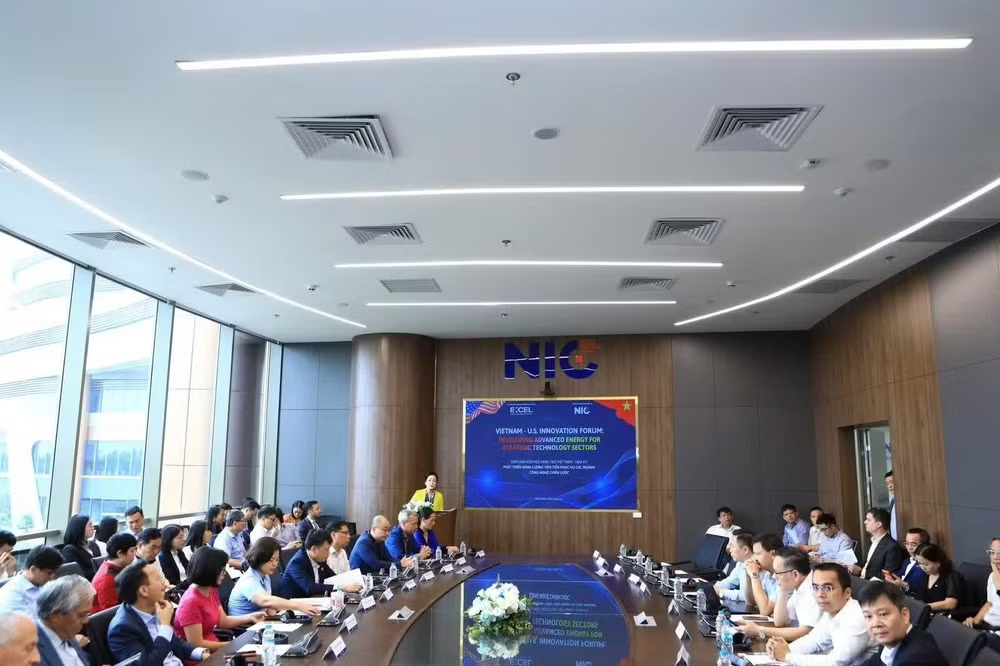
The event was held on May 8 in Hanoi by the National Innovation Centre (NIC) under the Ministry of Finance, in partnership with US-based EXCEL Services Corporation, aiming to support the implementation of the Politburo's Resolution No. 57-NQ/TW and the Prime Minister's Decision No. 21/2026/QD-TTg, laying the groundwork for modern energy infrastructure to underpin Vietnam's technological ambitions.
Advanced energy key to technological growth
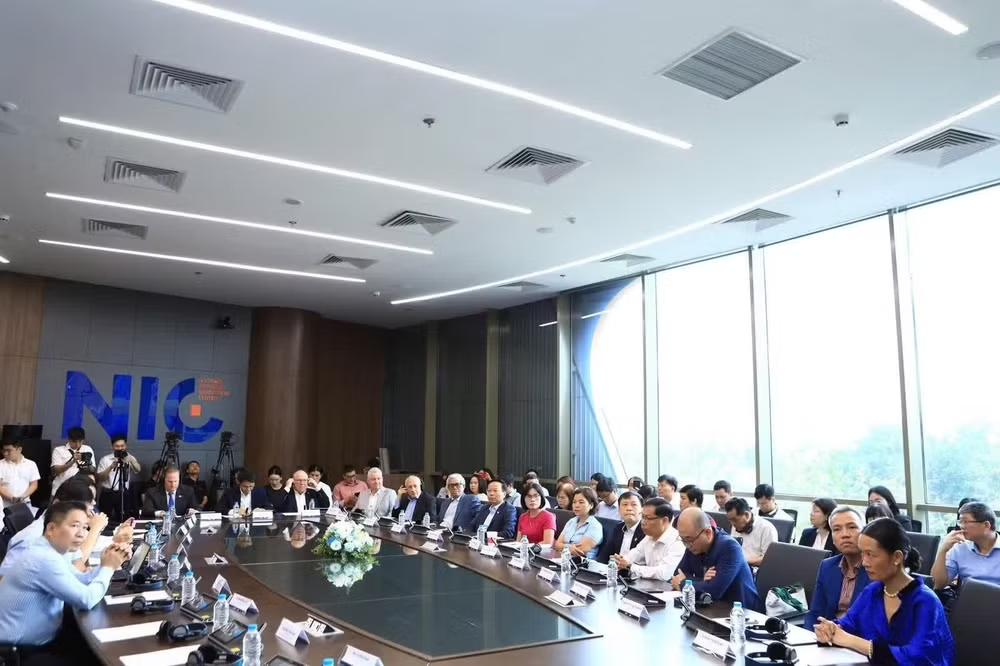
Speakers agreed that attracting global technology investors and achieving double-digit economic growth will require Vietnam to move beyond conventional energy sources and accelerate the deployment of advanced energy technologies, including next-generation safe nuclear power.
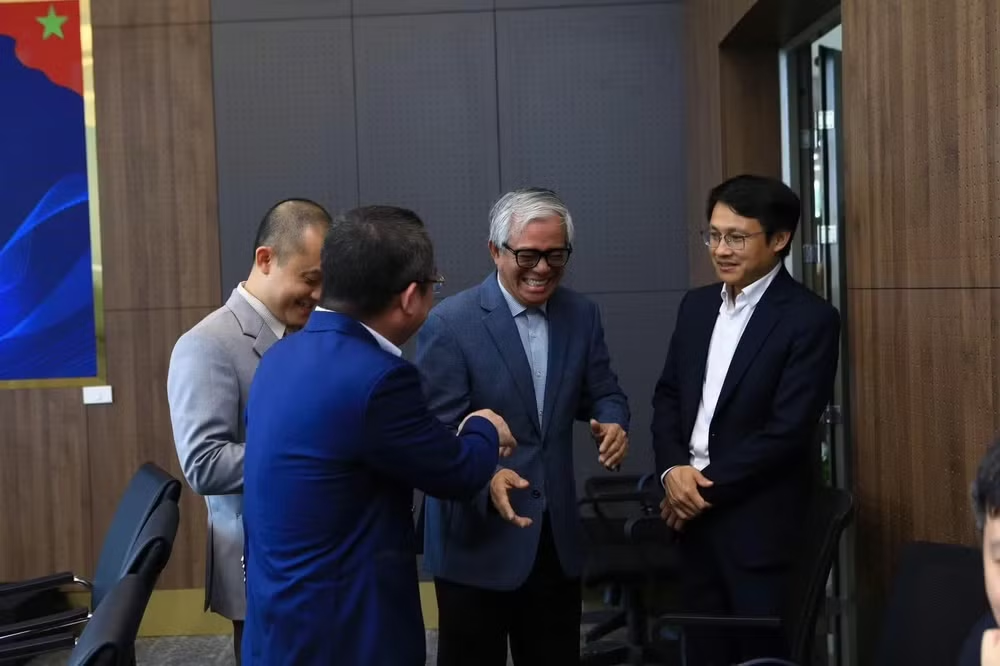
(Photo: VietnamPlus)
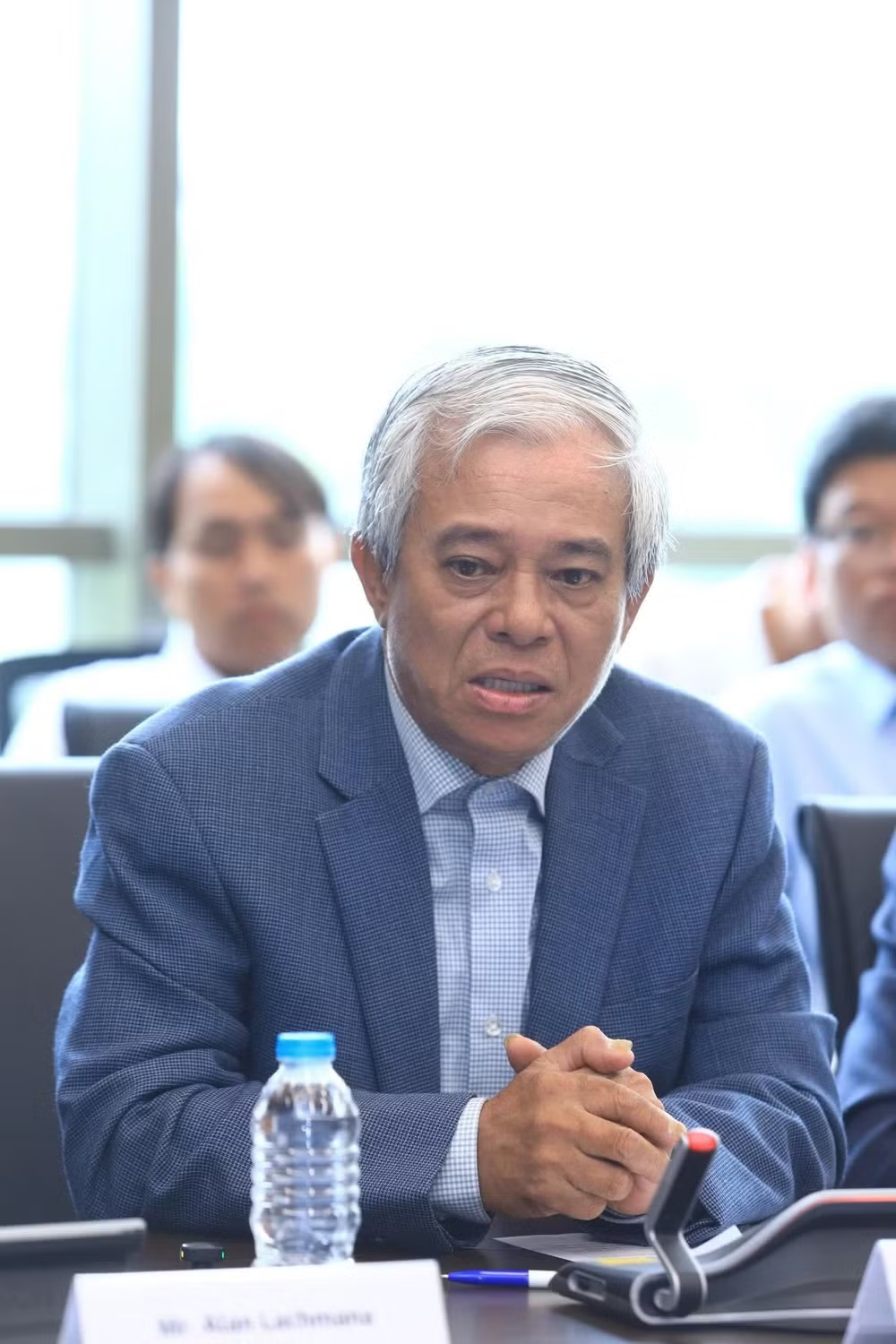
According to NIC Deputy Director Vo Xuan Hoai, strategic technology industries increasingly depend on large-scale, sustainable energy infrastructure. As electricity demand is expected to rise sharply from 2026 onwards, Vietnam will need coordination among government agencies, businesses and international partners to build an integrated energy ecosystem to support long-term economic competitiveness.
James Voss, Vice President of EXCEL Services Corporation, recalled comments from semiconductor investors at SEMICON Vietnam 2025. He said many viewed Vietnam favourably for its workforce and business environment but remained concerned that its current energy system cannot meet industry requirements.

Voss noted that AI and information technology industries require power supply reliability of 99.999%, with outages restored within 30 seconds. To meet these demanding standards, EXCEL Services has proposed developing three advanced energy hubs serving the high-tech parks in Hoa Lac (Hanoi), Da Nang, and Ho Chi Minh City. The proposal combines small modular reactors (SMRs) and micro-reactors with vanadium flow battery storage and smart microgrids.
Meanwhile, Donald R. Hoffman, President and CEO of EXCEL Services, said the company aims to complement rather than replace Vietnam's telecommunications and electricity providers by supplying on-site power generation. Surplus electricity could be fed back into the national grid, easing pressure on transmission infrastructure while benefiting surrounding communities.
From technology transfer to energy security
From a policy perspective, former Deputy Minister of Foreign Affairs Pham Quang Vinh described advanced energy as an increasingly important pillar of the Vietnam-US Comprehensive Strategic Partnership. Following recent high-level exchanges, he said the US had signalled a willingness to review export restrictions under the D1 and D3 regulations governing advanced technologies, creating an opportunity for Vietnam to gain greater access to cutting-edge nuclear and clean energy technologies.
However, he stressed that deeper cooperation will depend on building mutual trust. Technology transfer is best achieved through workforce development and joint ventures involving Vietnamese and international partners. Beyond political commitments, this also requires a robust legal framework and internationally recognised nuclear safety standards, areas that the Ministry of Science and Technology and the Ministry of Industry and Trade are currently working to strengthen.
The proposed energy programme for the three high-tech zones is expected to require 3-4 billion USD in investment. Voss suggested financing the projects through long-term power purchase agreements rather than public funding.
He noted that many companies operating in high-tech parks possess strong credit ratings. If firms such as Nvidia or Microsoft commit to purchasing electricity under 20-30-year contracts, those agreements could serve as bankable assets to attract international financing without relying on government guarantees or state budget resources.
This financing model could ease pressure on public debt while enabling Vietnam to develop world-class energy infrastructure.
The implementation is planned in two phases. During the first 1-2 years, partners will conduct feasibility studies supported by 2 million USD in technical assistance from the US Trade and Development Agency (USTDA), while seeking an additional 5 million USD from companies in high-tech parks to fund investment and engineering studies.
Over the following 2 - 5 years, the programme aims to install micro-reactors to achieve energy self-sufficiency for strategic industries by 2030.
Representatives from the Ministry of Science and Technology and the Ministry of Industry and Trade said Vietnam is refining its legal framework and policy mechanisms for nuclear power, with a focus on safety, international standards and domestic conditions.
The forum also explored opportunities for cooperation in education and workforce development, particularly in energy and engineering, to build a pool of specialists capable of supporting large-scale technology projects./.