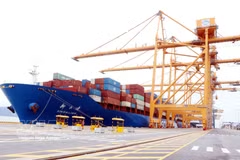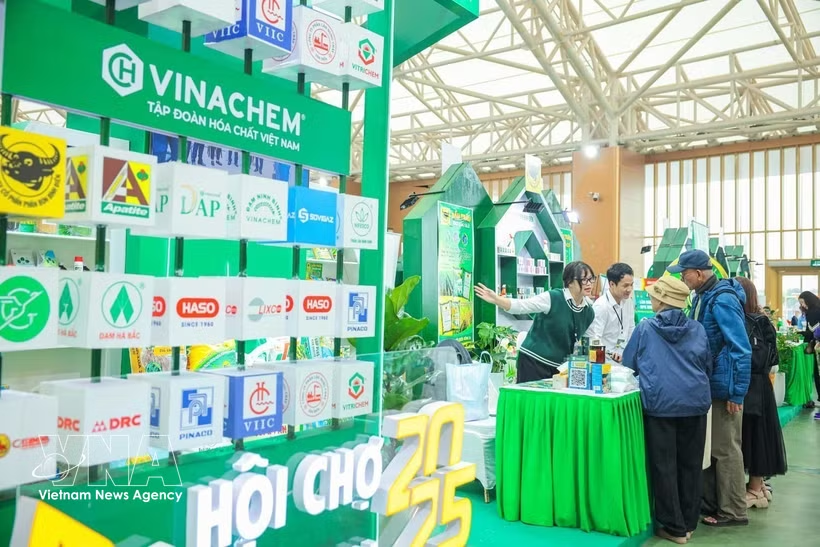
Hanoi (VNA) - After four decades of Doi Moi (renewal), Vietnam is seeking to shift its growth model from reliance on capital, natural resources and low-cost labour towards productivity, technology, innovation and higher value-added activities, as businesses face growing pressure to strengthen competitiveness and move up global value chains.
This is a key requirement of Resolution No. 19-NQ/TW on renewing the national development model, which aims to modernise traditional growth drivers and gradually build a self-reliant, innovative, humane, sustainable and internationally integrated development model.
From participation to mastery of value chains
The resolution identifies enterprises as the centre of the renewal process, urging them to shift from cost-based competition to productivity, technology, quality and market responsiveness; from operating independently to joining industrial ecosystems; and from participating in value chains to mastering and eventually leading them.
Few enterprises can meet these requirements alone, however, making cooperation and the sharing of technology, capital, markets and management experience essential to building complete value chains.
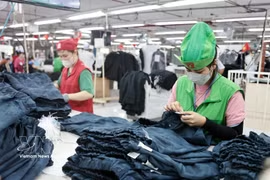
Cao Huu Hieu, General Director of the Vietnam National Textile and Garment Group (Vinatex), said the group is promoting cooperation, gradually mastering technologies and securing higher-value links in the chain. It is also helping small enterprises improve productivity and develop their own products, aiming to complete the chain from design and material supply to finished products.
This approach is expected to raise enterprise value, strengthen the textile and garment industry's competitiveness and build an ecosystem capable of meeting partners' requirements.
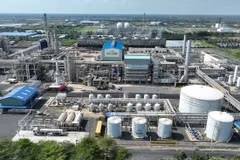
The Vietnam National Chemical Group (Vinachem), meanwhile, is focusing on technology mastery and investment in science, technology and human resources.
Vinachem Chairman Phung Quang Hiep said the group is investing about 1.5 trillion VND (57.3 million USD) in a 3ha research, development, science, technology and innovation centre at Hoa Lac Hi-Tech Park in Hanoi. The centre will connect businesses with research institutes, universities and technology partners, helping commercialise research results and improve self-reliance in materials and core technologies.
This is expected to provide a foundation for Vinachem to strengthen its self-sufficiency in raw materials, master core technologies, boost productivity, and gradually cement its role as a key player in Vietnam’s chemicals and fertiliser industries.
The renewal of the development model also requires changes among enterprises providing essential infrastructure and services.
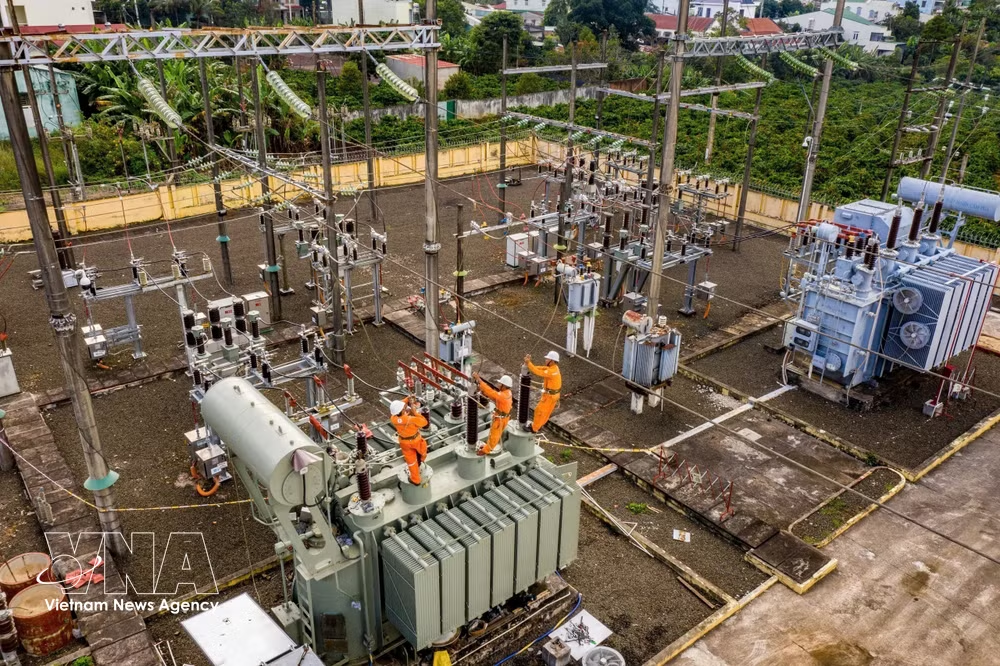
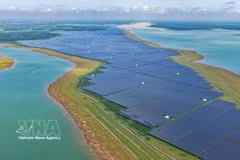
Nguyen Anh Tuan, President and CEO of Vietnam Electricity (EVN), said the group has invested in power generation and grids, strengthened transmission capacity and prepared infrastructure for high-tech industries, semiconductors, artificial intelligence, data centres and electric transport.
EVN is also shifting towards data-driven management, accelerating automation and applying AI, the Internet of Things and Big Data to grid operation, load forecasting and smart energy management. It is promoting green transformation, applying environmental, social and governance (ESG) criteria, improving efficiency, reducing losses and increasing renewable-energy integration.
Leveraging for enterprises
The experiences of Vinatex, Vinachem and EVN show that enterprises are not merely beneficiaries but direct actors in implementing Resolution No. 19-NQ/TW.
Enterprises need to master high-value links in supply chains, core technologies and branding, while small and medium-sized enterprises should view research and development, intellectual property, data, technology, human resources and digital transformation as long-term investments in competitiveness.
Effective cooperation among businesses, research institutes and universities can unlock the potential of industrial ecosystems.
Deputy Secretary General of the Vietnam Chamber of Commerce and Industry (VCCI) Dau Anh Tuan said the State should remove institutional and business-environment bottlenecks and improve policies supporting technology, capital, innovation and business linkages.
For major projects, incentives should be tied to developing domestic suppliers and achieving substantive localisation, backed by mechanisms to verify results.
Supply-chain financing should also help small suppliers access capital based on contracts and receivables from lead firms, turning the strength and credibility of major enterprises into leverage for smaller businesses.
Only by strengthening individual enterprises, tightening links and building effective ecosystems can new growth drivers become real economic capabilities rather than expectations./.