Hanoi (VNA) – As Vietnam moves forward with the restructuring of its State-owned shipbuilding sector, enterprises are seeking investors with strong financial capacity, industry expertise, and a long-term commitment to sustaining and developing the country’s shipbuilding industry.
While continuing production and business operations and implementing restructuring measures under the Government’s Resolution No. 220, shipbuilding enterprises are looking to a post-restructuring future in which strategic investors take over existing shipyards, helping sustain the maritime economy while supporting national defence and security objectives.
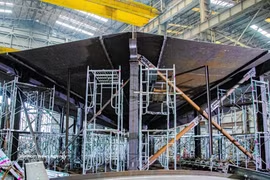
According to Vu Huu Chien, General Director of Pha Rung Shipbuilding Company under the Shipbuilding Industry Corporation (SBIC), the company has completed key steps required under the restructuring process, including creditor verification, asset inventory, and valuation. At the same time, it is operating normally with several export shipbuilding and ship repair contracts.
Chien stressed that any restructuring solution must avoid disrupting production activities. Given that most of the company’s contracts are for international customers, inappropriate handling could lead to delays, contract cancellations, and financial penalties, potentially affecting not only the company but also the reputation of Vietnam’s shipbuilding industry in global markets.
He also called for production assets to be sold as integrated packages rather than being dismantled or auctioned separately. This approach would maximise asset value recovery for the State and creditors while preserving existing production chains.
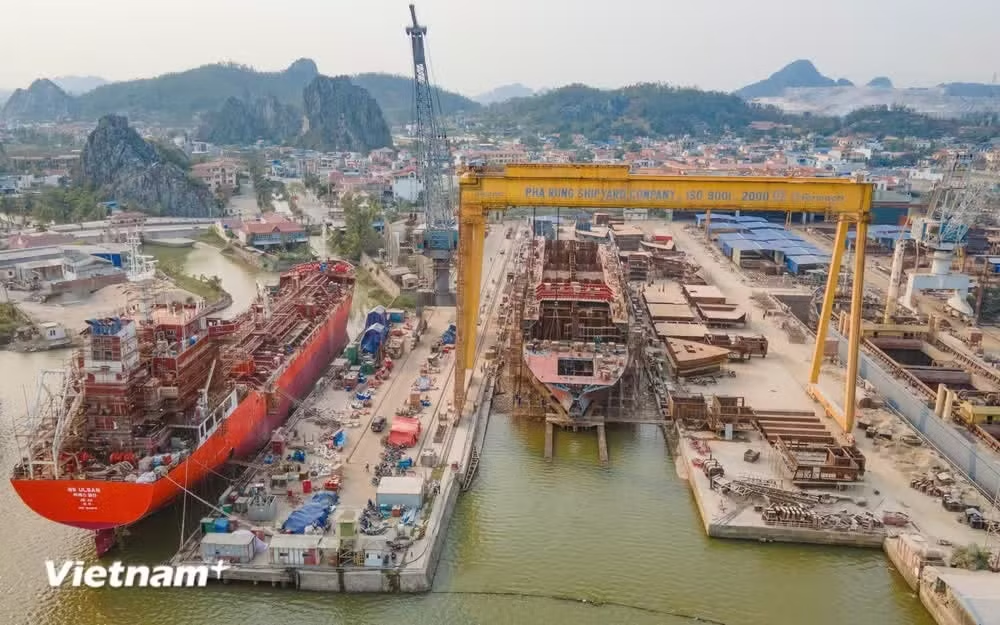
Similar concerns have been raised by Ha Long Shipbuilding Company, which is currently working on 19 new vessel orders.
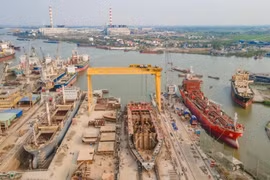
Its General Director Nguyen Van Manh warned that relocating the shipyard will result in significant losses, as key infrastructure such as docks, slipways, workshops and heavy-lifting systems are permanently attached to the site and will retain little value if moved. He said selling the entire production complex as a unified asset will be far more efficient than dismantling facilities or relocating operations.
Maintaining shipyard operations, Manh noted, is not merely a business issue but one that affects employment, social welfare, local socio-economic development and the long-term competitiveness of Vietnam’s shipbuilding sector.
He added that one of the most challenging issues facing shipbuilding enterprises is that planning arrangements for their operating locations remain unchanged and are still subject to provincial and local development plans.
He expressed his concern that transferring assets as a bundled package without including the associated land-use rights would have little practical value. If such a package sale were to be carried out, the authority to make decisions would rest with local administrations.
Therefore, Ha Long Shipbuilding Company called on competent authorities to assess the potential impacts that planning changes could have on business operations and future development. Such assessments will provide a basis for selecting appropriate master plans and functional zoning schemes, while establishing a feasible implementation roadmap for each development area to prevent wastefulness and safeguard state-invested assets, the company said.
Leaders of shipbuilding firms therefore urged authorities to facilitate restructuring plans that prioritise attracting investors capable of taking over and continuing factory operations. They called for support in resolving land-use procedures, improving the investment environment and creating conditions that enable new investors to maintain production after acquisition.
They also emphasised that the post-restructuring phase should focus on selecting investors with proven financial strength and experience in shipbuilding and mechanical engineering, while stressing the importance of preserving the sector’s skilled workforce, implementing clear business strategies suited to existing facilities, investing in infrastructure upgrades, and, above all, demonstrating a long-term commitment rather than pursuing short-term gains or asset resale opportunities./.