Vietnamese lychees hit Costco shelves, opening up greater export opportunities

Costco, which operates 635 stores across the US and Canada, is now offering Vietnamese lychees under the “Golden Lychees” brand. The fruit is grown in Vietnam following GlobalGAP standards and imported by Dragonberry Produce, one of the top premium produce importers in the US.

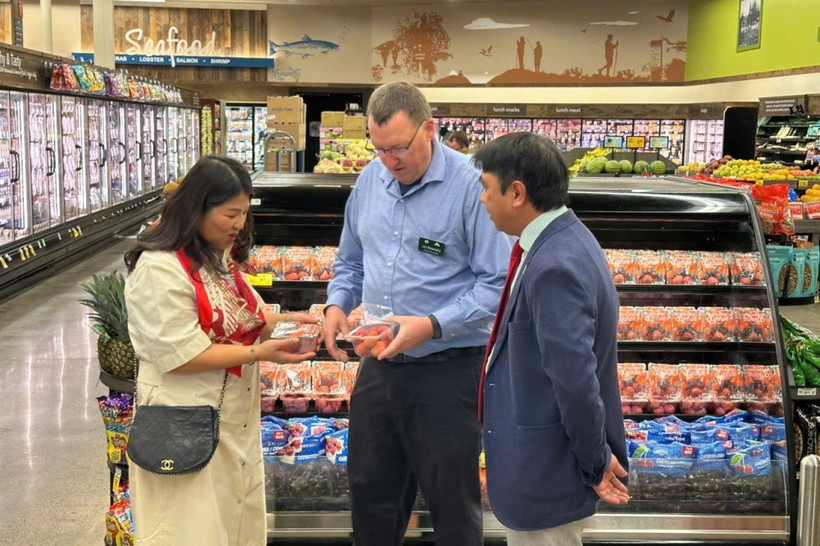
Bringing Vietnamese lychees to a high-profile retailer like Costco is not only a commercial achievement but also a testament to the effectiveness of a well-coordinated supply chain. (Photo: Industry and Trade Magazine)

Hanoi (VNA) – In early July, Vietnamese lychees made their debut at Costco, the largest retail chain in the US, marking a significant step forward for Vietnam’s fruit exports, according to the Vietnam Trade Office branch in San Francisco.

Costco, which operates 635 stores across the US and Canada, is now offering Vietnamese lychees under the “Golden Lychees” brand. The fruit is grown in Vietnam following GlobalGAP standards and imported by Dragonberry Produce, one of the top premium produce importers in the US.

After undergoing irradiation treatment in Vietnam to meet the US's strict plant quarantine regulations, the lychees were shipped by sea to ensure both freshness and compliance with safety standards.

This marks the third consecutive year that Dragonberry Produce has brought Vietnamese lychees to the US market. In the face of growing global competition, particularly from other Asian countries, the placement of Vietnamese lychees in a major US retail chain reinforces the quality and export readiness of the nation’s agricultural products.

According to the Ministry of Industry and Trade’s Agency of Foreign Trade, the global lychee market is projected to grow strongly in the coming years, reaching an estimated value of 8.79 billion USD by 2028. This growth is fueled by rising international demand and expanded production, especially across Asia.

China remains the world’s largest lychee producer and exporter, with an annual output of approximately 2 million tonnes. Other major producers include India, Thailand, Indonesia, and the Philippines, contributing to the regional and global supply chain.

Bringing Vietnamese lychees to a high-profile retailer like Costco is not only a commercial achievement but also a testament to the effectiveness of a well-coordinated supply chain. Dragonberry Produce has worked closely with Vietnamese cooperatives and businesses to standardise production processes and ensure consistent product quality. The company also plans to expand its imports to include other Vietnamese fruits such as longan, dragon fruit, and passion fruit to further boost the country’s fresh fruit exports.
vai.jpg
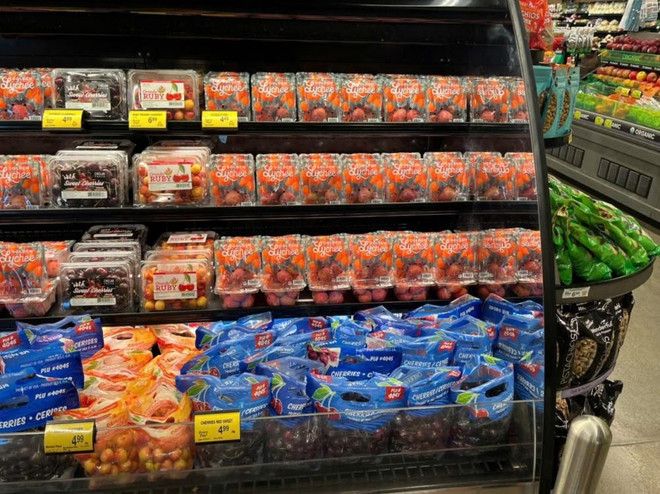
Vietnamese lychees enter large retail systems such as Safeway and Costco. (Photo: Industry and Trade Magazine)

As many major global retailers are actively diversifying their supply chains, Vietnam is increasingly recognised as a reliable source of high-quality agricultural products.

However, to have their products enter foreign retail networks, Vietnamese producers and exporters must comply with strict international standards for plant and animal quarantine, origin traceability, and transparency in labour and environmental practices.

To meet these requirements, experts recommended greater collaboration with importing countries to adopt suitable technologies from cultivation and processing to harvesting and distribution. More importantly, farmers and businesses must take the lead in embracing green transition and circular economy models to align with new global trade and investment standards.

Once more Vietnamese fruits appear on international supermarket shelves, consumers will gain clearer insights into the origin and quality of the products. This not only helps build brand recognition but also enhances the added value of each exported items./.
VNA

See more

A production line for electrical wires at Bandai Vietnam Co., Ltd., in Bo Trai Industrial Park in Hoa Binh ward of Phu Tho province. (Photo: VNA)

High-quality FDI expected to drive new growth model

The resolution calls for a shift in development mindset, positioning FDI as a key driver of growth model transformation, with a focus on quality, value addition and continuous improvement of intrinsic capacity and self-reliance of the economy. Many experts and businesses believe the policy provides a timely strategic boost, helping Vietnam to capitalise on the ongoing global supply chain realignment.

Workers produce sportswear at AMPFIELD (Vietnam) Co., Ltd. in the Tan Binh Industrial Park, Ho Chi Minh City. (Photo: VNA)

Ho Chi Minh City shifts focus to new-generation FDI

Ho Chi Minh City is currently home to 20,259 FDI projects with total registered capital of nearly 142 billion USD from 152 countries and territories. In the first half of 2026, the city attracted more than 6.8 billion USD, fulfilling 62% of its annual target.

A shopper at a supermarket in Hanoi. (Photo: VNA)

Supermarkets expand promotion of OCOP, Vietnamese products

The campaign is expected to stimulate domestic consumption, boost retail sales, support economic growth, promote Vietnamese brands and encourage consumers to prioritise locally made products while attracting international visitors via shopping events.

Vietnamese Ambassador to Brazil Bui Van Nghi speaks at the seminar. (Photo: VNA)

Vietnam, Brazil seek ways to promote trade, investment cooperation

Vietnamese Ambassador to Brazil Bui Van Nghi informed that two-way trade reached 4.22 billion USD in the first six months of 2026, up 16.8% year-on-year. Brazil's exports to Vietnam exceeded 2 billion USD, rising 16.6%, while its imports from Vietnam totalled about 2.11 billion USD, an increase of 17%.

Wave Alpha, Honda Vietnam’s best-selling manual motorcycle model each month. (Photo: Bnews/VNA)

Honda Vietnam posts strong car sales growth, leads motorcycle market

The company sold 172,299 motorcycles in June, up 4.7% from the same month last year, highlighting steady consumer demand even as the market gradually shifts towards greener transport options. For the first six months of 2026, motorcycle sales reached 515,743 units, up 0.6% year-on-year.