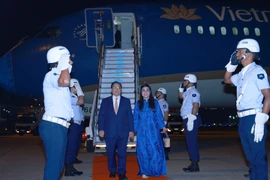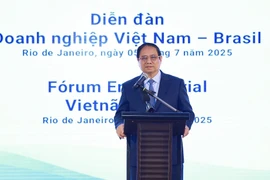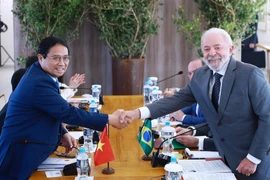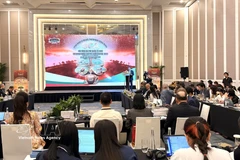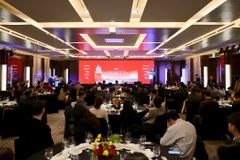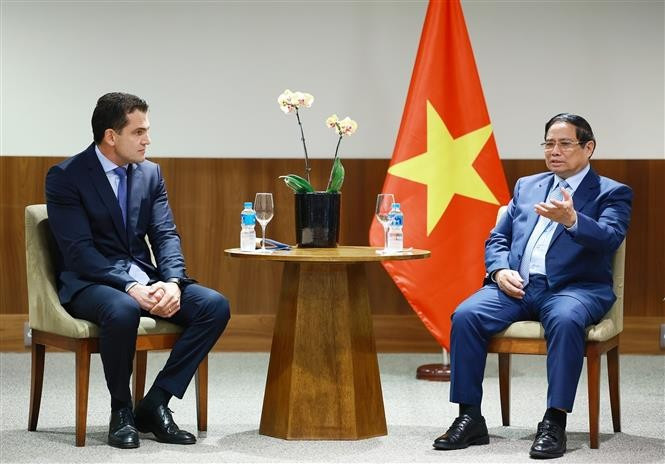
Rio de Janeiro (VNA) – As part of his trip to Brazil for the expanded BRICS summit and bilateral activities, Vietnamese Prime Minister Pham Minh Chinh had working sessions with leaders of major Brazilian corporations on the morning of July 6 (local time) in Rio de Janeiro, with a view to expanding cooperation in aviation, biofuel production, agriculture, and food processing and distribution.
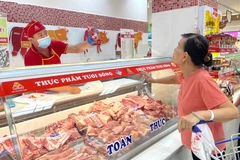
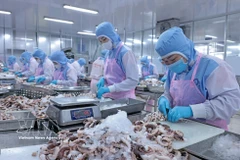
At a working session with the JBS group, one of the world’s largest food processing corporations headquartered in Brazil, PM Chinh praised the company for organising the first shipment of Brazilian beef to Vietnam and expressed his support for its investment expansion plans.
Fábio Maia de Oliveira, a leader of JBS, noted that the group has been active in the Southeast Asian country since 2021, operating two companies in frozen food distribution and leather production. JBS now aims to expand its investment in the country.
The Vietnamese leader said the nation’s growing consumer market of over 100 million people and its rising middle class position it as an ideal gateway for JBS to access ASEAN and Northeast Asia, including China.
PM Chinh encouraged JBS to deepen its cooperation with local partners to bring its products closer to Vietnamese and regional consumers. At the same time, the PM called on the corporation to help bring Vietnamese agricultural products to Brazil and global markets via its international network.
PM Chinh also informed JBS that Vietnam is actively promoting negotiations for a free trade agreement with Brazil and the Southern Common Market (MERCOSUR). He invited JBS to advocate for the acceleration of this process.
The PM affirmed that the Vietnamese Government is committed to accompanying and creating favourable conditions for JBS to carry out effective, long-term, and sustainable investment and business activities in Vietnam, in accordance with the country’s legal regulations. He also called on the group to cooperate with and support domestic partners in enhancing their capacity, particularly in areas such as market development, technology transfer, and product promotion, thus helping Vietnam integrate more deeply and sustainably into the global supply chain.
In response, Fábio Maia de Oliveira expressed strong agreement with the PM’s views and confirmed JBS’s readiness to position Vietnam as a central hub for its production and distribution of farm produce and food in the region and the world.
At the working session with PM Chinh, Global Vice President of Embraer Jose Serrador Neto stated that the corporation, the third-largest commercial aircraft manufacturer in the world with over 8,000 aircraft produced, has supplied aircraft to Vietnam’s Bamboo Airways and is currently in discussions with partners such as Vietnam Airlines and Vietjet to further expand cooperation with the Southeast Asian nation.
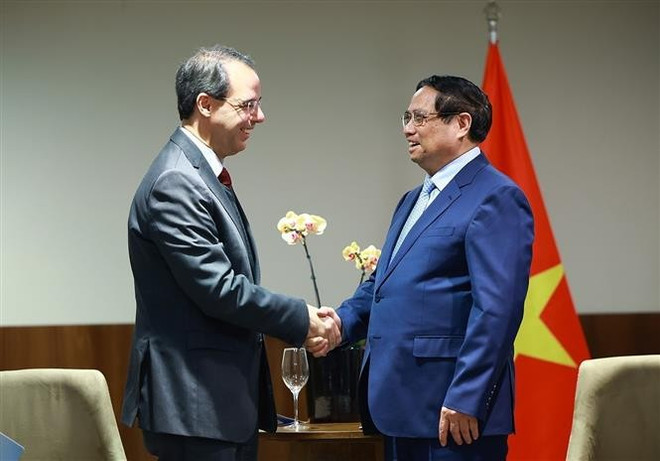
Noting that at his talks with Brazilian President Luiz Inácio Lula da Silva, they agreed to strengthen aviation cooperation, PM Chinh welcomed and highly appreciated the corporation’s new-generation commercial aircraft, which can serve as a solution to help Vietnamese airlines both develop a sustainable fleet and enhance operational efficiency while ensuring flight safety.
The PM emphasised that Vietnam holds many advantages for the development of the aviation sector, which is currently experiencing strong growth. He called on the corporation to study and continue discussions with Vietnamese partners such as Vietnam Airlines, Vietjet, and Viettel to move towards concrete cooperation activities that bring practical benefits to both sides.
PM Chinh highlighted the importance of promoting the launching of direct flights between the two countries, developing an aerospace ecosystem in Vietnam, conducting technology research and transfer, establishing aircraft maintenance and human resources training centres in Vietnam to serve the corporation’s partner and customer network in the ASEAN and Asia-Pacific regions, while also supporting Vietnamese businesses in deepening their penetration into the South American market.
Agreeing with the PM’s opinions, Jose Serrador Neto proposed the Government leader provide guidance and create favourable conditions for Embraer to establish long-term cooperation with Vietnamese partners. He also affirmed that Embraer will actively contribute to the negotiation and signing process of the Vietnam–Brazil Free Trade Agreement, the Vietnam–Brazil Investment Promotion and Protection Agreement, and the Vietnam–MERCOSUR Free Trade Agreement, as suggested by the PM.
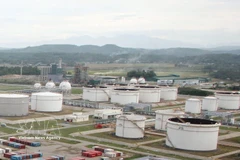
On the same morning, PM Chinh held a working session with leading officials of FS - a pioneering Brazilian enterprise specialising in ethanol production from corn and one of the leading producers of low-carbon biofuels in Latin America.
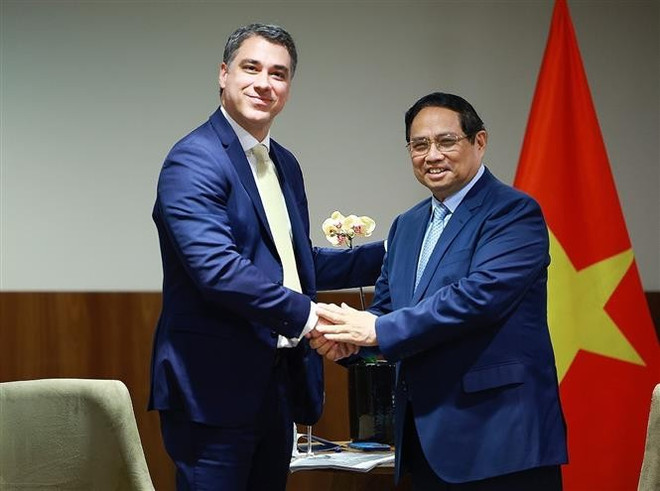
Highly appreciating Vietnam’s green development strategy, FS Executive Vice President Daniel Lopes stated that with the mission of promoting sustainable development, FS combines modern technologies with smart farming solutions to produce clean energy products such as ethanol, biomass electricity, and by-products for the livestock industry. FS proposed establishing a strategic partnership with Vietnam in the field of biofuels.
Welcoming FS’s proposal, PM Chinh assigned relevant Vietnamese agencies to engage in discussions and study the establishment of a bilateral exchange and cooperation mechanism between the two governments on biofuels. He also requested FS to closely coordinate with Vietnamese ministries, sectors, and localities to share its experience in biofuel production.
He also expressed his hope that FS will expand its investment, business, and trade cooperation in Vietnam as well as strengthen collaboration with local enterprises, including the Vietnam National Industry - Energy Group (Petrovietnam), to transfer technology and support local businesses in joining the global biofuel value chain. He also called for the Brazilian company’s support in helping Vietnam access E10 gasoline at competitive international prices. In particular, he encouraged further research on potential cooperation between Petrovietnam and FS to invest in ethanol production either in Vietnam or in Brazil.
PM Chinh also worked with leaders of Granja Fujikura, a high-tech agricultural farm in Brazil, which is part of Japan’s Granja Fujikura network.
William Shuhei Fujikura, Director of Fujikura Quail Genetics, said the company conducted a field survey in Vietnam in 2025 and is planning a partnership with Trong Khoi One-Member Co., Ltd to develop quail farming in Vietnam and across Asia. He expressed his hope that the Vietnamese Government, ministries and localities will support the company in expanding large-scale, high-tech agriculture operations in the country.
PM Chinh congratulated Granja Fujikura on its global business achievements and welcomed its planned collaboration with Trong Khoi One-Member Co., Ltd, one of Vietnam’s leading exporters of quail eggs. He expressed his desire to see more Brazilian enterprises, including Granja Fujikura, increase their investment and business cooperation in Vietnam, capitalising on the fruitful bilateral ties between the two countries.
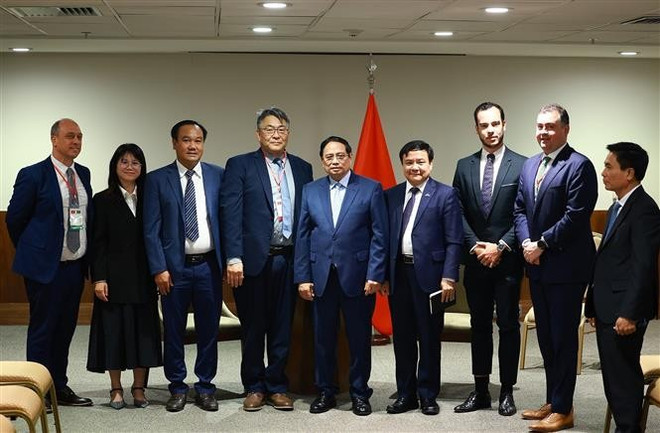
Vietnam is targeting an export turnover of 100 billion USD from agri-forestry-aquatic products in the coming years. To achieve this, the Government is committed to addressing bottlenecks in institutional frameworks, policies, land use and human resources, while facilitating the growth and export activities of private and foreign-invested agricultural enterprises, the PM said.
Highlighting Vietnam’s potential as a dynamic ASEAN market with a population of over 100 million and a growing middle class, PM Chinh encouraged Fujikura to deepen cooperation with Vietnamese partners to bring its products closer to Vietnamese and regional consumers, while also helping Vietnamese agricultural goods reach the Brazilian market and the group’s global distribution network.
He called on the group to support local firms in market development, technology transfer and product promotion. The Ministry of Agriculture and Environment and the Ministry of Finance were tasked with coordinating with other relevant agencies and localities to assist the company in its exploration and investment activities in Vietnam./.