Vietnamese traditional music, instruments captivate French audiences

Many attendees expressed surprise and admiration upon learning about “dan bau” – an instrument widely regarded as a symbol of Vietnamese traditional music.

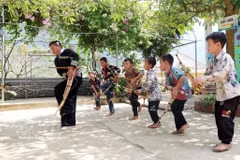
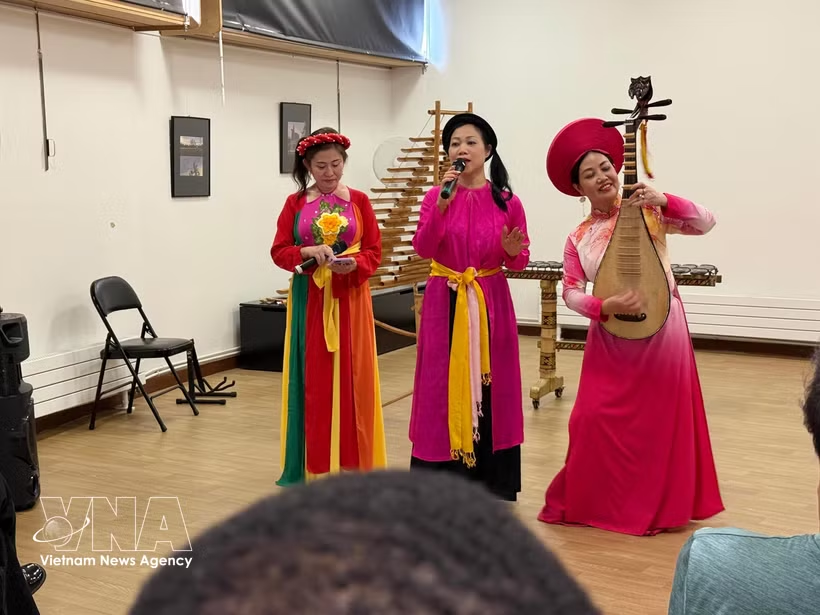
Artists perform the Vietnamese folk song “Trong Com” in a French-language adaptation. (Photo: VNA)

Paris (VNA) – A programme showcasing Vietnamese traditional musical instruments and performances captivated audiences in Arcueil commune, France's Val-de-Marne department, on May 30.

The event was jointly organised by the Association Aurore, the Vietnam Cultural Centre in France, and the Municipal Library Louis Pergaud, offering French visitors an opportunity to discover a wide range of traditional Vietnamese instruments, including “dan bau” (monochord zither), “dan T’rung” (bamboo xylophone), drums, gongs, flutes, lithophones and other ethnic musical instruments.

Artists also introduced the history, structure and distinctive characteristics of each instrument and stage live performances. Many attendees expressed surprise and admiration upon learning about “dan bau” – an instrument widely regarded as a symbol of Vietnamese traditional music.

Anne Balavoine, Director of the Municipal Library Louis Pergaud, said the library regularly hosts events introducing world cultures to local residents. She emphasised that music is one of the most effective ways to help people understand a nation’s identity and foster mutual understanding among communities living in France.

Chloe Sefrin, who takes charge of cultural affairs at the library, noted Vietnam was selected as this year’s featured theme following previous programmes dedicated to Japan and the Republic of Korea. In addition to traditional music performances, the event included activities related to Vietnamese cuisine, comics and artistic creativity.

Meritorious Artist Tang Thanh Son, Deputy Director of the Vietnam Cultural Centre in France, said the programme aimed to introduce international audiences the unique values of Vietnamese culture through traditional music. By presenting melodies from different regions of Vietnam, the performances offered audiences a vivid glimpse into the country’s cultural diversity and rich artistic traditions.

Organisers said the event’s success reflected growing French interest in Vietnamese culture and demonstrated the important role of cultural exchanges in strengthening people-to-people ties and deepening the friendship between the two countries./.

VNA
See more

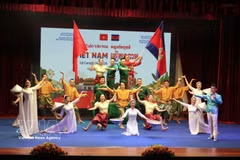
A Vietnamese traditional art performance at the event. (Photo: VNA)

Artistic exchange programme strengthens Vietnam- Japan cultural ties

Vietnamese Consul General in Osaka Nguyen Truong Son said the programme served as a meaningful platform to introduce and promote Vietnam’s rich cultural heritage to international audiences while strengthening solidarity within the Vietnamese community in Japan and fostering connections with their roots.

People join a mass yoga performance at the Vietnam Museum of Ethnology in Hanoi on June 14 as part of activities marking the International Day of Yoga (June 21). (Photo: VNA)

Mass yoga performance celebrates India – Vietnam cultural ties

Yoga's increasing popularity in Vietnam reflects the enduring appeal of positive cultural values and demonstrates the Vietnamese people's appreciation of India’s and humanity's cultural essence, said a leader of the Vietnam Academy of Social Sciences.

A performance at the opening ceremony of the Hue International Music Week 2026 on June 13. (Photo: VNA)

Hue International Music Week 2026 opens

Audiences will enjoy a diverse musical palette ranging from V-pop, K-pop, J-pop and alternative pop to flamenco and other emerging international performance trends.

Foreigners explore Vietnamese silk at the Yen Thai communal house in Hanoi. (Photo: VNA)

Vietnamese silk gets modern pitch inside Hanoi communal house

Storytelling about preserving traditional crafts, paired with experiential activities within heritage spaces, is seen as an effective way for Vietnamese craft village products to continue to shine and claim their place in contemporary life, said an insider.

Book displays and introductions help foster a love of reading and spread reading culture throughout the community. (Photo: VNA)

Vietnam seeks strong global presence for its children's books

Vietnamese children’s literature has steadily expanded its presence in international literary circles in recent years. From a few notable titles earning recognition in respected competitions, the sector has shown encouraging progress in bringing Vietnamese stories to readers around the world.

A stall offering discounted combo meals of bread and drinks at the fourth Banh mi Festival in Ho Chi Minh City on April 23 (Photo: VNA)

Ho Chi Minh City ranks among world’s top culinary destinations

According to Time Out, the appeal of Ho Chi Minh City’s cuisine lies in its creativity, much of which was shaped during challenging periods in history. Iconic dishes such as banh mi (sandwiches) and com tam (broken rice) are highlighted as examples of this resourcefulness.

The international short documentary film festival “Viet Culture in Motion” officially opens at the Saint-André des Arts cinema in Paris on June 11 (Photo: organising board)

Vietnamese youth tell cultural stories on European screen

The international short documentary film festival “Viet Culture in Motion” highlights the efforts of young Vietnamese and overseas Vietnamese filmmakers to introduce Vietnam’s culture and people to international audiences through documentary storytelling. It has brought together professional filmmakers, screenwriters and cultural and film activists from Vietnam and abroad.

Delegates to the 107th meeting of the AIMF Executive Bureau 2026 (Photo: VNA)

Hue spreads heritage city values within Francophone community

Its participation marked an important step for the central city of Hue to expand its international partnerships, deepen integration with municipalities worldwide, and cement its role and standing as a dynamic and responsible heritage city within the Francophone network.

With its rich history, aesthetic grace, and spiritual meaning, the lotus stands as a central symbol in defining Hue’s cultural identity. (Photo: tapchidongnama.vn)

Lotus Festival lights up Hue’s summer

Scheduled for June 19-21 at Bong Lai Islet on Tinh Tam Lotus Lake in Phu Xuan ward, one of Hue’s most renowned scenic landmarks and a symbol of royal garden art, the festival draws inspiration from the lotus’s enduring beauty in court culture. The event aims to honour local heritage while offering visitors a distinctive summer tourism experience.

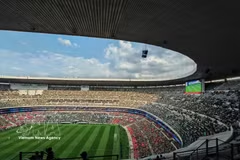
The “Vietnam Pavilion” at Aldea Global 2026 (Photo: VNA)

World Cup 2026: Vietnam leaves distinct mark at global cultural showcase

The “Vietnam Pavilion” at Aldea Global 2026 offers Mexican visitors and international guests an opportunity to explore the country’s rich cultural heritage, history and people through exhibitions, tourism promotion activities, traditional arts presentations and displays of representative cultural products.

Michelin Guide Vietnam recognises 11 one-Michelin star restaurants (Photo: Michelin Guide Vietnam)

Local ingredients, cultural roots propel Vietnam’s Michelin journey

One of the clearest examples is Hieu Luc, a modest fish soup eatery on Hai Ba Trung Street in Hanoi, which has been included in the Michelin Selected category for the second consecutive year. Known for its clear, delicately sweet broth made from freshwater perch and mustard greens, the restaurant serves a traditional specialty from Hung Yen province.

Delegates attending the ASEAN City Leaders Conference 2026 visit the Imperial Citadel of Thang Long on June 9. (Photo: VNA)

ASEAN city leaders explore Hanoi’s heritage sites

At the Imperial Citadel of Thang Long, delegates visited the Doan Mon Gate and learnt about the formation and development of the ancient capital through different historical periods at display spaces. They also explored the Kinh Thien Palace’s Dragon Steps (large stone steps with dragon carvings), regarded as the political and ceremonial centre of the imperial citadel during successive Vietnamese dynasties.