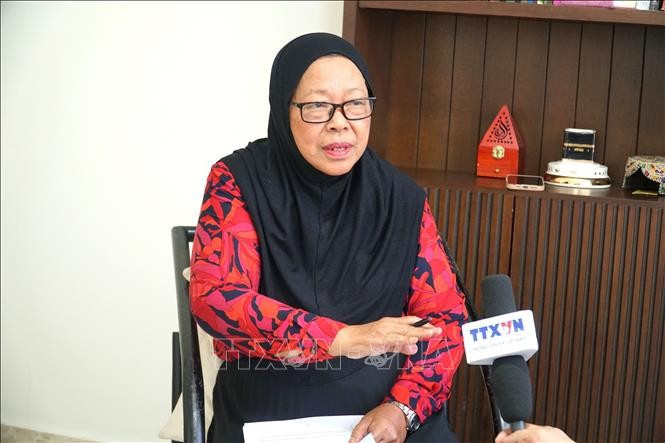
Kuala Lumpur (VNA) – A scholar from the National Defence University of Malaysia (UPNM) has highlighted Vietnam’s contributions to the Association of Southeast Asian Nations (ASEAN), describing the country’s accession to the bloc as a major step and a catalyst for the enlargement of the bloc.
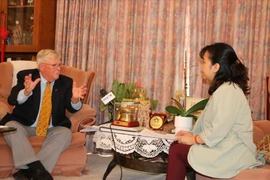
In an interview with Vietnam News Agency (VNA) correspondents in Kuala Lumpur on the occasion of the 30th anniversary of Vietnam’s membership in the bloc, Professor Ruhanas Harun from the UPNM's Department of International Relations emphasised that Vietnam’s entry paved the way for other countries such as Laos, Cambodia, and Myanmar to join ASEAN — which she considered one of Vietnam’s most notable contributions to the organisation.
She also underscored Vietnam’s hosting of the ASEAN Summit in 1998 — only three years after becoming a member — as a demonstration of the country’s leadership role. The event that produced the Hanoi Plan of Action was a significant contribution to the bloc. Since then, Vietnam has actively participated in all ASEAN summits and high-level meetings, helping to strengthen the ASEAN mechanism, Ruhanas noted.
These direct contributions, alongside indirect ones such as promoting friendship among member states, are concrete, undeniable, and highly valuable, she added.
Regarding the opportunities that the ASEAN membership has brought to Vietnam, the expert said it is necessary to consider the three pillars of the ASEAN Community. Among them, the second pillar — the ASEAN Economic Community (AEC) — is perhaps the most challenging to fully realise in the short term due to the varying levels of economic development across member states.
She cited an example: before Vietnam’s accession, Malaysia primarily imported rice from Thailand. Today, Vietnam has become the world’s second-largest rice exporter, trailing only Thailand. Beyond rice, it now exports coffee and a variety of other agricultural products. Many Malaysian traders frequently visit Ho Chi Minh City to source textiles and garments, creating substantial opportunities for economic engagement.
Over the past 30 years, as a member of ASEAN, Vietnam has gained numerous economic development opportunities. However, for Vietnam to develop and integrate more deeply into the ASEAN economy, the professor recommended considering several key factors.
First is the economic disparity between member states, and the collective effort required to narrow the development gap across the bloc. Second is the need to address external factors that may hinder economic growth or integration such as US tariff policies.
According to Ruhanas, ASEAN can help other member states to learn from Vietnam’s economic development experiences. The country shifted from a centrally planned socialist economy to a socialist-oriented market economy. During that process, though it has been able to develop a market economy, Vietnam has exercised caution so as not to succumb to external pressures, maintaining policies designed to ensure a certain level of social welfare for its people. One clear example, she noted, is Vietnam’s success in maintaining sustainable rice cultivation alongside urban development./.
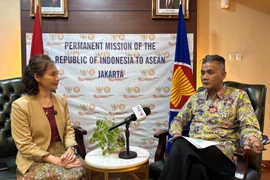
Indonesian diplomat praises Vietnam's role in ASEAN as catalyst for cohesion, cooperation
Since the beginning of its membership in 1995, the country has consistently demonstrated a strong commitment to ASEAN’s core principles of unity, consensus, and regional resilience, said Permanent Representative of Indonesia to ASEAN Ambassador Derry Aman.