Vietnam’s export durians face stricter regulation in China market

Vietnam’s export durian industry faces difficulties in entering the Chinese market due to new inspection regulations for durian exports.

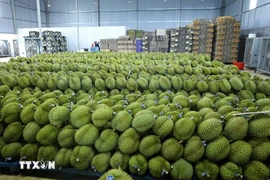
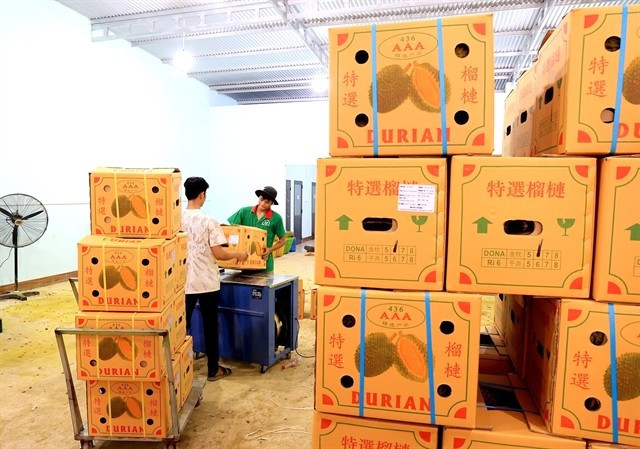
Export durian batches. China has tightened the inspection of Basic Yellow 2 (BY2) residues in durian batches exported from other countries into their market, including Vietnam (Photo: VNA)

Hanoi (VNS/VNA) – Vietnam’s export durian industry faces difficulties in entering the Chinese market due to new inspection regulations for durian exports.

China has tightened inspection of Basic Yellow 2 (BY2) residues in durian batches exported from other countries to this market, including Vietnam, with 90% of its durians exported to China.

The inspection regulation was issued after the General Administration of Customs of China (GACC) reported the detection of Basic Yellow 2 (BY2), a substance classified by the WHO as a Group 2B carcinogen, in Thai durian exports.

That move left Vietnam's export durian batches being returned or waiting for customs clearance for lengthy periods at the border gates.

One Vietnamese exporter said that 170 tonnes of its produce did not clear customs at border gates because of the China inspection of BY2, believed to be used to enhance the yellow colour of durian fruit.

According to the durian export company's representative, this is the first time its fruit has been returned due to a lack of an inspection certification for BY2.

At Huu Nghi International Border Gate, the number of durian trucks clearing customs each day has decreased sharply, from 70-80 trucks in 2024, to only 20-30 trucks in recent days.

Deputy Director of Huu Nghi Customs Branch, Phung Van Ba, said that the slow customs clearance speed was mainly due to China tightening inspections of BY2 and only allowing customs clearance for shipments meeting the new regulations.

Vietnam's Plant Protection Department has asked localities to strengthen supervision of growing areas and packaging facilities.

Chemical residue and heavy metal testing and traceability have been tightened to ensure that exported fruits meet international standards. Violated growing area codes and packaging facilities will be suspended if they do not meet the criteria.

The General Secretary of the Vietnam Fruit and Vegetable Association (Vinafruit), Dang Phuc Nguyen, said Vietnam's durian export activities are being disrupted because China inspects all export shipments and they are now taking a week to clear customs.

China has determined that BY2 can contaminate the fruit flesh, so inspections must also examine beneath the peel. China's authorities have also warned against using returned durian for frozen processing because it is likely to encounter similar inspections as fresh durian.

The association also recommend that businesses must not sell returned durian to consumers or move it into processing before the results of the BY2 residue test are available.

If there is no residue, the durians can be sold or processed, but if fruit has substance residues, the durians must be destroyed to protect both consumers and the reputation of Vietnam's durian.

Thailand's authorities have almost completed the BY2 substance testing process to certify the safety of Thai durian. So, the durian shipments can be exported again next week to take advantage of the consumption demand during the Lunar New Year.

Meanwhile, Vietnam's relevant offices have not yet had support for local businesses to check for residue.

Nguyen has suggested that it is necessary to quickly establish many testing rooms to issue certificates for crops without BY2 residue.

Vu Kim Hanh, Chairwoman of the Business Association of High Quality Vietnamese Products, said that because Thailand does not lower durian prices or give gifts to durian buyers, they compete with Vietnamese on standards alone.

In addition to competing in export volume and value, the battle of durian brands is also taking place in China market.

This market has Thailand's Monthong durian, and Malaysia's Musang King and Black Thorn, while Vietnam still does not have a national brand for its product.

Durian is a key export product of Vietnam, reaching a record turnover of about 3.3 billion USD in 2024, an increase of more than 1 billion USD compared to 2023.

Every year, China imports fresh durian worth 7 billion USD and this figure is expected to exceed 10 billion USD in the next few years.

In addition, China also spends 1 billion USD on frozen durian, a figure which is expected to increase rapidly./.
VNA

See more

Downtown area in Ho Chi Minh City. (Photo: VNA)

Vietnam's golden gateway: FDI poised for gains in 2026

More than just volume, the quality of FDI entering Vietnam has improved. The nation is evolving from a base for basic assembly and processing into a genuine contributor to hi-tech manufacturing and R&D across global value chains.

Deputy Minister of Finance Do Thanh Trung speaks at the ceremony (Photo: VNA)

Project to advance growth, innovation, leadership for enterprises kicks off

AGILE is not only a testament to the long-standing and trusted strategic partnership between Vietnam and Canada, but also an important contribution to the Vietnamese Government’s efforts to promote innovation and sustainable growth within the private sector, thereby effectively mobilising private investment to realise inclusive and sustainable development goal.

At Regza Vietnam Electronics Co., Ltd. in Dong Nai province. (Photo: VNA)

FDI disbursement in January hits five-year high

Economists said that the continued growth in realised FDI reflects foreign investors’ sustained implementation and expansion of production and business activities in Vietnam. This is seen as an encouraging signal, underscoring investors’ confidence in Vietnam’s business environment and economic prospects.

In Q1 2026, Vietnam records 16 export commodities with turnover exceeding 1 billion USD. (Photo: VNA)

Exports face stiff test in bid to hit 550 billion USD

To achieve export growth of over 15% as directed by the Government, the MoIT said it will prioritise a set of core measures in 2026, including expanding production capacity, developing new export products, increasing domestic content and value added, accelerating the shift from processing to manufacturing, and proactively addressing trade barriers and defence measures.

Illustrative photo (Photo: VNA)

January CPI rises on stronger Tet holiday demand

CPI in January 2026 rose 0.05% month-on-month, with urban areas up 0.02% and rural areas up 0.09%. Of the 11 major commodity and service groups, nine recorded price hikes while two saw declines.

Vietnam is currently Cambodia’s third-largest trading partner worldwide, after China and the US, and its largest trading partner within ASEAN. (Photo: Ministry of Industry and Trade)

Party chief’s Cambodia visit to open up new phase of deeper, closer cooperation

To further unlock the potential of bilateral economic and trade cooperation, Vietnam and Cambodia should continue reviewing and effectively implementing signed agreements, facilitating trade and border connectivity, strengthening trade promotion in complementary sectors, reforming administrative procedures, upgrading border and logistics infrastructure, and enhancing coordination in combating smuggling and trade fraud.

Investors monitor stock market movements at the HoSE trading floor. (Photo: VNA)

VNX, FTSE Russell discuss Vietnam market upgrade

During the working session, the two sides shared updates on the performance of Vietnam’s stock market in 2025, focusing on market capitalisation, index trends, developments in the equities, bond and derivatives segments, and the continued expansion of the investor base.

Vietnamese products continue to gain traction at traditional markets and supermarkets across Ho Chi Minh City (Photo: VNA)

Vietnamese goods dominate Tet market in Ho Chi Minh City

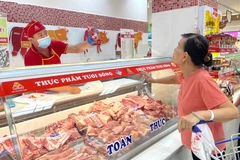
Despite still-muted purchasing power, Vietnamese products continue to gain traction at traditional markets and supermarkets across Ho Chi Minh City, as consumers increasingly prioritise locally made goods, from fresh food and fast-moving consumer items to processed products, for their stable quality, reasonable prices and transparent origins.