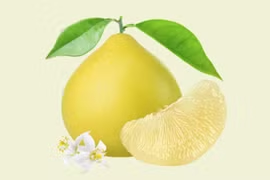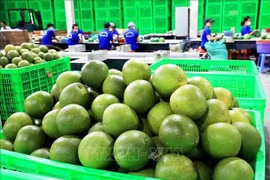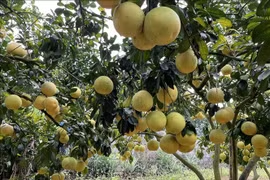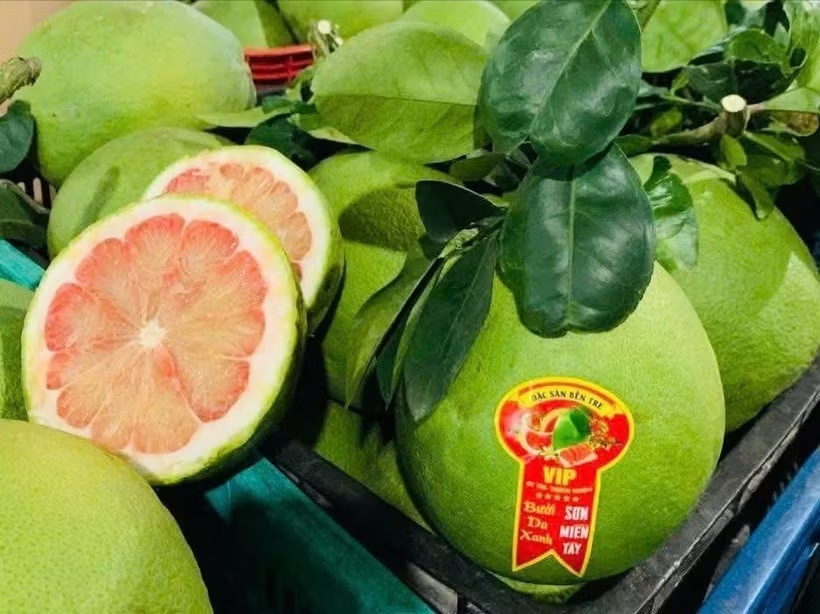
Hanoi (VNA) - For the first time, Vietnamese pomelos have been exported to Australia, one of the world’s most demanding agricultural markets, while Vietnam also opened its doors to Australian blueberries.
With this milestone, pomelo becomes the sixth Vietnamese fruit officially exported to Australia, joining dragon fruit, lychee, longan, mango and passion fruit. The achievement not only broadens Vietnam’s export portfolio but also reflects the country’s growing reputation and advanced capacity in plant quarantine management.
Under Australian import requirements, exported pomelos must meet stringent standards, including being intact and free from 19 quarantine pests banned by Australia. They must come from registered growing areas with traceability codes, and be packed, labelled and irradiated at a minimum dose of 150 Gy in approved facilities.
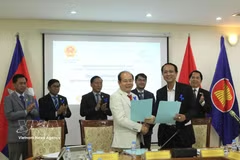
Deputy Minister of Agriculture and Environment Hoang Trung highlighted that Australia has become one of Vietnam’s most reliable partners in the global agricultural supply chain. In 2024, two-way agricultural trade reached 2.24 billion USD, with several key commodities witnessing growth.
However, given both countries’ agricultural potential, this figure remains modest, he said, suggesting ample room for further cooperation. Over recent years, Vietnam and Australia have regularly exchanged technical expertise and held policy dialogues to facilitate market access for more fruits from both sides.
In recent years, Vietnam’s pomelo industry has made remarkable progress in standardising cultivation areas, ensuring safe production and traceability, and adopting advanced farming techniques under VietGAP/GlobalGAP standards and integrated pest management (IPM). These practices have helped maintain consistent quality and supply year-round.
According to Huynh Tan Dat, Director of the Plant Production and Protection Department under the Ministry of Agriculture and Environment, fresh Vietnamese pomelos are now available in 14 countries and territories, including the US, the Republic of Korea and New Zealand.
The domestic pomelo cultivation area has expanded from 50,000 ha in 2015 to over 100,000 ha in 2025, with an annual output nearing one million tonnes. Fresh pomelo exports were valued at around 60 million USD in 2024.
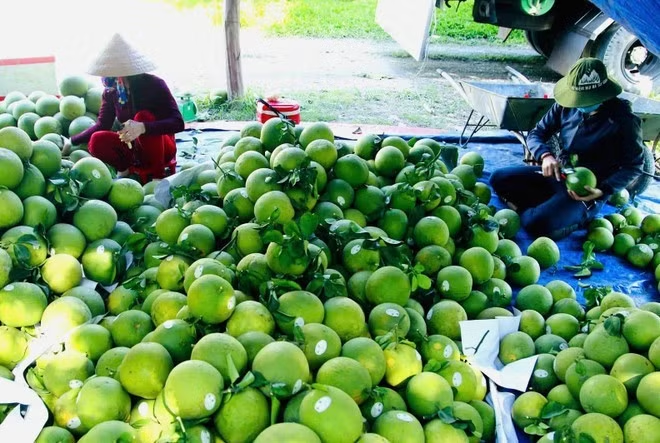
To ensure full compliance with Australia’s phytosanitary and food safety regulations, the department will work with local agencies to provide training on plant quarantine and food safety standards, and to guide the establishment and certification of growing areas and packaging facilities for pomelo exports.
To ensure smooth trade of Vietnamese pomelos and Australian blueberries, Trung urged stakeholders to strictly comply with Australia’s regulations on fresh pomelos, to safeguard product quality and enhance the global image of Vietnamese agricultural products.
He also called on Vietnam’s technical quarantine agencies to expedite necessary procedures to facilitate the import of Australian blueberries.
Australian Ambassador to Vietnam Gillian Bird affirmed that Australia’s security, prosperity and economic future are closely tied to Southeast Asia, including Vietnam.
Agriculture, she said, remains a key pillar of bilateral cooperation, as both countries share the goal of developing sustainable, profitable and climate-resilient agriculture. In 2024 alone, two-way trade in agriculture and food reached 4.4 billion AUD (2.85 billion USD), underscoring the deepening economic partnership.
Australia currently supplies Vietnam with high-quality products such as cotton, wheat, red meat, dairy and horticultural goods, while Australia’s demand for Vietnamese exports including seafood, coffee, rice and fruit continues to rise.
The Ambassador praised the effective cooperation between the Australian Department of Agriculture, Fisheries and Forestry and Vietnam’s Ministry of Agriculture and Environment. He lauded the Plant Production and Protection Department, in implementing the “2+2” cooperation mechanism, which allows both sides to simultaneously open their markets for two priority commodities./.