Vietnam’s private sector faces survival test in digital, green shift

The rapid evolution of information technology, cloud computing, artificial intelligence (AI), and the Internet of Things (IoT) offers a vast array of opportunities.

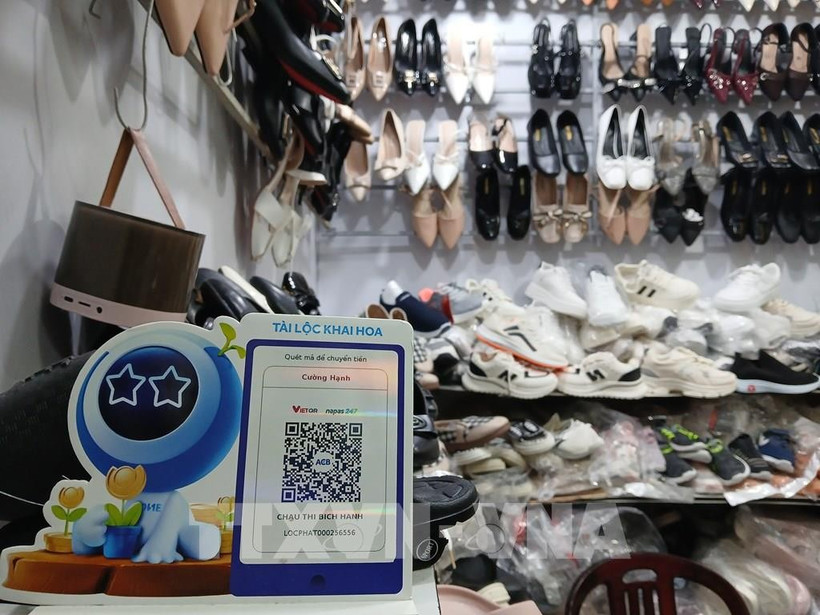
Over 15,000 merchants in Da Nang's traditional markets use QR codes for cashless payment (Photo: VNA)

Hanoi (VNA) - In an era shaped by intense globalisation and the strong impact of the Fourth Industrial Revolution, Vietnam’s private sector is feeling the heat to reinvent itself. Digitalisation and green transition are no longer optional strategies, but they are make-or-break moves for companies to stay competitive.

The Vietnamese State has recognised this urgency, rolling out a suite of policies to spur an overhaul. These include a national digital transformation programme to 2025, with a vision until 2030, alongside landmark resolutions such as the Politburo’s Resolution No. 57 on breakthroughs in science-technology, innovation, and digital transformation, and Resolution No. 68 on private sector development.

According to Vice President of the Vietnam Digital Communications Association Prof. Dr. Nguyen Dinh Thang, digital transformation means embedding digital technologies into every aspect of business operations, from management and finance to production, sales, marketing, and customer service. “This is not simply about adopting new technologies,” Thang said. “It requires a fundamental shift in corporate mindset, culture, and operating models to optimise processes, improve efficiency, and enhance customer experiences".

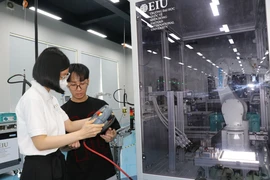
Private firms, increasingly attuned to these high stakes, are scrambling to embrace technological solutions. The rapid evolution of information technology, cloud computing, artificial intelligence (AI), and the Internet of Things (IoT) offers a vast array of opportunities. Yet, obstacles remain, especially for small and medium-sized enterprises (SMEs), which often lack cash to invest in cutting-edge technologies. Resistance to change, entrenched habits and mindsets among employees further hamper progress.

Compounding these challenges is the growing complexity of the digital realm, which exposes companies to major risks in cybersecurity and data protection. Thang called for state-backed solutions and investments to protect customer and corporate data.He also urged tighter cooperation among businesses, research institutions, universities, and international organisations to share knowledge and experience. Building support networks among companies, regulators, and organisations, coupled with public awareness campaigns, would also be critical, he added.
jep.jpg
Over 10% of companies integrate AI into operations (Photo: VNA)

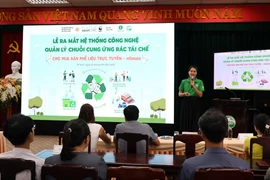
Dr. Vo Tri Thanh, former Vice Director of the Central Institute for Economic Management (CIEM) and now head of the Institute for Brand and Competitiveness Strategy, pointed to equally tough hurdles in Vietnam’s green transition. Beyond the need for a consistent and effective policy framework, the country must establish clear classification criteria for green activities while piloting new models, such as circular economy initiatives within regulatory sandboxes, he said.

“To navigate this phase requires more than determination and persistence,” Thanh said. “What’s essential is a spirit of boldness and accountability, from policymakers down to each enterprise and citizen, to create momentum for Vietnam turn its green aspirations into reality,” he added./.
VNA

See more

Prime Minister Pham Minh Chinh visits a display of science and technology development, innovation and digital transformation. (Photo: VNA)

Gov't leader requests greater efforts to step up development of sci-tech, innovation

Emphasising three strategic digital breakthroughs - digital institutions, digital infrastructure and digital human resources - PM Chinh called for close integration of science and technology development, innovation, administrative reforms, digital transformation and Project 06 with efforts to streamline the organisational apparatus and modernise leadership, management and working styles.

Doctors from Cho Ray Hospital (Ho Chi Minh City) and Vinh Long General Hospital (Vinh Long province) test the operation of a linear accelerator radiotherapy system for cancer treatment (Photo: VNA)

Vietnam sets orientations for applying nuclear energy across sectors

The plan aims to ensure the effective implementation of Decision No. 245/QD-TTg dated February 5, 2025, which approved the national master plan, while concretising objectives, orientations, solutions and resources for applying radiation and radioisotopes across sectors. It also assigns responsibilities to ministries, sectors and localities, and sets roadmaps and priorities for key programmes and projects.

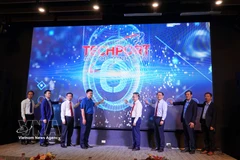
Prime Minister Pham Minh Chinh and delegates visit booths showcasing products at TechFest Vietnam 2025. Photo: VNA

Vietnam to become attractive destination for tech talent, innovative startups: PM

TechFest Vietnam 2025, held from December 12 to 14, is expected to attract more than 60,000 participants both in person and online, with the participation of over 20 corporations, 50 investment funds, more than 100 supporting organisations and incubators, and delegates from Southeast Asia, Northeast Asia, Central Asia, the Middle East, North America, and Europe.

Police offiers mornitor the traffic through AI camera (Photo: VNA)

Applying the Internet of Things in smart transport

The project aims to build a unified, safe and efficient IoT platform to support the management, operation and exploitation of smart transport systems under the Ministry of Construction, with data shared across ministries and localities.

Through long-term commitment, Viettel has brought millions of Burundians into the mobile era and become the first operator to roll out 5G in the country, Viettel Burundi CEO Phan Truong Son noted. (Illustrative photo: VNA)

Viettel secures three prestigious international awards

Viettel has won honours in the “People & Culture” and “Best Operator in a Growth Market” categories at the 2025 World Communication Awards (WCA), alongside the “Best Digital Transformation Project” at the 2025 Global Telecoms Awards (Glotel).

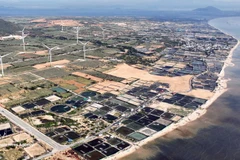
A view of the Can Gio sea-encroaching urban area project (Photo: VNA)

Green-tech push for Can Gio

Vietnam has the capacity, ambition and technological foundation to join the group of leading sustainable coastal urban nations in the coming decade, experts said at a dialogue on "advancing to the sea with ESG++ megacities: breakthroughs through green technology", held on December 9 in Hanoi by the Vietnam Institute for Real Estate Studies (VIRES).

Minister of Science and Technology Nguyen Manh Hung speaks at the meeting (Photo: VNA)

Vietnam turns intellectual property into bankable assets in new law

About AI-generated content, the law draws a clear line: purely autonomous AI creations are not eligible for copyright or patent protection. Those who provide substantial creative input, such as ideas, curation, editing, or selection, qualify as authors or inventors.

Lieutenant General Nguyen Minh Chinh, NCA Vice Chairman, speaks at the launch ceremony of the southern branch of the National Cybersecurity Association. (Photo: VNA)

National Cybersecurity Association opens branch in HCM City

The southern branch aims to become a coordinating body for cybersecurity tasks, workforce development, awareness-raising and the strengthening of digital defence capabilities across the region, contributing to the safe and sustainable growth of Vietnam’s digital economy.

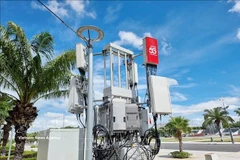
Viettel exceeds target of 20,000 new 5G stations by more than three weeks. (Illustrative photo: VNA)

Viettel exceeds target of 20,000 new 5G stations by more than three weeks

Viettel plans to continue scaling up its network from now until the end of 2025, with an additional 23,500 stations scheduled for installation, nearly quadruple the number rolled out in 2024. Once completed, Viettel will operate Vietnam’s largest 5G network, with 30,000 stations covering 90% of outdoor areas and 70% of indoor spaces nationwide, from major cities to rural regions.