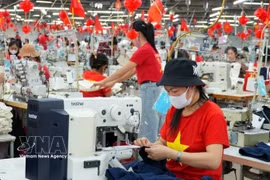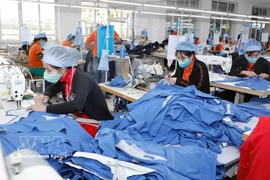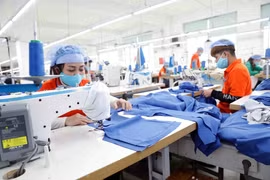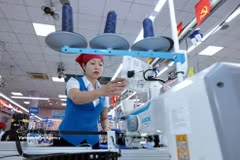
Hanoi (VNA) – Vietnam's textile and garment industry is racing to leverage a temporary tariff window in the US market while navigating mounting geopolitical risk, as businesses face dwindling fourth-quarter orders, soaring logistics costs and growing uncertainty over future US trade policy.
The sector earned 18.8 billion USD from exports in the first five months of 2026, up 5.6% year-on-year despite weak global demand. To achieve its full-year export target of 48-49 billion USD, monthly export turnover will need to average 4.31-4.46 billion USD over the remaining seven months.
Challenges remain despite strong growth
Global demand remained subdued in the first half of the year amid sluggish economic recovery, escalating geopolitical tensions and shifting tariff policies. US textile imports fell 12.1% in the first four months of 2026, while imports into the EU declined 12.8% in the first two months and those into the Republic of Korea in January-April slipped 1.8% year-on-year.
Against this backdrop, the industry's export growth reflected the resilience and adaptability of Vietnamese manufacturers.
According to Cao Huu Hieu, General Director of the Vietnam National Textile and Garment Group, businesses accelerated shipments after a US court suspended the reciprocal tariffs proposed by President Donald Trump, leaving a temporary 10% tariff in place until July 24, 2026.
Vinatex reported an estimated pre-tax profit of 158 billion VND in the first six months of the year, more than double the figure recorded a year earlier and equivalent to 60% of its annual target, driven largely by a strong recovery in the fibre segment.
However, businesses have warned that operating conditions remain increasingly challenging.
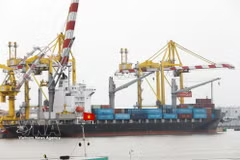
Pham Thi Phuong Hoa, General Director of Hung Yen Garment Corporation, said geopolitical conflicts had sharply increased transport costs, with freight rates rising 30–40%. At the same time, supply chain disruptions have created severe logistics bottlenecks as manufacturers worldwide stockpile raw materials.
She noted that even when imported materials reach Vietnamese ports, companies often struggle to secure trucks to transport them to factories.
Delivery schedules have also become more demanding, with buyers insisting on on-time shipments. Air freight, while an alternative, costs 4–5 USD per kg, far exceeding garment processing fees of just over 2 USD per product, making it economically unviable.

Beyond logistics, manufacturers are increasingly concerned about a shortage of orders for the fourth quarter.
Hoang Manh Cam, Chief of Office at Vinatex, said orders have become noticeably scarce since July as overseas buyers wait for the US administration to announce new reciprocal tariff rates before deciding where to source products.
Importers are particularly watching future US tariffs on Chinese goods, using them as a benchmark when negotiating with suppliers in other countries, he said.
Ambitious export target of 49 billion USD
According to industry sources, the reciprocal tariff rates under consideration for Vietnamese textile products may be less favourable than those facing several competitors, prompting businesses to pin their hopes on ongoing Vietnam-US trade negotiations.
Hung Yen Garment Corporation, which had maintained a stable order book even during the difficult years of 2022 and 2023, has yet to secure fourth-quarter contracts. Hoa said the company had received virtually no customer visits to negotiate new orders over the previous two weeks, with the only meeting taking place on June 12 for contracts scheduled to begin in January 2027.
She described the absence of fourth-quarter orders as a major risk for the industry.

Despite the uncertainty, Cam remained cautiously optimistic, saying Vietnam's solid export performance, competitive production costs and effective risk management continue to make the country a trusted sourcing destination for US buyers.
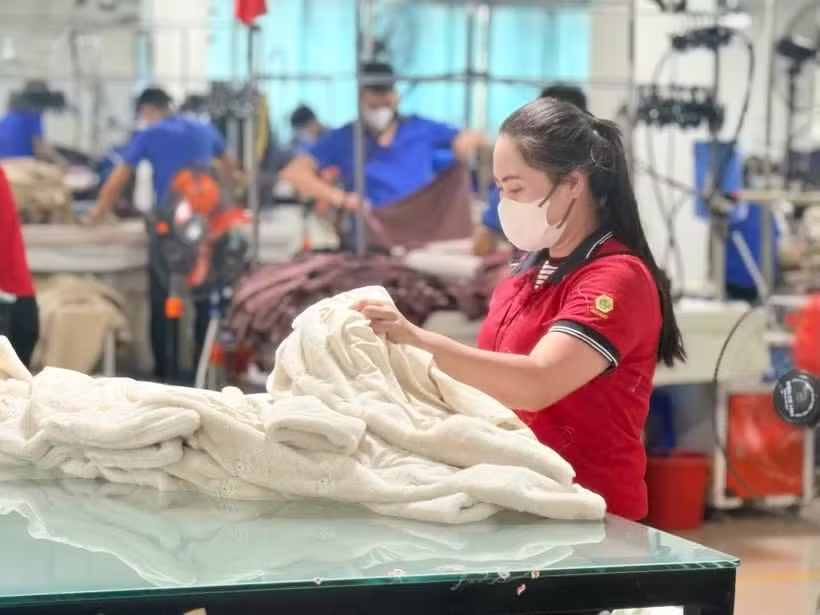
Over the longer term, Vinatex plans to prioritise productivity and sustainability rather than simply expanding output. The group is investing in green, smart and circular manufacturing, including carbon footprint measurement, rooftop solar power and production automation.
Several member companies, including Hoa Tho, Hue Textile and Garment and Phong Phu, are developing smart factories that meet global ESG standards, laying the foundation for sustainable growth during the 2026–2030 period.
In the short term, the industry's top priority is to fulfil July and August export orders on schedule via sea freight while intensifying efforts to secure contracts for the final quarter of 2026 amid continued market uncertainty./.