Government determined to cut administrative procedures to drive double-digit growth

Resolution No. 258/NQ-CP, dated August 31, 2026, calls for substantive and comprehensive reform, with a focus on maximum cuts and simplification of administrative procedures and business conditions. It also seeks to shift management from pre-licence inspection to post-licence inspection based on risk management, while strengthening real-time, data-driven oversight and putting people and businesses at the centre of public services.

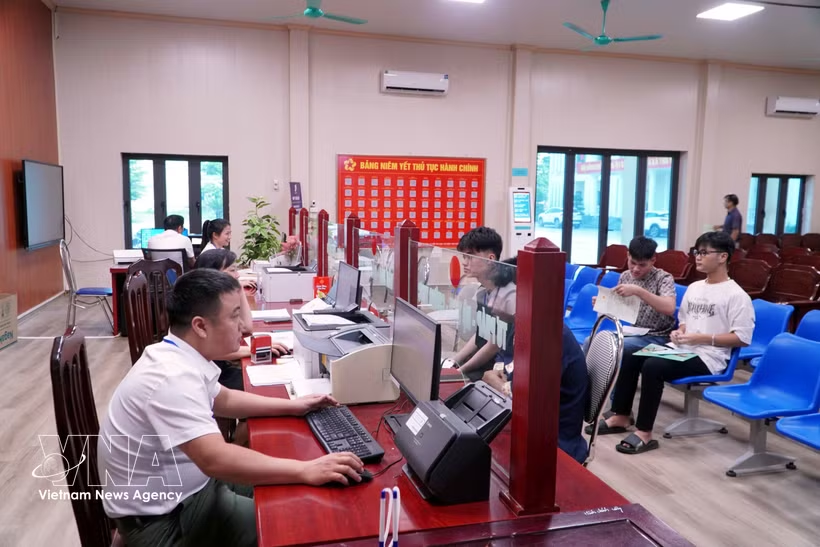
At a commune administrative service centre in Hung Yen province (Photo: VNA)

Hanoi (VNA) – The Government has issued Resolution No. 258/NQ-CP, setting out key tasks and solutions to accelerate administrative procedure reform, contributing to achieving double-digit economic growth in the 2026–2030 period.

The resolution, dated August 31, 2026, calls for substantive and comprehensive reform, with a focus on maximum cuts and simplification of administrative procedures and business conditions. It also seeks to shift management from pre-licence inspection to post-licence inspection based on risk management, while strengthening real-time, data-driven oversight and putting people and businesses at the centre of public services.​

The Government aims to improve the quality of institutions, significantly enhance the investment and business environment, strengthen national competitiveness and create new drivers for double-digit economic growth during the 2026-2030 period.

Under the resolution, reforms must ensure that no unnecessary administrative procedures, business conditions or conditional business sectors are added compared with those already removed, simplified or decentralised under 11 Government resolutions implementing Conclusion No. 18-KL/TW.

By 2027, all eligible administrative procedures are expected to be available as fully online public services, while all administrative procedure results will be digitised and data reused, subject to regulations on state secrets.

People and businesses will not be required to resubmit documents containing information already available in databases officially made accessible by the agencies managing those databases, unless otherwise required by specialised laws.

By 2030, all essential public services are expected to be accessible nationwide regardless of administrative boundaries through public administration service centres. Public services will also be provided proactively when the necessary data and digital infrastructure are in place.

All eligible internal administrative procedures between State administrative agencies are set to be conducted electronically by 2027. The same year, eligible business reporting requirements are expected to be fully electronic, while information, documents and papers related to production and business procedures should only have to be submitted once to State agencies.

The Satisfaction Index of Public Administration Services (SIPAS) is targeted to reach at least 95% by 2030. All feedback and recommendations from individuals and organisations concerning administrative regulations must also be received, handled and publicly reported within the prescribed time limits.

Administrative procedure reform will be closely linked to power control, corruption and negative-practice prevention, and stronger administrative discipline. The Government calls for an end to the “ask-give” mechanism and for measures to prevent the evasion of responsibility, buck-passing, and the pursuit of local and vested group interests in the development and implementation of administrative procedures.

The results of administrative reform will be linked to the assessment and classification of officials and civil servants, becoming an important criterion in personnel work.

The resolution also requires stronger digital transformation and restructuring of administrative procedures around data. National and specialised databases will be connected and shared with administrative procedure information systems, helping replace or eliminate unnecessary dossier components./.

​

VNA

See more

Speakers at the thematic session on economic cooperation at the St. Petersburg Chamber of Commerce and Industry on October 16. (Photo: VNA)

Vietnam-Russia trade at structural turning point: report

The report adopts a practical approach, focusing on how businesses operate rather than relying solely on diplomatic assessments. Its aim is to identify ways to translate the two countries’ political goodwill and longstanding trust into tangible economic cooperation.

An overview of the Vietnam-Cambodia International Commerce & Culture Forum 2026. (Photo: VNA)

Vietnam-Cambodia Int’l Commerce & Culture Forum promotes business ties

Alongside the positive growth in bilateral economic and trade ties, Vietnamese Ambassador to Cambodia Nguyen Minh Vu highlighted regular cultural exchange activities, including culture weeks and days, artistic performances and photo exhibitions, which have helped introduce each country’s culture to the people of the other.

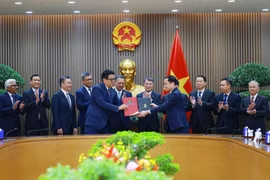
Prime Minister Le Minh Hung (C) witnesses the exchange of the Strategic Alliance Agreement between Petrovietnam and PETRONAS. (Photo: VNA)

Prime Minister backs PETRONAS’ further investment expansion in Vietnam

Prime Minister Le Minh Hung praised PETRONAS and the Vietnam National Industry-Energy Group (Petrovietnam) for maintaining a strong partnership for more than 30 years, with joint efforts supporting Vietnam’s energy security, sustainable development and economic growth, as well as those of the Asian region.

The central province of Nghe An holds an investment promotion conference in Seoul on October 15. (Photo: VNA)

Nghe An seeks stronger tech, clean energy ties with RoK

A Nghe An official affirmed the province's commitment to providing a fair and favourable investment environment, preparing cleared land in the expanded Southeast Nghe An Economic Zone, streamlining administrative procedures, and ensuring clean energy infrastructure for investment projects.

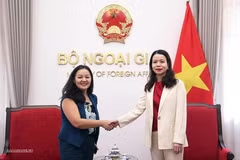
Deputy Minister of Foreign Affairs Nguyen Minh Hang (right) meets with US Deputy Assistant Secretary of Commerce for Asia and Acting Executive Director of SelectUSA Kelly Coldiron in Hanoi on October 15, 2026. (Photo: baoquocte.vn)

Vietnam, US propel economic, trade, investment ties

Vietnam considers the US one of its leading strategic partners and wants to continue advancing the Comprehensive Strategic Partnership in a stable, substantive, and effective way for the benefit of its citizens and enterprises, said Deputy Minister of Foreign Affairs Nguyen Minh Hang.

Deputy Foreign Minister Nguyen Minh Hang (R) receives Pamela Phan, former Deputy Assistant Secretary for Asia at the US Department of Commerce, in Hanoi on October 15, 2026. (Photo: baoquocte.vn)

Vietnam, US look to strengthen business, investment ties

Vietnam and the US should further promote business connections and practical cooperation in trade and investment, Deputy Foreign Minister Nguyen Minh Hang told Pamela Phan, former Deputy Assistant Secretary for Asia at the US Department of Commerce, in Hanoi on October 15.

Shoppers at Winmart (Photo: VNA)

National brand programme drives Vietnamese corporate competitiveness

Vietnam’s national brand value reached 462.28 billion USD in 2026, up 45.14% from 2020 and ranking 32nd among 193 countries, according to Brand Finance. The challenge, however, goes beyond climbing the rankings or scaling up. It is turning those gains into lasting competitiveness and getting Vietnamese firms deeper into global value chains.

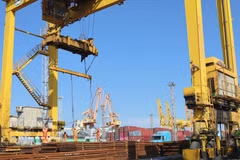
Loading and unloading steel products at Hoang Dieu–Chua Ve Port, Hai Phong city (Photo: VNA)

Hai Phong city seeks to boost inland waterway transport

According to the Hai Phong Maritime Administration, inland waterways carry coal, agricultural products, ores, stone, cement and other bulk cargoes, helping ease pressure on roads, particularly those connecting seaports and industrial parks.