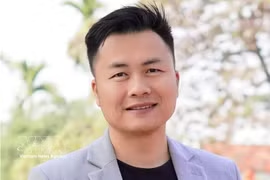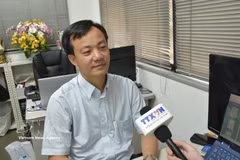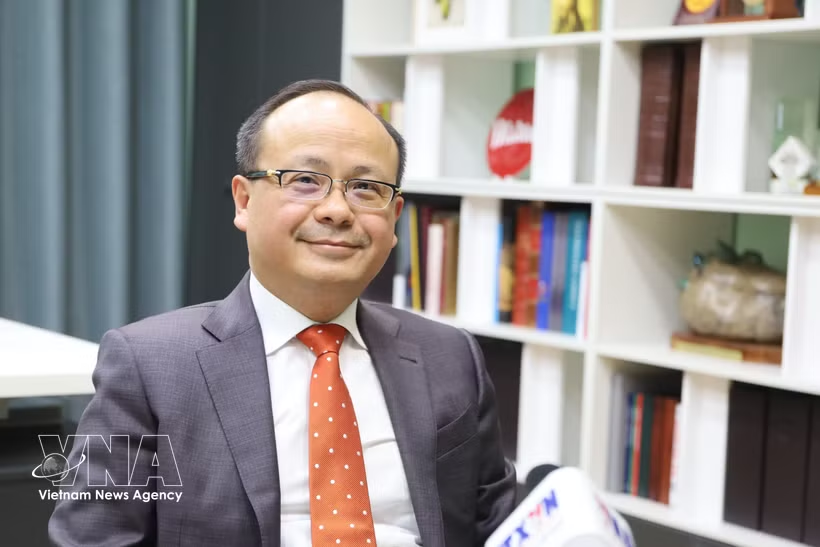
Moscow (VNA) – The Politburo’s Resolution 23-NQ/TW on overseas Vietnamese (OV) affairs marks a new step in policy thinking and raises expectations for more effective mobilisation of expertise, technology and international resources for national development in the new era, said Chairman of the Union of Vietnamese Organisations in Russia Dr. Do Xuan Hoang.
Speaking to the Vietnam News Agency's correspondents in Moscow, Hoang said the resolution is timely and more comprehensive, better aligned with the rapid evolution of the Vietnamese community abroad after more than two decades under the Politburo’s Resolution 36-NQ/TW issued on March 26, 2004.
A key new feature is that the resolution elevates overseas Vietnamese to one of the country’s important strategic resources. It recognises their contributions, particularly Vietnamese in Russia, and affirms policies to support the community’s prosperity in host countries. That, in turn, is expected to deliver qualitative changes to their contributions to national construction, global integration and Vietnam’s standing in the world.
According to Hoang, while Resolution 36 placed emphasis on mobilisation and solidarity, the new resolution highlights connection and partnership, creating new conditions to harness the full range of resources available within the Vietnamese community broad.
From the perspective of the Vietnamese community in Russia, its contributions span a wide range of areas, from business, investment, regional connectivity, to the sharing of organisational, management experience and scientific - technological expertise. In the past, Vietnamese students in the Soviet Union formed the backbone of several economic and scientific sectors in Vietnam. Today, more than 5,000 Vietnamese students are studying in Russia - a promising pool of young talent expected to acquire advanced scientific and technological knowledge and contribute to national development.
Against this backdrop, the timing of Resolution 23 is significant as it responds to new developments and anticipates emerging trends when science and technology become more central to global economic growth, he said.
He underlined the resolution’s two-way impact. As an entrepreneur who has contributed to his host country and Vietnam, Hoang said State policies not only generate new benefits for Vietnam’s economy and national interests, but also create opportunities for Vietnamese firms and scientists abroad to develop, demonstrate capabilities and maximise professional potential.
Vietnam’s economy is increasingly open and growing rapidly, creating new opportunities in both scale and quality for Vietnamese entrepreneurs and scientists abroad. Hoang said he is confident that the patriotism and desire of overseas Vietnamese to contribute to their homeland’s development will receive an even more positive response, giving the community greater opportunity to build a prosperous and developed Vietnam./.