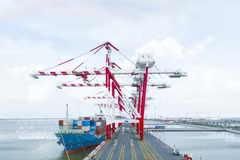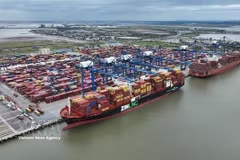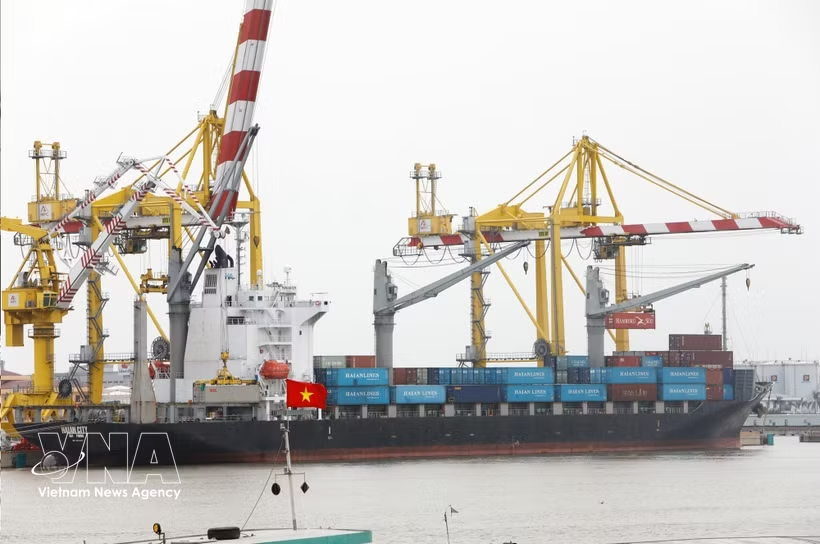
Hanoi (VNA) - Vietnam’s total import-export turnover topped 825 billion USD as of September 15, up 29.4% year on year, while the trade deficit widened to 23.5 billion USD.
According to the Vietnam Customs Department, trade turnover reached nearly 55 billion USD in the first 15 days of September, pushing the year-to-date total above 825 billion USD.
With growth approaching 30% year on year, Vietnam’s trade flows remain robust, driven by strong demand for consumer goods and production materials. Processing and manufacturing, particularly electronics, machinery and equipment, continued to drive export growth.
If the current momentum is sustained, Vietnam’s trade turnover could reach or exceed 1.2 trillion USD this year.
Computers, electronic products and components remained the leading trade category. In the first 15 days of September, exports reached 9.6 billion USD, while imports stood at 13.1 billion USD. Since the beginning of the year, exports of these products totalled 111 billion USD, compared with nearly 175 billion USD in imports.
Machinery, equipment, tools and spare parts recorded nearly 51 billion USD in imports and 50.7 billion USD in exports.
The trade deficit stood at 20.46 billion USD in the first eight months. In the first 15 days of September alone, exports exceeded 26 billion USD, while imports reached 28.84 billion USD, adding more than 2.82 billion USD to the deficit.
Imports of several key commodities also rose sharply, including petroleum products at nearly 9 billion USD, crude oil at 6.6 billion USD, coal at 6.7 billion USD, iron and steel at 8.2 billion USD, and fabrics at nearly 11 billion USD.
Despite strong overall trade growth, major domestic export sectors, including agriculture, fisheries, textiles and garments, footwear and wood products, are facing weaker demand and lower export prices.
Seafood exports reached 1.1 billion USD in August, up 6.4% year on year, but growth slowed significantly from the 11.9% recorded in the first eight months.
Exports to the US fell 3.8% in August to 182 million USD, with shrimp exports down 12.6% and pangasius plunging 49.3%. The EU market also contracted 6.2%, while export growth to China slowed to 16.5% in August from 32% in the first eight months.
Prof. Dr. Vo Xuan Vinh, Director of the Institute of Business Research at the University of Economics Ho Chi Minh City, said the trade deficit is not necessarily negative as imports are largely made up of machinery, equipment and raw materials for production and exports.
He said the greater concern is that domestic businesses have yet to fully benefit from expanding trade, citing high financing costs, limited access to capital and rising compliance and logistics costs.
Vinh called for policies to ease access to financing and support market expansion and export promotion for businesses in Vietnam./.