Hanoi (VNA) – Vietnam’s trajectory toward 1 trillion USD in import-export turnover urgently requires a comprehensive upgrade of national logistics, from infrastructure, multimodal connectivity, business capacity, and supply chain management, with the focus shifting from simply moving more goods to ensuring faster, more efficient cargo flows and greater value for the economy, said insiders.
As trade expands, systemic bottlenecks across transport networks, warehousing, ports, border gates, and industrial zones are becoming more apparent. Experts emphasise the need to shift from a fragmented, project-by-project approach toward strategic management structured around trade corridors and integrated supply chains.
Under this model, the State focuses on improving institutions, regulatory frameworks, strategic planning, and foundational connectivity, while enterprises develop integrated service capabilities.
According to Tran Thanh Hai, Deputy Director General of the Ministry of Industry and Trade's Import-Export Department, growing production, market expansion and international integration are generating rising demand for logistics. For import-export businesses, logistics directly affects delivery times, contract performance, and product costs.
With import-export turnover continuing to expand toward the 1-trillion-USD mark, demand for logistics services will remain large; therefore, logistics capacity needs to be upgraded accordingly, Hai stressed.
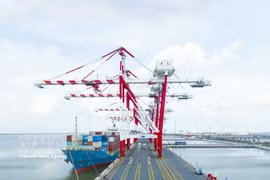
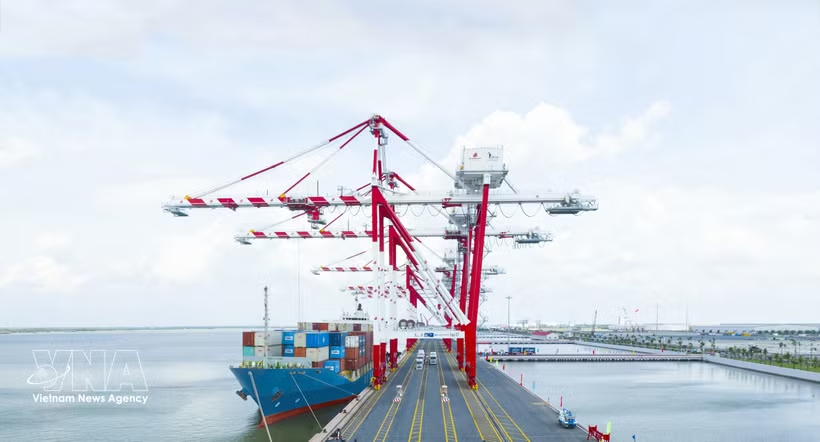
This direction is also consistent with developing a modern, multimodal logistics system that connects seaports, border gates, airports, railways, expressways, industrial parks and economic corridors. Logistics is thus increasingly viewed not only as a service sector but also as part of national competitiveness.
Vietnam’s logistics costs are currently estimated at 16-17% of GDP, above the target of 12-15% by 2035, indicating considerable room for improvement. Lowering costs, however, requires tackling structural bottlenecks rather than relying solely on freight rate reductions.
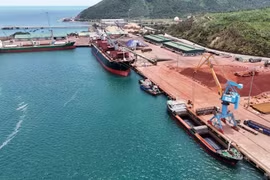
The central province of Thanh Hoa illustrates these challenges. Despite hosting the Nghi Son Economic Zone, a major seaport, roads, railways, waterways, and Tho Xuan Airport, over 74% of its freight remains road-dependent. Direct rail links to key ports and industrial parks are absent, and dedicated air cargo hubs have yet to be developed.
Tran Nhu Tuan, Vice Chairman of the Thanh Hoa Stone Association, said policies and infrastructure should be designed around actual transport needs. The province’s advantages in seaports, waterways and cargo sources cannot be fully converted into competitiveness without suitable transport solutions.
Transport policies and infrastructure must align with real-world demand, measuring success strictly by tangible reductions in shipping costs and transit times, he noted.
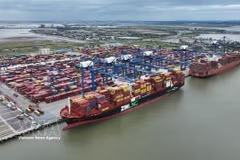
At the sectoral level, Hai identified poor synchronisation and connectivity among transport modes, localities and businesses as major bottlenecks. In addition to roads, Vietnam needs to develop warehouses, logistics centres, inland container depots, rail and waterway transport, and container-handling capacity.
Logistics firms should also move from individual services toward integrated solutions, applying technology and becoming more deeply involved in supply chain management, he noted.
Digital transformation, data and green logistics are increasingly becoming competitive capabilities amid global supply chain disruptions, he said, stressing that an official logistics data system will help management agencies identify bottlenecks and high-cost sectors while enabling businesses to manage vehicles, warehouses, orders and transport more efficiently.
According to Hai, the ministry has issued an action plan to implement the Vietnam Logistics Services Development Strategy for 2025-2035, with a vision to 2050, while working with localities to assess conditions and identify priorities.
Given differences in location, cargo sources and infrastructure, no single logistics model can fit all localities. Ministries and sectors therefore need to improve inter-regional coordination, shared data and integrated planning, while prioritising major cargo corridors, multimodal transport and logistics centres linked to production areas, industrial parks, seaports and border gates.
Ultimately, policy effectiveness should be measured through tangible improvements in cargo flows such as lower costs, shorter delivery times, greater use of multimodal transport and more value retained by Vietnamese businesses. The 1-trillion-USD trade milestone is therefore not merely a measure of trade scale, but also a test of national logistics capacity./.