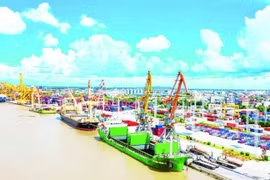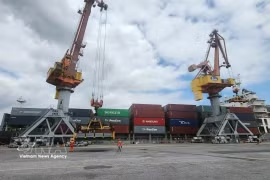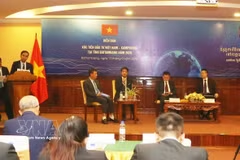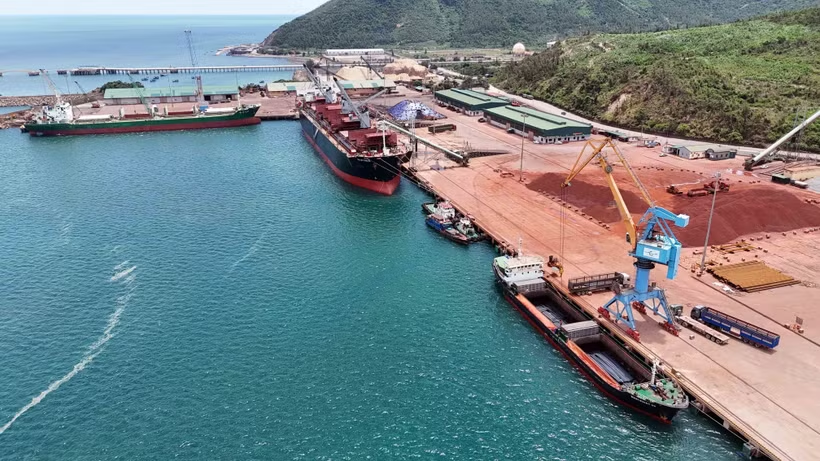
Gia Lai (VNA) - Green and digital transformation, together with modern logistics systems, are key priorities for improving the competitiveness of Vietnam’s seaport sector, experts and industry representatives said at a conference in Gia Lai province on September 18.
Discussions the 2026 annual conference of the Vietnam Seaports Association (VPA) in Quy Nhon ward focused on the development of the sector amid changes in global supply chains, rising demand for logistics services, and pressure to adopt new technologies and cut emissions.
Green transformation drives competitiveness
Nguyen Dinh Viet, Deputy Director of the Vietnam Maritime and Waterway Administration, said green transformation was becoming an important part of Vietnam’s seaport development.
He noted that the process involves not only investment in equipment and technology but also improvements in management, port operations, resource efficiency and service quality.
Green transformation presents both a requirement and an opportunity for businesses to improve their operations, raise efficiency and strengthen competitiveness, he said.
Digital transformation and technological innovation are also key drivers of port modernisation. Digitising procedures, connecting and sharing data, and applying technology to port management and operations can help raise productivity, reduce time and costs, and improve service quality.
However, such efforts should match the conditions of each region, port, and business to ensure effective investment and long-term benefits, Viet said.
Chairman of the VPA Huynh Van Cuong said the sector was facing both opportunities to expand its role in regional supply chains and new demands for stronger connectivity, competitiveness, green development, digitalisation and better management.
He said the association would prioritise green and smart port development and stronger logistics links during its 10th tenure.
Key areas include energy management, emissions reduction, electrification, shore power, renewable energy, emissions measurement and reporting systems, and green financing.
“Seaports are not only gateways for goods. They must also become gateways for connectivity, innovation and development,” Cuong said.
Building a green, smart port ecosystem
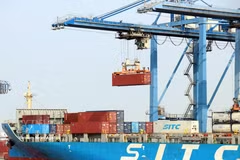
According to the VPA, its members rose 14% between 2020 and 2025, while cargo throughput increased 19% and container throughput grew 31%.
Member ports are expected to handle around 530 million tonnes of cargo and 24 million TEUs in 2026. A TEU is the standard unit for a 20-foot shipping container.
The growth highlights the need to improve port operations, hinterland connectivity, service quality and the ability to meet new development standards.
The VPA has identified six priorities through 2030: policy, connectivity, green ports, smart ports, human resources and international integration.
To develop green ports, the association planned to promote energy management, emission reduction, electrification, onshore power, renewable energy, measurement systems, reporting and verification of emissions (MRV), along with green financial solutions.
For smart ports, it encourages the use of digitalisation, automation, artificial intelligence, the Internet of Things, port community systems, electronic documents and industry-wide data sharing.
However, the association noted that connections between seaports and roads, railways, inland waterways, inland container depots, logistics centres and industrial parks remain uneven.
Deputy Chairman of the provincial People's Committee Nguyen Huu Que said the merger of Gia Lai and Binh Dinh provinces to form the new Gia Lai province had transformed the “highlands–seaport” transport corridor into an internal development axis, creating opportunities for coordinated planning of transport, logistics and industrial infrastructure.
The province plans to upgrade and expand Quy Nhon Port and other port facilities towards green and smart operations. It will also improve transport links between highland production areas and seaports, develop logistics centres and coastal industrial zones, and streamline administrative procedures to attract shipping lines, logistics companies and domestic and foreign infrastructure investors./.