Kim Long Motor exports first batch of electric buses to Thailand

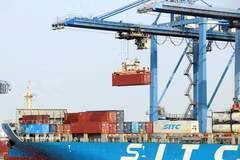
This is the first batch of finished buses manufactured by Kim Long Motor to be transported to an international market via a dedicated roll-on/roll-off (Ro-Ro) vessel, marking a new development in logistics capacity and port connectivity in the central region.

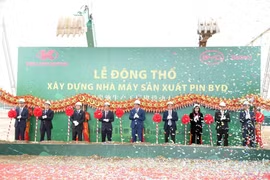
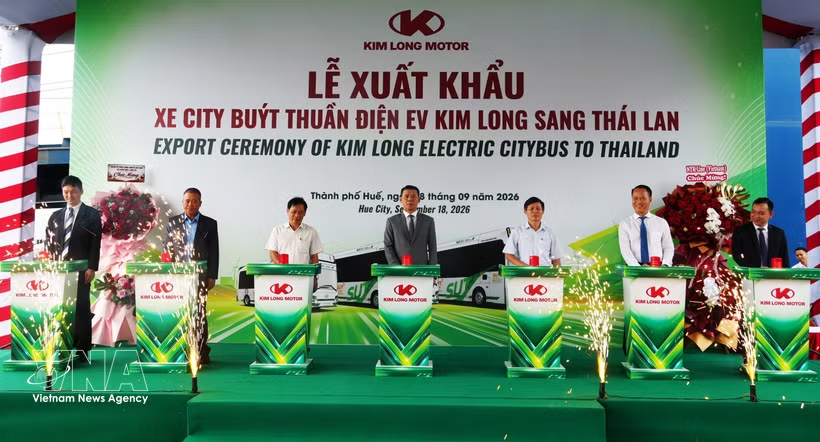
Delegates at the ceremony held at Chan May Port in Hue city for the export of first batch of Kim Long Motor electric buses to Thailand Photo: VNA)

Hue (VNA) – The Kim Long Motor Hue JSC (Kim Long Motor) on September 18 exported its first batch of electric buses to Thailand, marking the Vietnamese automaker’s first shipment of finished buses to an international market and a new step in its export and logistics operations.

The export ceremony was held at Chan May Port in Chan May-Lang Co commune, in central Hue city. The nine buses are part of a total of 113 vehicles scheduled for delivery and export to Thailand in 2026 for passenger transport.

This is the first batch of finished buses manufactured by Kim Long Motor to be transported to an international market via a dedicated roll-on/roll-off (Ro-Ro) vessel, marking a new development in logistics capacity and port connectivity in the central region.

Developed specifically for Thailand, the Kim Long electric bus is designed to meet the country’s urban transport infrastructure and technical requirements. The bus is equipped with various convenience and safety features, including a high-capacity air-conditioning system, surveillance cameras, and a dedicated wheelchair area with a foldable ramp and assistance bell, and advanced safety systems.

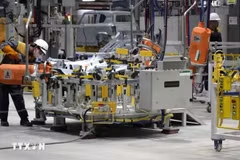
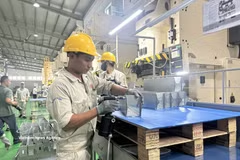
Kim Long Motor’s automobile manufacturing complex in the Chan May-Lang Co Economic Zone in Hue city covers 636ha and houses factories producing components, including interior and exterior parts, chassis, batteries, and motors.

The company’s production capabilities have enabled its electric vehicles to achieve a localisation rate of more than 60%, with the rate targeted to reach 90% by the end of 2026, matching the level already achieved by its diesel-powered buses.
vnanet-kim-long2.jpg
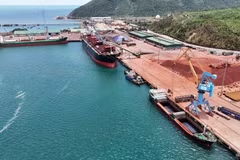
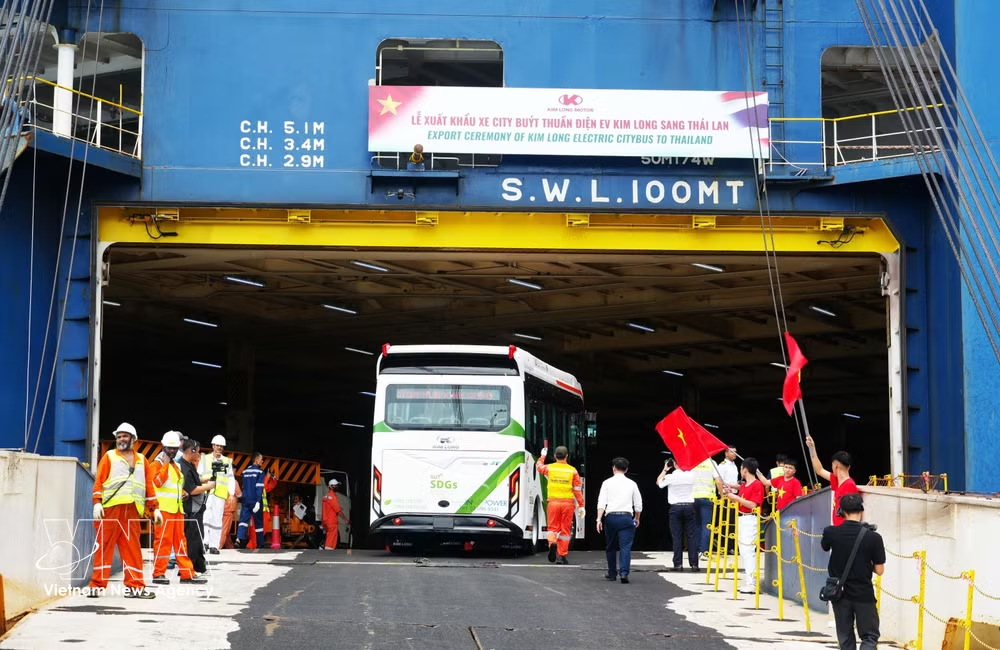
A Kim Long Motor electric bus is loaded onto a vessel for export to Thailand (Photo: VNA)

The transport of the buses from Kim Long Motor’s plant to Chan May Port and onward to Laem Chabang Port in Thailand demonstrates the integration of production, logistics and exports, creating a foundation for the Vietnamese firm to expand international connections and participate more deeply in global supply chains and trade networks.

Kim Long Motor General Director Dao Viet Anh said the export of electric buses to Thailand demonstrates the technological and manufacturing self-reliance of Vietnamese brands. Each exported product represents not only a commitment to quality but also an opportunity to showcase Vietnam’s industrial capabilities to international markets, he stressed.

Previously, on September 15, Kim Long Motor launched its passenger bus models in Thailand and received 50 orders on the day./.
VNA

See more

Vung Anh deep-water port in Ha Tinh province (Photo: VNA)

Vietnam promotes green, smart seaports linked to modern logistics

To develop green ports, the Vietnam Seaports Association planned to promote energy management, emission reduction, electrification, onshore power, renewable energy, measurement systems, reporting and verification of emissions (MRV), along with green financial solutions.

The Can Gio mangrove forest, a vital "carbon sink" ecosystem, contributes to generating the credits needed to fuel Vietnam's carbon market. (Photo: VNA)

Institutions must provide strong economic incentives for green transition: experts

Assoc. Prof. and Dr Ngo Tri Long of the Vietnam Financial Consulting Association proposed reviewing legislation across the entire chain of economic activities to identify and address key points of intersection in support of the green and circular transition in a consistent manner, preventing legal gaps and enabling waste to genuinely become a resource.

An automotive and motorcycle parts production line at Vietnam Precision Industrial Co., Ltd. No. 1 in Ba Thien 2 Industrial Park, Phu Tho province (Photo: VNA)

Vietnam moves to fast-track foreign investment through institutional reforms

Under the draft Law, the Government will periodically adjust market access restrictions for foreign investors based on socio-economic conditions and management requirements. This approach could shorten policy lags amid rapid changes in international capital flows, technology and supply chains, while Vietnam is shifting its investment attraction focus from quantity to quality and efficiency.

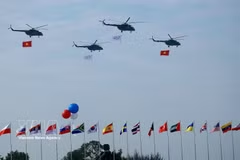
Helicopters perform a flypast at the opening ceremony of the Vietnam Defence Expo 2024. (Photo: VNA)

128 companies from 31 countries register for Vietnam Defence Expo 2026

Vietnam Defence Expo 2026 will cover about 123,800 sq.m and feature seven main areas, including indoor and outdoor exhibition spaces, a defence experience and military games area, a space showcasing defence-economic products and the cultural heritage of Vietnam’s three regions, a VIP reception area, grandstand and performance areas, and common facilities.

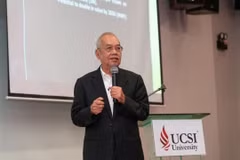
Professor Dato Dr Ahmad Ibrahim, an expert in technology, digital transformation and agricultural value chains at UCSI University (Photo published by VNA)

Malaysia-Vietnam cooperation potential under NAP 2.0: expert

By leveraging their complementary strengths under the NAP 2.0 framework, Malaysia and Vietnam have considerable potential to deepen cooperation to build a more technology-driven, sustainable, and resilient agricultural sector in Southeast Asia.

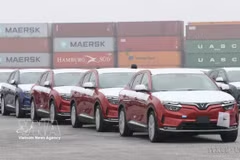
VinFast electric cars are gathered at Hai Phong Port, ready to be loaded onto a ship for export. (Photo: VNA)

Going global: The competition challenge for "Made in Vietnam" cars

The growing number of exporters shows that Vietnam’s automobile industry is entering a new stage of development. However, international markets also present major challenges related to localisation, supporting industries, technological capabilities, human resources and country-specific technical standards.

Ports in Ho Chi Minh City are always bustling with ships loading and unloading cargo (Photo: VNA)

Ho Chi Minh City helps businesses effectively leverage FTAs

Ho Chi Minh City will implement a range of tasks and solutions to enhance business competitiveness, promote sustainable exports, expand markets, and enable local businesses to engage more deeply in global value and supply chains. The move is also expected to contribute to the development of Ho Chi Minh City as a regional hub for trade, logistics and international economic integration.