Hanoi (VNA) – The Turkish market offers considerable room for Vietnamese tropical fruits, particularly produce that Türkiye lacks the natural conditions or domestic production capacity to supply, but Vietnamese businesses face a number of challenges in tapping the market, including logistics, phytosanitary requirements, food safety, traceability, and import costs.
Asurvey by the Vietnam Trade Office in Türkiye shows that there remains significant potential for Vietnamese fresh fruit exports to the market. At present, fresh fruits from Vietnam are available mainly at some premium supermarkets, Asian food stores, and importers serving foreign communities in Istanbul and Ankara; they have yet to gain widespread market access.
Several factors have limited the growth of Vietnamese fresh fruit exports to Türkiye. The country has a highly developed agricultural sector and is one of the world's major producers of grapes, apples, cherries, and apricots, among others. Abundant domestic supplies mean that demand for imported fresh fruits is lower than in many East Asian and Middle Eastern markets.
The considerable geographical distance between Vietnam and Türkiye also raises logistics costs and transportation times. For perishable produce such as mango, dragon fruit, rambutan, and longan, maintaining quality during long-distance transportation remains a major challenge. Türkiye also imposes strict requirements on phytosanitary measures, food safety, and traceability.
In addition, the two countries do not have a free trade agreement. Many fresh fruits remain subject to import tariffs under the most-favoured-nation (MFN) tariff schedule, along with phytosanitary, inspection, and customs clearance costs, reducing their competitiveness.
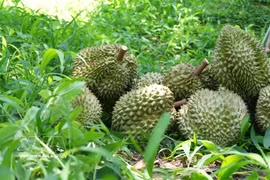
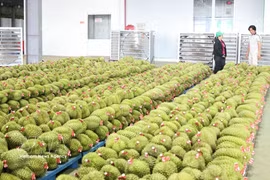
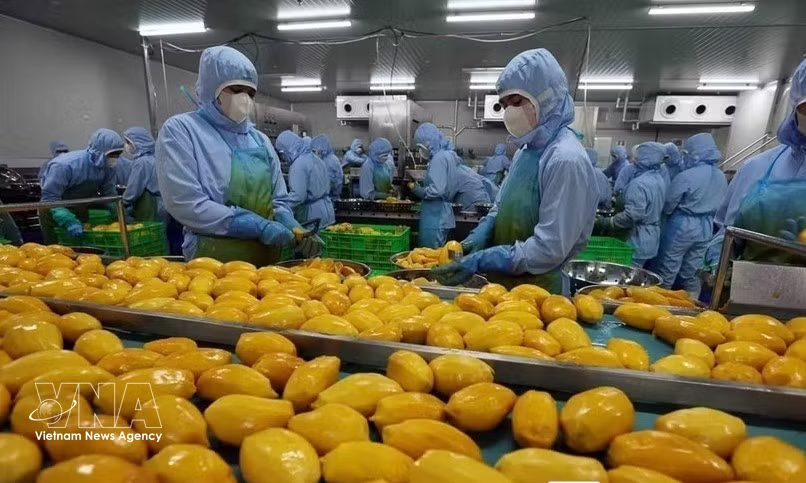
Despite these challenges, the Vietnam Trade Office sees potential for several Vietnamese tropical fruits in the Turkish market, including fresh coconut, dragon fruit, mango, durian, frozen fruit, and individually quick-frozen (IQF) products. These are products for which Türkiye has limited or no domestic production advantages.
The development of tourism, hotels, restaurants, and coffee chains, together with growing demand for healthy foods, is also gradually boosting demand for tropical fruits in major cities such as Istanbul, Ankara, Izmir, and Antalya.
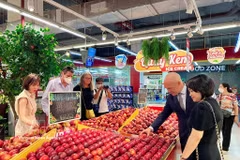
Meanwhile, the growing number of foreigners living in Türkiye and rising international tourist arrivals are creating demand for tropical fruits. Major supermarket chains such as Migros, CarrefourSA, and Metro Türkiye have begun selling a range of premium imported fruits, expanding their product offerings.
To expand fresh fruit exports to Türkiye, Vietnamese businesses are suggested to focus on several key areas. They must fully comply with Turkish regulations on phytosanitary measures, food safety, traceability, and pesticide residue limits.
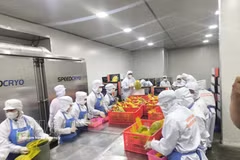
Businesses also need to invest more heavily in post-harvest technologies, including cold treatment, preservation, packaging, and logistics, to maintain product quality during long-distance transportation.
Building a brand for Vietnamese fruits should also be prioritised instead of exporting products merely as raw materials. Businesses should also focus on partnerships with importers specialising in premium food products, modern supermarket chains, and hotel, restaurant, and catering (HORECA) distribution networks, which are more likely to accept higher prices for quality products.
According to experts, Türkiye presents certain barriers, but the market gap for tropical fruits also creates opportunities for Vietnam. By addressing quality, logistics, standards, and branding challenges, Vietnamese fruits could gradually expand from niche markets into modern distribution systems, enabling the country to make better use of its export potential in Türkiye./.