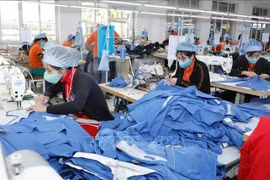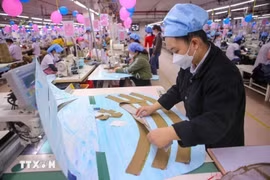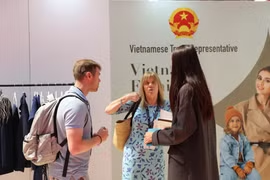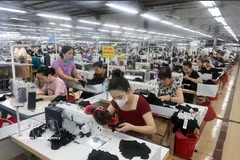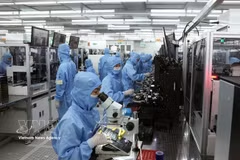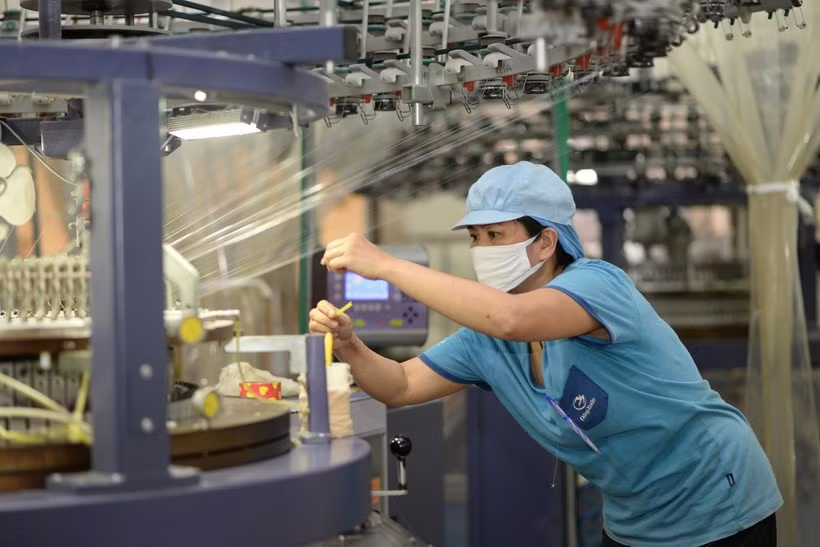
Hanoi (VNA) - To meet increasingly stringent market standards, businesses in Vietnam’s garment and textile industry need to invest heavily in eco-friendly production technology, modern equipment and the development of a high-quality workforce.
Fierce competition and heightened trade tensions between major economies have significantly affected Vietnam’s exports of various products. In response to global economic fluctuations, garment and textile enterprises are intensifying market development efforts, connecting with partners to accelerate orders, while focusing on expanding into new markets to minimise future risks.
In 2024, Vietnam’s garment and textile exports reached around 43.5 billion USD, making the country the world’s second-largest exporter after China. However, the rise of trade protectionist policies in many countries could impact the sector.
Le Tien Truong, Chairman of the Vietnam National Textile and Garment Group (Vinatex), noted that the United States’ temporary countervailing tax policy will affect Vietnam’s garment exports. While US inventories remain low, suggesting orders in the third quarter of 2025 may hold up, the fourth quarter is expected to see a decline due to weakening demand for apparel.
“Although the market remains volatile, current tariff negotiations are being conducted by product groups, which could create opportunities for Vietnam’s garments,” Truong said.
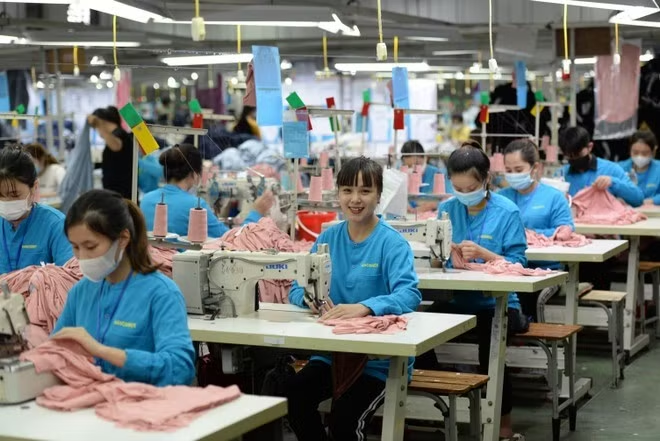
The US accounts for around 35–40% of Vietnam’s garment exports. To reduce risk, many companies are targeting potential new customers.
Nguyen Hong Lien, General Director of Hue Textile and Garment JSC, said production plans have been affected by the US tariff announcement. Initially, some customers paused orders, then requested faster delivery when the 10% tax was imposed for 90 days. Most orders for April to June remain on schedule.
Hue Textile and Garment has filled its July order book but foresees tougher competition as social responsibility, security and quality management requirements become stricter. The company continues to secure FOB (free on board) orders for the third quarter. Chinese fabric suppliers have agreed to cut material prices by 25–27% to retain customers and cushion the tariff impact. Fourth-quarter orders are likely to fall year-on-year, depending on the segment.
At Hung Yen Garment Corporation, orders from Korean customers, though modest in volume, have required small price concessions of around 1%. General Director Pham Thi Phuong Hoa said production is scheduled through mid-August, with negotiations ongoing for more orders. Demand in the US is forecast to dip slightly.
“From now until the end of July, especially in June and early July, production is very tight. Customers demand on-time delivery, without the delays allowed in previous years. Any delay poses risks in transport and timing, so our entire production system is focused on meeting deadlines,” she added.
According to Vinatex, garment exports in April totalled 3.64 billion USD, up 15% year-on-year. In the first four months of the year, exports reached 13.9 billion USD, an 11% rise. Besides the US, key markets such as Japan and Europe also recorded growth, prompting companies to step up negotiations to boost shipments.
Nguyen Hung Quy, General Director of Southern Textile and Garment Corporation (VSC), said the company has enough orders until the end of August. In light of US tariff developments, VSC has proactively expanded into Europe and the UK, where the share of orders for late 2025 is significantly higher than earlier in the year.
“If countervailing tariffs are negotiated to rise only 15–20%, it would still be acceptable for Vietnam. We also propose greater transparency in origin certification,” Quy said.
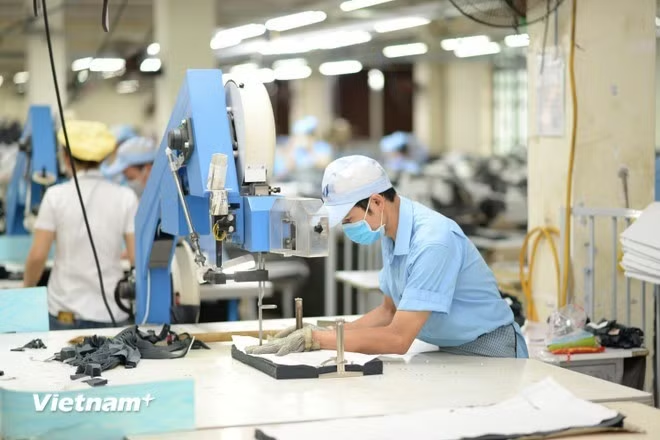
Nguyen Thi Phuong Thao, CEO of Garment 10 Corporation (May10), said its orders are full until the end of July, with some product lines, such as jackets, being booked through August, and others until the year’s end. Customers are pushing for early July deliveries, creating significant production pressure. May10 has adopted flexible production and overtime to cope with, while expanding its raw material supply network via Vinatex members and partners in India and Taiwan (China).
Pham Tien Lam, General Director of Duc Giang Corporation, said the firm is working to ship goods within the US 90-day tariff suspension, while exploring potential markets like Australia and Japan. Positive signals have also emerged from China.
“In the US market, we must retain customers and prevent order cuts, ensuring stable production without excessive pricing pressure. The right approach is to focus on customers and high value-added brands, matching our strengths. We are stable through July and are taking orders for August and September,” Lam added./.