Hanoi (VNA) – As global competition intensifies, developing internationally recognised brands has become crucial for Vietnam’s handicraft sector which, despite its rich heritage, has yet to fully unlock the export potential.
Hanoi alone is home to around 1,350 handicraft villages whose products have already reached markets such as Japan, the US, and the European Union. Yet, facing rivals from China, India, or the Philippines, Vietnam’s handicrafts still struggle to stand out.
Industry insiders say the biggest bottleneck lies in design stagnation and the absence of a strong brand identity. Many products follow existing templates instead of offering fresh or distinctive concepts. Some items with high aesthetic value fail to match consumer tastes or cannot be produced at scale. Meanwhile, consumer awareness of craft village brands remains limited, and investment in branding, packaging, or storytelling is still modest among small producers.
International certifications such as FSC, ISO, CE, and FDA remain underutilised though they are mandatory in many high-end markets. At the same time, weak design strategies, limited marketing capacity, and slow adoption of e-commerce mean that many artisanal products, though high-quality and competitively priced, remain invisible to global buyers.
As a locality that accounts for 45% of Vietnam’s traditional craft villages, Hanoi is placing stronger emphasis on brand development. Villages like Bat Trang, Dai Bai, and Van Phuc have long been renowned for ceramics, bronze, and silk products, but experts argue that village-level naming alone is not enough.
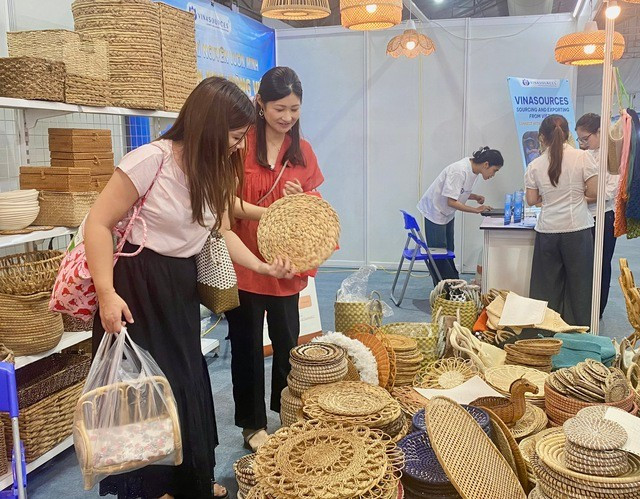
Dr. Dao Cao Son of the Thuongmai University said while some producers have started creating logos, catalogues, and websites, many brands still lack unique visual identity beyond the name printed on a signboard.
In a market saturated with imitation and mass-produced goods, a strong brand is essential to differentiate authentic handicraft products, says Trinh Quoc Dat, Chairman of the Vietnam Craft Village Association. A recognised brand signals quality and origin, builds buyer confidence, and opens doors to modern distribution channels such as supermarkets, global retail chains, and e-commerce platforms. Brand value also directly influences pricing, market stability, and rural incomes.
For craft villages producing items deeply embedded with cultural significance such as carved wood and lacquerware, brand also becomes vital to preserving and promoting cultural identity.
Several craft villages have begun adapting to stricter market requirements. The Dong Ky woodcraft village in Bac Ninh province has registered a collective trademark, developed showrooms, and boosted exports to Japan and the Republic of Korea. La Xuyen village in Ninh Binh has earned a 4-star OCOP rating for its intricately carved wooden pieces used in cultural and religious buildings. In Hanoi, Truong Son Company’s adoption of the Forest Stewardship Council (FSC) standards has paved the way for export to the EU. Many producers have also embraced e-commerce by selling on Amazon, Etsy, and Alibaba to stretch their reach to global markets.
To elevate Vietnam’s handicraft brands to global standards, Son recommends that each craft village develop a unified brand identity system – covering brand name, logo, labelling, and usage guidelines – as the foundation for intellectual property protection and consistent customer recognition. This must be paired with long-term development plans, communications campaigns, and closer links between branding and craft village tourism.
The Hanoi Department of Industry and Trade has proposed supporting villages and enterprises in building professional brand identity systems, standardising packaging, developing brand narratives rooted in cultural heritage, and securing international certificates. It is also planning assistance with greener production, transparent traceability, and intellectual property protection./.