Can Tho (VNA) – Amid efforts to accelerate national digital transformation, localities in Can Tho city are integrating modern technologies into State administration. Beyond conventional software and online platforms, artificial intelligence (AI) is being incorporated into public administrative service processes, leading to tangible improvements in service of people and businesses.
AI “employees” delivering real results
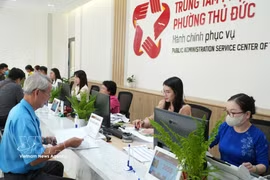
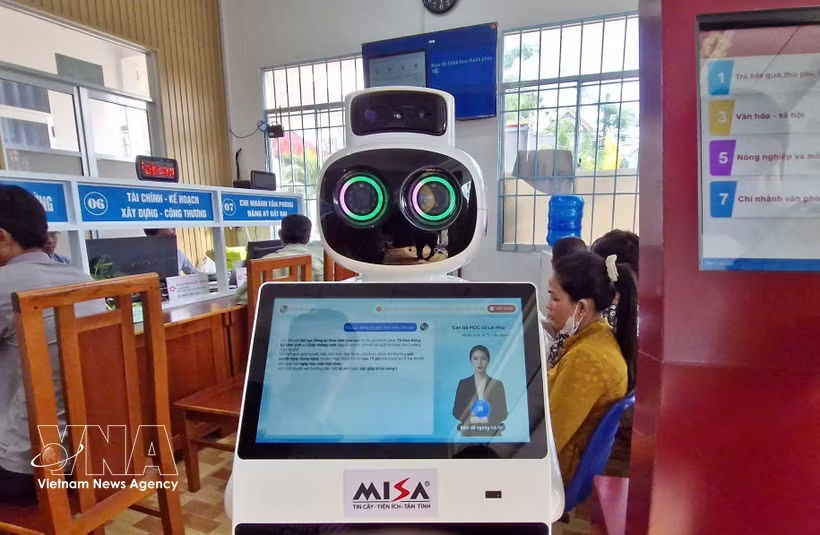
At the Lai Hoa commune Public Administration Service Centre, residents have been pleasantly surprised to be welcomed by a special “employee” – a smart reception robot powered by AI, a virtual assistant, and an automated question-and-answer system.
Unlike conventional information kiosks, the robot can provide step-by-step guidance on administrative procedures in clear Vietnamese, helping residents access information without having to wait for direct assistance from officials.
Resident Dao Phuoc Huyen said he was pleased with the robot’s support, noting that questions about administrative procedures could now be answered conveniently and accurately. Many other residents have also welcomed the tireless virtual assistant, which helps reduce confusion and hesitation when handling administrative procedures while cutting waiting times, particularly during peak periods.
Nguyen Thi Doan, an official at the centre, said the robot can handle around 60-70% of initial questions and provide basic guidance. This helps ease the workload of frontline officials, allowing them to focus on reviewing and processing more complex applications.
The effectiveness of AI-supported services is reflected in the centre’s performance during the first six months of 2026. It received 3,602 applications, of which 3,597, or 99.86%, were submitted online, while only five were filed in person. As many as 99.97% of applications were processed on time or ahead of schedule, while the rate of digitisation of application components and processing results reached 99.87%.
Chairman of the Lai Hoa commune People’s Committee Tran Tri Van said the locality remains committed to the three pillars of the digital transformation process – digital economy, digital society, and digital government – and steps up AI application to support socio-economic development and improve quality of life.
Expanding digital platforms, AI in administrative management
The AI-driven transformation is spreading beyond individual pilot models. Long Phu commune has recently launched AI applications and specialised digital platforms to optimise administrative operations and bring digital services closer to residents.
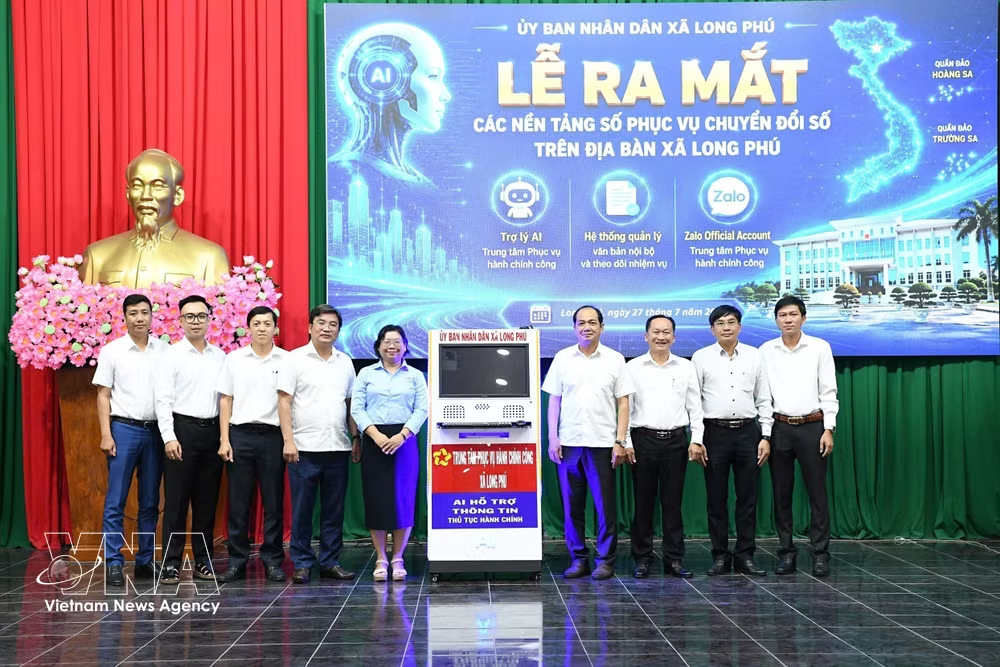
These include an AI assistant providing information on administrative procedures for people and businesses, an internal document management and task-monitoring system, and a Zalo Official Account of the commune’s Public Administration Service Centre to strengthen online interaction between authorities and residents.
The commune had laid solid foundations for digital services. In the second half of 2025, 97.10% of its 4,900 administrative applications were submitted online, placing Long Phu third among 103 communes and wards on the National Public Service Portal in December 2025. It also received full marks on transparency and public satisfaction.
According to Vice Chairman of the municipal People’s Committee Nguyen Van Khoi, science and technology provide the foundation for a smart society, innovation serves as a driving force, and digital transformation creates breakthroughs in governance. He stressed the importance of implementing Politburo Resolutions No. 57-NQ/TW on breakthroughs in science and technology development, innovation, and national digital transformation, and No. 68-NQ/TW on the development of the private economic sector to renew governance methods and enhance local competitiveness.
By placing public satisfaction at the centre, Can Tho’s localities are steadily building a smart, modern, and people-centred administration in the digital era./.