Pilot "Smart police station" kiosk launched in Hanoi

During the pilot phase, the "Smart police station" provides five core functions: crime/incident reporting; SOS emergency calls; crime alert; finding the nearest police stations and administrative offices; and legal Q&A.

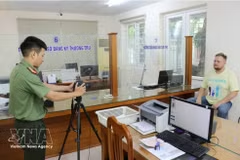
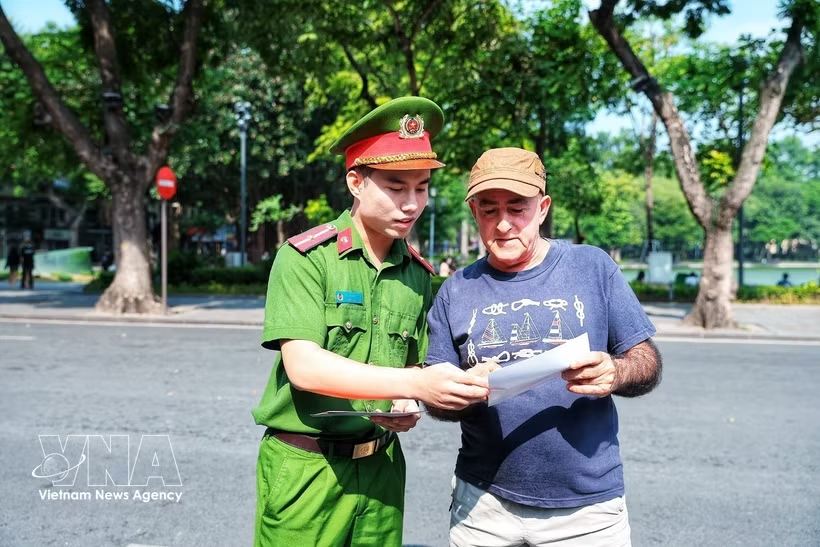
A police officer introduces a foreign visitor to the “Smart police station” kiosk, making it easier for international visitors to access police support services. (Photo: VNA)

Hanoi (VNA) - A “Smart police station” kiosk was officially launched for pilot operation in the capital city of Hanoi on August 15 morning.

Located at 89 Dinh Tien Hoang Street near Hoan Kiem Lake, this kiosk offers multi-language support to assist both local residents and tourists.

This station is part of the "multi-service kiosk ecosystem" spearheaded by the Police Department for Administrative Management of Social Order (C06) under the Ministry of Public Security. The project aims to leverage national population data, digital identity, and electronic authentication to provide safer and more efficient public services.

During the pilot phase, the "Smart police station" provides five core functions: crime/incident reporting; SOS emergency calls; crime alert; finding the nearest police stations and administrative offices; and legal Q&A.

A standout feature of the model is its sophisticated back-end processing. When a citizen files a report, AI and voice-recognition technology guide them through the process step-by-step. The system automatically records the user's speech and suggests missing details to ensure the final report is comprehensive and properly structured.

Once submitted, the information is instantly logged into the Ministry of Public Security’s processing system and forwarded to the relevant local police units. This allows authorities to proactively contact, guide, and support citizens throughout the resolution process, while tracking all progress and results within the digital system.

Major General Nguyen Manh Hung, Deputy Director of C06, said the value of the "Smart police station" extends beyond simply providing an additional communication channel for the public. Instead, it aims to establish a seamless, end-to-end process—from reception and recording to processing, citizen support, and result tracking—thereby enhancing transparency and efficiency in handling reports and feedback.
vnanet-kiosk1.jpg
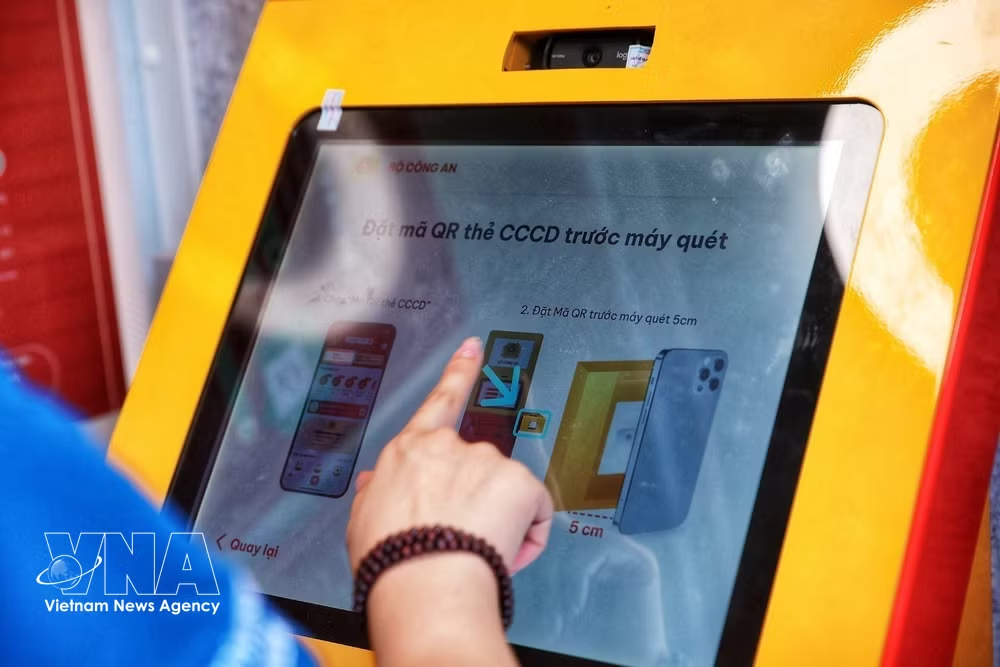
The Kiosk guides users through authentication using the QR code on their identity cards or the VNeID app to access its services. (Photo: VNA)

For both domestic and international tourists, the station features an SOS function for emergency assistance, enabling users to establish immediate contact with local police forces.

While "Smart police station" models have been implemented in several countries and cities worldwide, the challenge in Vietnam was more than just adopting an existing system.

Based on practical requirements, C06 developed an operational framework and development strategy specifically tailored to Vietnam’s national population database and digital identification systems. This model prioritises the application of AI, the automation of intake and processing, and seamless integration with professional police systems, all while ensuring strict information security and the protection of personal data.

Hanoi is the first locality in the country to pilot the model. In the coming time, the model will continue to be researched and refined, with plans to integrate further services and utilities linked to population data, citizen identity cards, and the VNeID digital identification ecosystem./.
VNA

See more

A public servant at the Public Administrative Service Centre of Vinh Yen ward, Phu Tho province, guides residents through the marriage registration process on the online public service portal. (Photo: VNA)

Digital literacy campaign lays foundation for digital citizens in Phu Tho province

After nearly a year, the “Digital Literacy for All” campaign in Phu Tho is demonstrating its effectiveness through tangible results. Residents who were once hesitant about technology are becoming increasingly familiar with VNeID, online public services, cashless payments, and digital platforms for learning, production, and business.

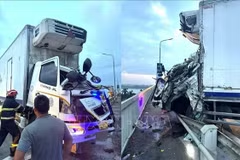
Firefighters and rescue personnel deploy specialised equipment to rescue two truck drivers trapped in their cabins. (Photo: VNA)

Road accident fund to provide support from September

Under Decree No. 279/2025/ND-CP and Circular No. 126/2026/TT-BCA, injured victims with bodily injury rates of over 31% to below 81% may receive up to 10 million VND (381 USD) per case, while families of deceased victims may receive up to 20 million VND.

Ha Thanh, Chairwoman of the Ho Chi Minh City Union of Friendship Organisations and head of the advisory council for international integration, people-to-people diplomacy and overseas Vietnamese affairs under the Vietnam Fatherland Front Committee of the city (Photo: VNA)

New resolution seeks to unlock OV resources for national development

Ha Thanh, Chairwoman of the Ho Chi Minh City Union of Friendship Organisations and head of the advisory council for international integration, people-to-people diplomacy and overseas Vietnamese affairs under the Vietnam Fatherland Front Committee of the city, said Resolution No. 23 builds on the fundamental viewpoints of the Politburo's Resolution No. 36-NQ/TW issued in 2004, reaffirming that overseas Vietnamese are an inseparable part of the nation and a bridge connecting Vietnam with the world.

The Vietnamese Embassy in London's Education Section and representatives from the Department of Higher Education (Ministry of Education and Training) visit and hold a working session at Queen Mary University of London. (Photo published by VNA)

Vietnam-UK education cooperation: From market to partnership

In the 2024/25 academic year, about 3,725 Vietnamese students studied in the UK, while 13,285 enrolled in UK programmes delivered in Vietnam. Both flows are growing, but the balance is increasingly shifting towards UK education being delivered to learners in Vietnam. If managed strategically, this could enable Vietnam to expand access to international education at home while improving the quality of its workforce.

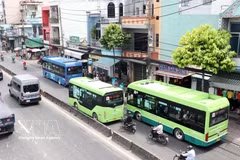
A bus picks up passengers on National Highway 22 (Le Quang Dao Street), near An Suong Bus Station. (Photo: VNA)

Free bus fares drive sharp rise in ridership in Ho Chi Minh City

As of August 12, the city’s bus network had served nearly 12 million passenger trips, up about 44% year on year. On August 12 alone, around 306,000 passengers used free buses, an increase of roughly 55%, despite students having yet to officially return to school.

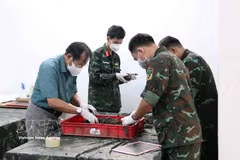
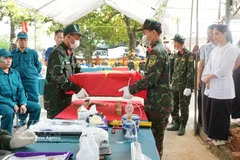
Officers and soldiers bring martyrs’ remains to the sampling station at Binh Xuyen commune Martyrs’ Cemetery in Phu Tho province (Photo: VNA)

More than 1,700 war martyrs’ remains recovered

The national steering committee will continue verifying information on suspected martyrs’ graves in key areas, including Tan Son Nhat Airport in Ho Chi Minh City, Quan Y Bac Son Hill in Dong Nai, the Con Tien base area in Quang Tri and former Vi Xuyen battlefields in Tuyen Quang.

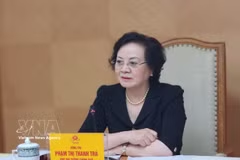
Delegates observe a minute of silence in tribute to Cuban leader Fidel Castro Ruz (Photo: VNA)

Quang Tri celebrates 100th birthday of Cuban leader Fidel Castro

Addressing the ceremony, Vice Chairman of the provincial People’s Committee Le Duc Tien said Fidel Castro was a figure of exceptional stature whose life and revolutionary career were closely associated with the victory of the Cuban Revolution and the struggle for national independence and sovereignty, as well as the aspirations of peoples around the world for independence, freedom, peace and justice.

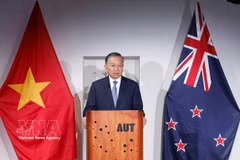
General Secretary of the Communist Party of Vietnam Central Committee and President To Lam addresses the 2026 Vietnam–New Zealand higher and vocational education forum in Auckland on August 13, 2026. (Photo: VNA)

Top leader calls for stronger Vietnam–New Zealand ties in higher and vocational education

General Secretary and President To Lam called on the two sides to jointly develop high-quality human resources for the digital, green, circular and knowledge-based economies, prioritising areas of strong demand and high complementarity such as artificial intelligence (AI), data science, digital technology, cybersecurity, biotechnology, smart agriculture, food technology, renewable energy, environmental technology, public governance and emerging occupations of the future.

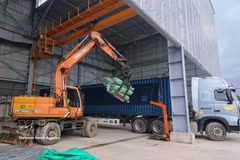
Machinery has been integrated into cargo handling lines, helping reduce labour requirements and improve import-export efficiency. (Photo: VNA)

Lang Son tackles skilled labour shortage in border-gate logistics

As the province promotes investment in logistics services and infrastructure at border gates, businesses are increasingly shifting from relying on manual labour for loading and transshipment to workers capable of operating modern equipment and handling specialised tasks.