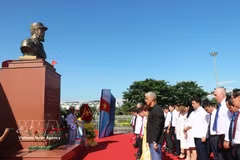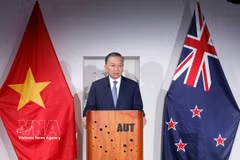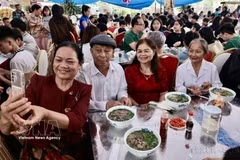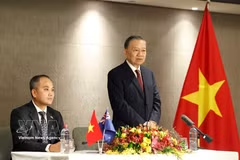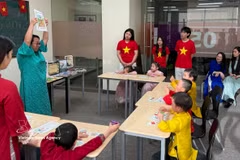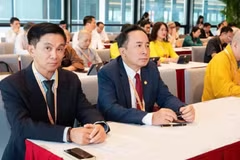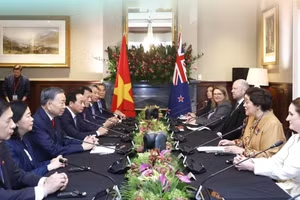
Sydney (VNA) – Aside from the official meetings, business forums, or signed deals, one of the most memorable moments from General Secretary of the Communist Party of Vietnam Central Committee and President To Lam’s state visits to Australia and New Zealand was the sight of overseas Vietnamese eagerly welcoming the delegation, filled with pride, emotion, and fresh hopes for stronger ties to their homeland.
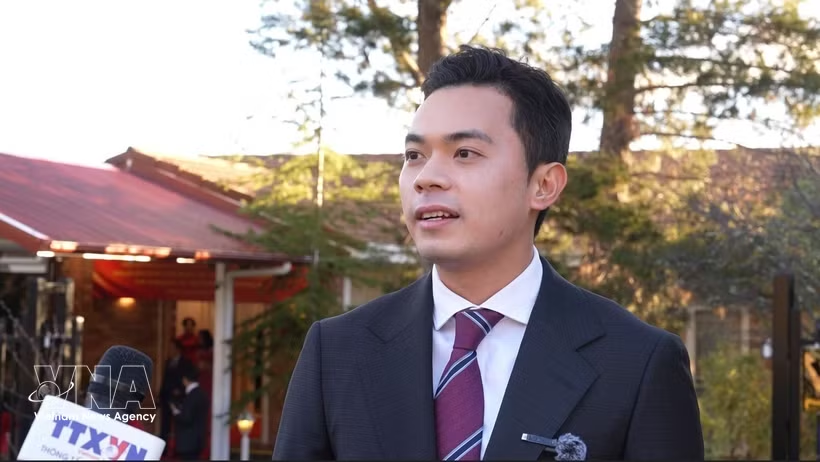
Speaking to Vietnam News Agency reporters in Oceania, many Vietnamese expatriates said the visits marked more than diplomatic milestones but signalled the Party and State’s attention to overseas Vietnamese communities.
Tran Ba Phuc, Chairman of the Vietnamese Business Association in Australia, said the visit affirmed Vietnam’s rising position and the importance of the bilateral relationship. For those living abroad, he said, the more personal significance was a stronger connection to Vietnam’s development.
Phuc called for more favourable mechanisms to link expatriate resources, including business experience, knowledge and host country networks, with Vietnam’s development needs.
Huynh Tan Dat, President of the Vietnamese Students’ Association in Australia, said the visit injected new momentum into the Vietnam–Australia Comprehensive Strategic Partnership and demonstrated the Party and State's attention to overseas students and young people.
He hoped that youth and intellectual associations will have more opportunities to join cooperation agendas of the two countries and make more practical contributions to Vietnam.
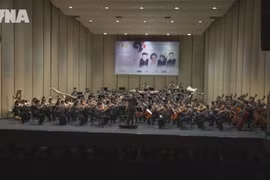
Minh Ha Patmore, a member of the Viet–Aus Culture Exchange Organisation, said she was very moved and proud to meet the Vietnamese leader. Working in culture and arts, she said deeper bilateral ties will open more space for Vietnamese culture in Australia, particularly among second- and third-generation Vietnamese Australians, with more venues to showcase music, instruments, and traditions, connecting young people to their roots.
In New Zealand, Nguyen Truong Khoai, Vice Chairman of the New Zealand–Vietnam Friendship Association, shared that the visit sparked high hopes for a new chapter in closer relations.
He noted benefits could soon be seen in everyday life, from stronger education and tourism exchanges to increased technological cooperation and, notably, the possibility of a direct air link. These stronger connections will make distance less of a hurdle for expatriates, businesses, students, and citizens of both countries.
Nguyen Thi Huong, Co-Vice Chairwoman of the New Zealand–Vietnam Friendship Association, focused on education and future generations. New Zealand has strengths in education while Vietnam boasts a young and dynamic workforce.
Stronger training links and exchanges, Huong said, will meet immediate needs while preparing a future generation of leaders, experts, and young people capable of bridging the two countries.
Nguyen Lam Giang, head of Southeast Asia and East Asia regional engagement activities at the University of Waikato and Co-Chairwoman of the Vietnamese Knowledge Network in New Zealand, said the visit came as bilateral ties were opening up new opportunities.
According to her, education, science–technology, and innovation are areas where Vietnamese intellectuals in New Zealand can serve as a bridge. Vietnamese professionals at universities, research institutes, and businesses in New Zealand understand the homeland’s needs and have local networks and experience.
Giang expressed her hope that the visit would pave the way for a more concrete cooperation agenda in training, research, and knowledge transfer while giving expatriates a deeper role in connecting the two countries./.