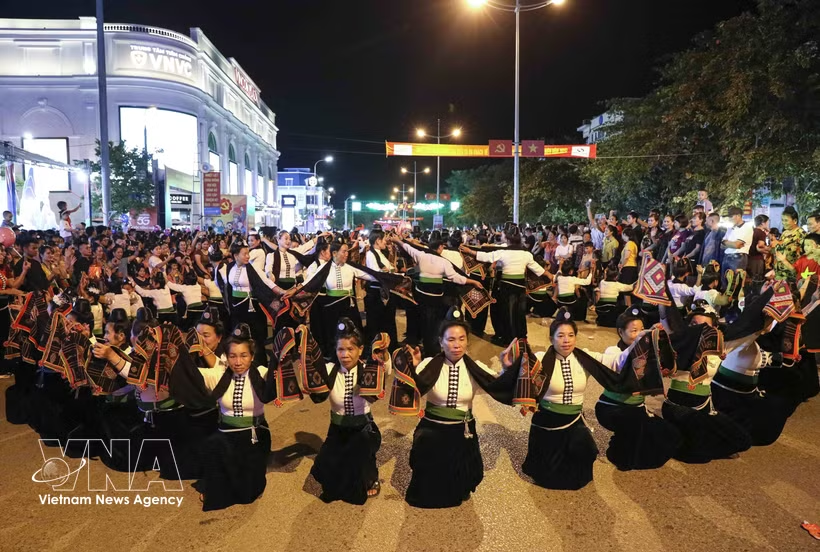
Hanoi (VNA) - A community-centred approach is creating greater opportunities for people to participate in preserving and promoting their own cultural values, contributing to the protection of cultural diversity among ethnic groups.
Established in 2025, the Vietnam Pioneers Network provides a space for ethnic communities to share their heritage stories, helping reduce ethnic stereotypes and promote understanding of cultural diversity. Operating on a voluntary basis, the network connects community groups in localities across the country through core members.
The network now brings together members of more than 20 ethnic minority groups in provinces and cities including Can Tho, Lam Dong, Quang Tri, Nghe An, Thai Nguyen, Lao Cai and Dien Bien. Local groups can proactively propose ideas and select cultural content they wish to share.
Sohaniim, a member of the network’s executive and communications board, said its top priority is ensuring that community voices receive greater attention in efforts to preserve and promote cultural values.
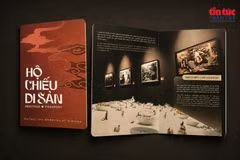
The network has implemented projects focusing on cultural heritage and indigenous knowledge, including “Weaving Our Stories”, which explores the meanings of patterns on traditional costumes of the Cham, Pa Then, Muong and Thai ethnic groups. It has also published “The Flow of Colours”, a book featuring stories about the cultures and heritage of ethnic minority groups.
Other activities, such as “In Search of Lullabies”, “Passing Down Folk Tales” and “Heritage Not Forgotten”, seek to preserve folk songs, languages, traditional crafts, cultural memories and knowledge accumulated within ethnic communities.
Experts accompanying the network describe it as a journey of dialogue among ethnic minority communities. With its community-centred approach, the model promotes development from, by and for communities.
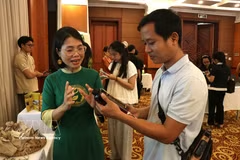
Artisan Sam Thi Tinh from Hoa Tien hamlet, Chau Tien commune, Nghe An province, is one of the network’s community participants. Building her career around the traditional weaving craft of her ethnic group, she has developed new designs and brought Thai brocade products to domestic and international markets.
Tinh said every ethnic group has its own cultural identity and expressed hope that the network would help share the beauty of Thai traditional culture with the wider community.
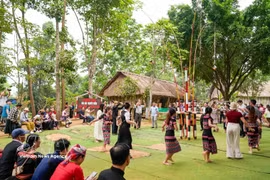
In Hoa Tien hamlet, the network works with local authorities to organise the annual “Multicoloured Harmony” programme, which connects ethnic minority communities to share cultural stories, indigenous knowledge and traditional practices. This year’s theme, “Seeds Not Forgotten”, highlights the connection between people and nature and encourages younger generations to appreciate values that have sustained community life over generations.
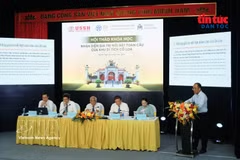
Dr. Nguyen Bao Ngoc, Director of the Institute for Studies of Society, Economics and Environment, said the network has created a space for diverse voices and community needs to be heard.
Through its activities, members can exchange views on cultural practices and discuss the meanings of customs and traditions. The participation of different groups and generations helps build a shared understanding of heritage, providing a foundation for cultural values to be passed on in ways compatible with contemporary life.
Even when a cultural practice is no longer appropriate, dialogue and consensus within the community over whether to maintain it remain meaningful parts of the heritage conservation process, Ngoc said.
She stressed that community-based conservation initiatives need greater support from management agencies, social organisations and local resources to ensure their long-term sustainability.
For Sohaniim, the most important task is to foster pride, confidence and self-reliance within each community. When people recognise that their traditional values are valuable and deserve respect, heritage preservation will become an intrinsic need of those who hold and practise the culture./.