Dong Thap offers simple, authentic experiences that touch visitors’ hearts

For generations, local residents have adapted to the natural rhythms of the rising waters, using traditional fishing tools to earn a living. Today, these practices have become part of eco-tourism activities imbued with the spirit of the Mekong Delta.

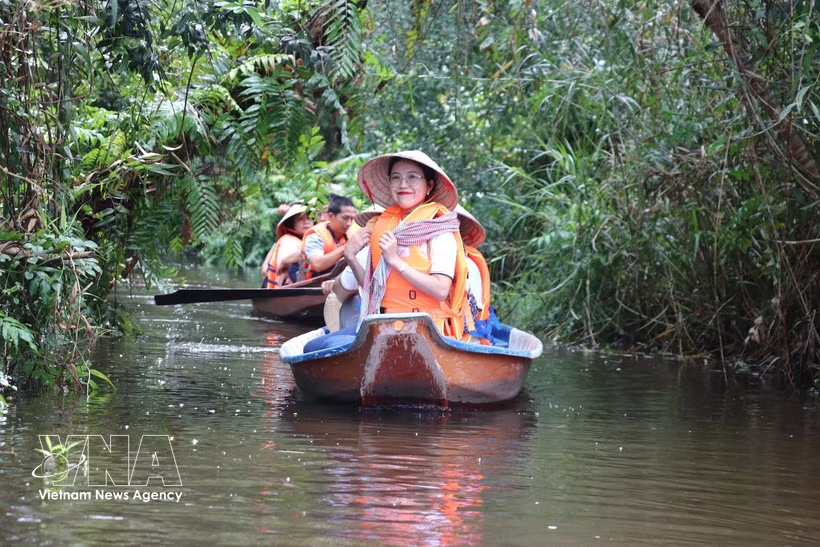
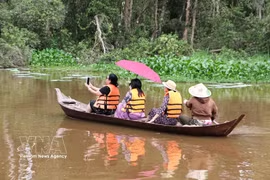
Tourists enjoy a boat ride while exploring the Dong Thap Muoi Ecological Reserve in Tan Phuoc 2 commune, Dong Thap province. (Photo: VNA)

Dong Thap (VNA) - Every year, when the flood season arrives, Tram Chim and the vast Dong Thap Muoi land take on a distinctive charm. Floodwaters wind through canals and waterways, carrying alluvial deposits and creating favourable habitats for fish, shrimp and eels.

For generations, local residents have adapted to the natural rhythms of the rising waters, using traditional fishing tools to earn a living. Today, these practices have become part of eco-tourism activities imbued with the spirit of the Mekong Delta. Residents of four communes in the buffer zone of Tram Chim National Park are also receiving training to become local storytellers, sharing their authentic cultural heritage and touching visitors’ hearts.

Bringing traditional livelihoods to life

People in Tram Chim and Dong Thap Muoi have organised their lives around the seasonal rise and fall of the waters for years. During the dry season, they grow rice and vegetables and raise livestock. When floodwaters arrive, they turn to fishing, using traditional traps, nets and eel-catching devices to make a living.

As economic development and urbanisation accelerate, many young people are seeking new livelihoods, leaving traditional occupations increasingly concentrated among older residents. Fishing tools once familiar throughout the riverine region have also become unfamiliar to many urban dwellers.

Pham Duc Hoa, Director of Tram Chim Tourist Site, said modern life and economic pressures mean traditional cultural values are overlooked. Each fishing tool reflects a particular technique and generations of knowledge about living in harmony with seasonal waters. Preserving these tools merely as exhibits risks allowing the stories and local cultural practices behind them to fade away, he said.

Building on the natural assets of the Tram Chim National Park, the world’s 2,000th Ramsar site, and the region’s cultural heritage, the tourist site has incorporated traditional fishing practices into its visitor experiences.

Local residents introduce tools such as fish traps, shrimp traps, eel-catching devices, nets and fishing rods, explaining their origins, construction and use according to different aquatic species and water conditions.

Ly Thi Thu On, manager of Tram Chim Farmstay, said that visitors could enjoy the peaceful, natural surroundings of the national park’s buffer zone and discover local agricultural life and culture. Activities include setting fishing traps, harvesting fish, feeding fish, cycling around the farm and taking early-morning walks. The experiences offer an escape from the urban bustle to enjoy meaningful time with family and friends.

Experiencing flood season

Visitors to Tram Chim can travel by boat along canals and waterways, trying traditional activities such as fishing and setting traps under the guidance of local residents.

The flood season also brings brilliant yellow sesbania flowers and the arrival of linh fish (Henicorhynchus), a seasonal delicacy of the Mekong Delta. Along the waterways, visitors can observe fish and birdlife and learn to retrieve traps, gaining first-hand insight into traditional fishing practices and the daily lives of people in the buffer zone.

Nguyen Thi Thuy Trinh, a visitor from Ho Chi Minh City, said the activities helped her learn more about fishing techniques and harvesting vegetables for local dishes. She planned to recommend Tram Chim to her family and friends so they could experience the flood season together.
vnanet-dong-thap2.jpg
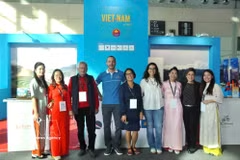
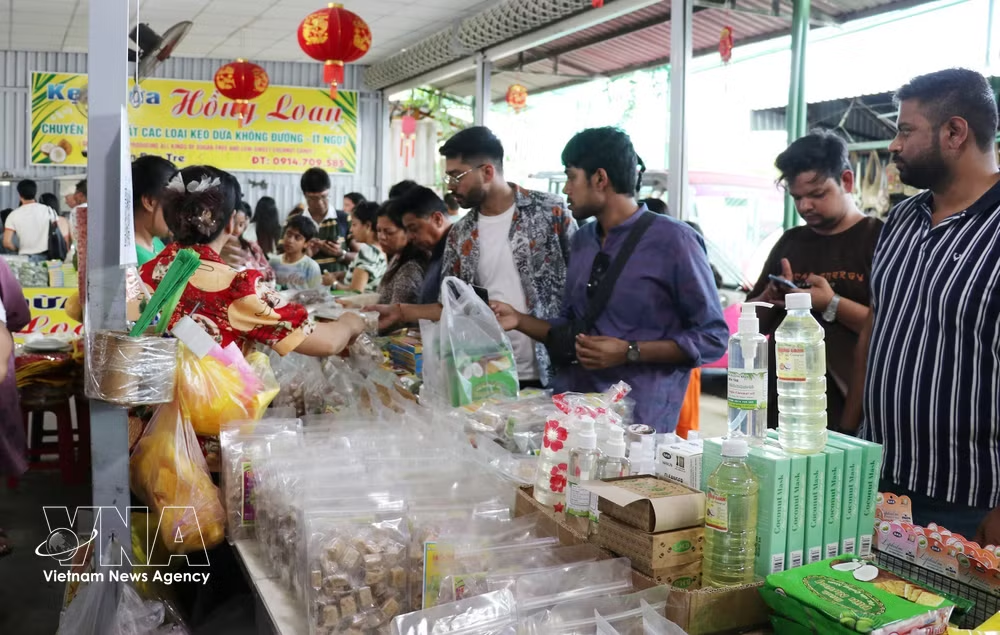
International tourists visit and shop for OCOP products at a tourist site in Thoi Son ward, Dong Thap province. (Photo: VNA)

According to Hoa, a programme to visit Tram Chim during the flood season comprises nine activities designed to connect nature, local communities and seasonal livelihoods. Residents play a direct role in telling stories and guiding visitors, creating opportunities to earn additional income from their local knowledge and skills.

Through these simple yet meaningful experiences, Tram Chim is turning traditional fishing practices into a tourism asset. By involving buffer-zone communities in tourism development, the programme helps preserve local cultural heritage while creating new livelihoods and bringing the stories of Tram Chim and its people closer to visitors./.
VNA

See more

Night golf - a must-try experience in Phu Quoc

Night golf - a must-try experience in Phu Quoc

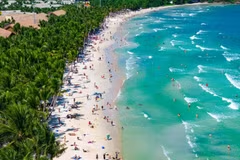
In Phu Quoc, a resort destination where days are often filled with beach trips and family activities, night golf fits naturally into the rhythm of a holiday. Golfers can spend the day with their families rather than setting aside several hours exclusively for a round. As evening approaches, they can head to the course in cooler temperatures and watch the landscape shift from sunset to floodlight.

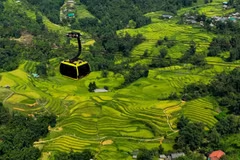
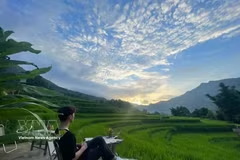
The Fansipan cable car cabin glides across Muong Hoa Valley, opening up panoramic views of its lush terraced rice fields. (Photo: Sun Group)

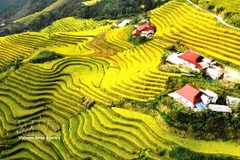
Follow Lonely Planet's travel trends and discover Sa Pa in Fall and Winter 2026

The renowned American travel guide includes Vietnam in its "Fall Travel Trends 2026: The World's Next 15 Destinations," highlighting the country's breathtaking landscapes as the season unfolds. For travellers eager to explore northern Vietnam's mountains, Sa Pa stands out as a destination well worth adding to the itinerary.

Healing tourism destinations are often places that offer visitors a pure connection with nature. (Photo: VNA)

Lao Cai seeks breakthroughs with wellness tourism ecosystem

With its cool climate, mountain scenery and rich cultural and natural resources, the northern mountainous province of Lao Cai aims to turn its advantages into a high-quality tourism brand through smart resort services and health care experiences.

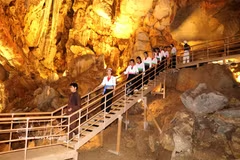
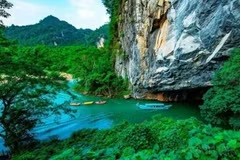
The scenery outside Phong Nha Cave in Phong Nha-Ke Bang National Park is picture-perfect. (Photo: VNA)

Quang Tri to host week-long culture and tourism festival

The opening ceremony and an art programme under the same theme will take place on November 24 at Phong Nha-Ke Bang National Park in Phong Nha commune, highlighting the UNESCO-listed natural heritage site and promoting cave exploration tours.

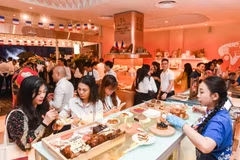
On October 20, every woman visiting Maison Éric Kayser Phu Quoc will receive a complimentary cookie and greeting card (Photo: Sun Group)

Pink month brings a sweet October escape to Phu Quoc’s Sunset Town

Available from October 5 through October 30, the French bakery’s Pink Month Collection 2026 introduces shades ranging from delicate blush to vibrant pink across macarons, éclairs, and flower-shaped mousse cakes. Created exclusively for October, the collection brings a seasonal flourish to the pastry counter and a fresh reason to pause amid a day of sightseeing.

Sun Group’s resort in Da Nang tops the Asian resort category at Condé Nast Traveler’s 2026 Readers’ Choice Awards. (Photo: Sun Group)

Condé Nast Traveler names InterContinental Danang Best Resort in Asia for 2026

On October 6, Condé Nast Traveler announced its “Top 15 Resorts in Asia” list as part of the 2026 Readers’ Choice Awards. InterContinental Danang Sun Peninsula Resort ranked first with a score of 98.76, ahead of Wildflower Hall, Shimla - an Oberoi resort in India - which placed second with 98.56. The Oberoi Vindhyavilas Wildlife Resort, Bandhavgarh, took third place with 98.36.

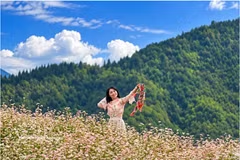
Tourists experience the buckwheat flower season on the Dong Van Karst Plateau. (Photo: VNA)

Buckwheat blossoms help extend tourism season in stone plateau

Phan Duc Nam, Chairman of the Dong Van commune People's Committee, said the locality is focusing not only on flower cultivation but also on improving landscapes, environmental sanitation and tourism services. The goal is to give visitors more reasons to stay longer and return at other times of the year.