Draft documents for 14th Party Congress highlight role of overseas Vietnamese in national development

Exposure to Japan’s advanced education and innovative work culture enables overseas Vietnamese to contribute to training, knowledge transfer, and educational cooperation, said Dr Nguyen Hong Son, Chairman of the Union of Vietnamese Associations in Japan.

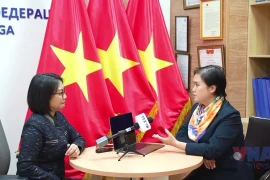
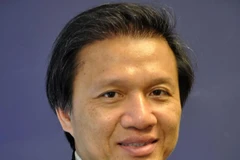
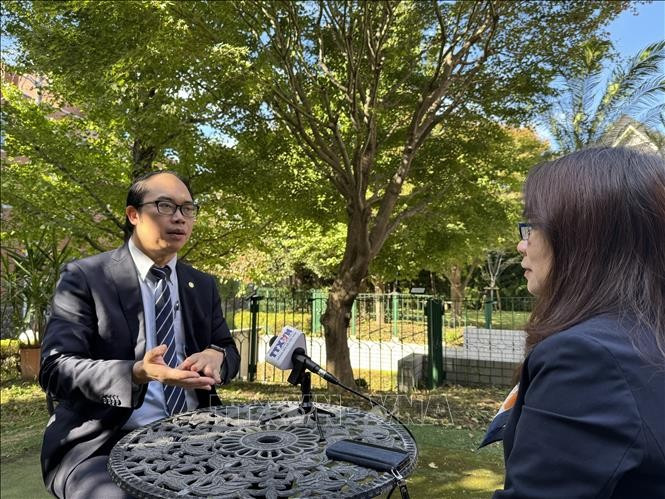
Dr Nguyen Hong Son, Chairman of the Union of Vietnamese Associations in Japan, grants an interview to the Vietnam News Agency's reporter in Tokyo. (Photo: VNA)

Tokyo (VNA) - Dr Nguyen Hong Son, Chairman of the Union of Vietnamese Associations in Japan, has given recommendations on the draft documents for the upcoming 14th National Party Congress, emphasising the role of overseas Vietnamese in national development, integration, and modernisation.

Son affirmed that the spirit of unity, solidarity, self-reliance, and confidence outlined in the draft is highly relevant.

Noting contributions by Vietnamese in Japan, he said they have supported one another in daily life, studies, and employment, while promoting Vietnamese culture and building the image of Vietnamese abroad as dynamic and responsible.

With a growing population and strong Vietnam–Japan relations, the community enjoys many advantages but must overcome cultural differences and uneven connectivity through stronger internal communication and sustainable networking, he said.

On the draft’s addition of “environmental protection” as a core task alongside socio-economic development, Son called it timely and appropriate. He said Vietnamese in Japan have gained practical experience in environmental protection — from waste sorting and energy saving to green living — and have shared this through community initiatives.

He proposed integrating environmental topics into festivals and youth forums; promoting green technologies and recycled products; and enabling overseas Vietnamese to contribute policy ideas through official channels.

Regarding the private economic sector development, Son said Vietnamese entrepreneurs in Japan hope for more transparent, stable, and favourable investment conditions. He recommended simplifying procedures, enhancing legal protection, and offering incentives for overseas Vietnamese enterprises investing in Vietnam. He also suggested the high value of mechanisms linking the State and overseas business networks to boost investment, technology transfer, and supply chains.

On foreign affairs and integration, Son welcomed the draft’s recognition of diplomacy as an essential, regular task. Given the Vietnam-Japan comprehensive strategic partnership, overseas Vietnamese can strengthen people-to-people diplomacy through cultural, culinary, and artistic exchanges, while intellectuals and businesspeople can facilitate technology transfer and educational cooperation. He proposed linking overseas Vietnamese with national programmes on innovation and digital transformation and involving them in international forums as “cultural ambassadors” and “knowledge partners.”

Highlighting education as a strategic pillar, Son described the Vietnamese community in Japan — now over 600,000 strong — as a valuable resource for developing high-quality human capital. Exposure to Japan’s advanced education and innovative work culture enables overseas Vietnamese to contribute to training, knowledge transfer, and educational cooperation.

He noted that branches under the Union of Vietnamese Associations in Japan — such as the Vietnamese Intellectuals Association and the Vietnamese Women Intellectuals Association — have launched initiatives including expert networking, workshops, and education partnerships.

Particularly, the Vietnamese Intellectuals Association is particularly active in connecting resources in high technology, sustainable development, and education to create long-term cooperation programmes that enhance Vietnam’s human resources in the era of integration, he said./.


VNA
See more

Prime Minister Pham Minh Chinh visits the operational system of the Nhon Trach 3 and 4 power plants (Photo: VNA)

Nhon Trach 3 and 4 thermal power plants reflect Vietnam’s determination, expertise: PM

The Nhon Trach 3 and 4 power thermal plants, invested by Petrovietnam Power Corporation, have a total investment of around 1.4 billion USD. With a combined capacity of 1,624 MW, the plants are expected to supply over 9 billion kWh annually once fully operational, adding substantial baseload power to the system, particularly in the southern region.

Minister of Foreign Affairs Le Hoai Trung receives Non-Resident Ambassador of Nepal to Vietnam Dhan Bahadur Oli in Hanoi on December 13, 2025. Photo courtesy of the Ministry of Foreign Affairs.

Vietnam, Nepal seek to promote deeper, substantive cooperation

Nepalese leaders attach great importance to relations with Vietnam and wish to learn from its experience and development models in socio-economic development and international integration, said Non-Resident Ambassador of Nepal to Vietnam Dhan Bahadur Oli.

Vietnamese Minister of Foreign Affairs Le Hoai Trung (Photo: VNA)

Vietnamese, Lao foreign ministers hold online talks

The two ministers agreed to maintain close coordination in the time ahead and to expand cooperation under the new framework and orientation, underscoring the significance of the two countries’ “great friendship, special solidarity, comprehensive cooperation, strategic cohesion”.

State President Luong Cuong (fourth from left, first row) and newly-appointed foreign ambassadors in Hanoi on December 12, 2025. (Photo: VNA)

State President receives newly-appointed foreign ambassadors

Receiving Egyptian Ambassador Hany Mostafa Mohamed Mostafa Hassan, President Cuong affirmed that Vietnam highly evaluates Egypt’s role, position, and contributions to regional peace and stability. He also congratulated the African country on its achievements in implementing the 2030 Vision.

An overview of the seminar on the Party’s leadership in ensuring macroeconomic stability, renewing the growth model, restructuring the economy and promoting international integration (Photo: VNA)

Vietnam, Cuba exchange theoretical views on Party’s leadership in macroeconomic stability

The two sides explored in depth the Party’s role in leadership, orientation, oversight and strategic coordination in economic management; approaches to implementing economic restructuring programmes alongside the renewal of the growth model; measures to respond to global economic volatility, inflationary pressures and shifts in global trade; and the building of effective strategic advisory bodies to ensure the Party’s comprehensive leadership in a changing context.

Vietnam’s Ambassador to Australia Pham Hung Tam (Photo: VNA)

Australia–Vietnam Policy Institute serves as bridge for bilateral relations

Established in 2022, AVPI serves as a forum for exchanging ideas among businesses, government agencies, non-profits, universities, and scholars in Australia on Vietnam. The institute acts as a platform for policy dialogue, focusing on research and insights on strategic relations and bilateral economic ties.