Efforts to preserve five-tone musical ensemble of the Khmer in Soc Trang

The five-tone (Ngu am) musical ensemble or Pinn Peat orchestra, a form of orchestral music for religious rituals, is closely associated with Theravada Buddhism in pagodas and hamlets of Khmer people in the Mekong Delta province of Soc Trang.
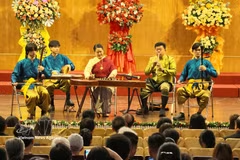
Efforts to preserve five-tone musical ensemble of the Khmer in Soc Trang ảnh 1Members of a five-tone musical ensemble during a practice. (Photo: Soc Trang Newspaper)

Hanoi (VNA) – The five-tone (Ngu am) musical ensemble or Pinn Peat orchestra, a form of orchestral music for religious rituals, is closely associated with Theravada Buddhism in pagodas and hamlets of Khmer people in the Mekong Delta province of Soc Trang.

The five-tone music is a popular and long-standing traditional musical genre of the Khmer in the Southern region in general and in Soc Trang in particular.

Through the process of formation, existence and development, the performance folk art form has been imbued with special values and meanings.

Today, despite many changes, the vitality of the musical genre is still preserved and developed.

This genre of music is influenced by the royal court and religion of India as well as some countries in Southeast Asia such as Cambodia and Thailand but still reflects the unique characteristics of the Khmer group in general and those in Soc Trang in particular.

The 5-tone musical ensemble is an orchestra composed of five tones of musical instruments made from five different materials, which creates five distinct timbres.

Each Pinn Peat orchestra consists of nine or ten instruments, mainly wind, string, and percussions including several varieties of xylophones, drums, cymbals, gongs, and fiddles namely Srolai Pinn Peat, Roneat Ek, Roneat Thung, Roneat Dek, Kuong Vong Toch, Kuong Vong Thum, and Chhung, Sampho, and Sko Thum.

There are similarities in the orchestra’s structures of Khmer people in Soc Trang and the Khmer in other localities, as well as the Pinn Peat orchestra of the Khmer in Cambodia, the Sebnai orchestra of Laos, the Piphat orchestra of Thailand, the Saing Waing (Patwaing) orchestra of Myanmar, and the Gamelan orchestra of Malaysia.

The Pinn Peat orchestra expresses the feelings and attitudes of the Khmer towards genies, nature, and other people. Almost every Khmer pagoda has a musical ensemble. In the past, the ensembles only performed in pagodas. Now they play at festivals and parties.

An orchestra must have roneat – xylophones, which are considered the lead high-pitched instrument in the ensemble – and Skor-thom - two big drums played with drumsticks. There are also flutes, fiddles, and cymbals. To play in the ensemble, the musicians must have a deep understanding of the Khmer music, tradition, and culture.

The folk art genre has become a cultural identity closely linked and deeply imprinted in the consciousness and daily life of the Khmer people.

When the sound of Sko Voth drum along with the five-tone musical ensemble resounds at Khmer pagodas, the people in hamlets know that it is time to hold religious ceremonies in their localities.

The Pinn Peat orchestra was recognised as a national intangible cultural heritage in December 2019 by the Ministry of Culture, Sports and Tourism.

Authorities and relevant agencies, and the Khmer community in Soc Trang have taken many specific actions and made great efforts to preserve and promote the unique culture value of this traditional musical genre.

Many Khmer pagodas have musical clubs and classes for children. They aim to inspire the children to learn the Khmer music as a way to preserve it.

Currently, the performing art of the musical genre is no longer limited in pagodas, at religious ceremonies, or at funerals. The musical genre has been performed and taught at the province’s Khmer art troupes, most junior high schools and boarding high schools for ethnic minorities in the province.

In an effort to preserve the five-tone musical ensemble, local authorities have also organised competitions find talents, thus encouraging learning and playing the musical genre./.
VNA

See more

Singer Dang Duong is among the artists featured in the national concert Proud to Be Vietnamese 2026. (Photo of the organisers)

Concert to celebrate unity and pride

The programme carries profound political, cultural and social significance, helping promote historical values and the Vietnamese tradition of paying tribute to the past generations, while nurturing love for the homeland and country and strengthening bonds among generations of Vietnamese people.

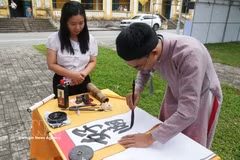
A visitor watches a calligraphy demonstration at the first Vietnam Calligraphy Festival 2026. (Photo: VNA)

Vietnam Calligraphy Festival celebrates national cultural heritage

The festival features more than 100 exhibition booths, bringing together calligraphy clubs from across the country, calligraphers, artisans, culture researchers, businesses and representatives of traditional craft villages. Exhibitions, exchanges, discussions and hands-on activities celebrate calligraphy and promote Vietnam’s cultural values.

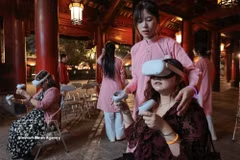
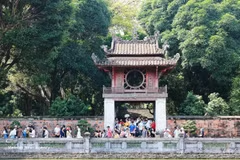
Tourists experience writing calligraphy through virtual reality at Hanoi's Temple of Literature. (Photo: VNA

Hanoi works to unlock heritage resources

When innovation deepens understanding of traditional values rather than replacing them, heritage becomes not only something to preserve but also a resource for sustainable tourism, economic development and reinforcement of Hanoi’s position as a UNESCO Creative City.

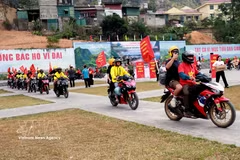
Following the launch ceremony, the 100-motorbike convoy travels from Dong Van across Ma Pi Leng Pass, taking in spectacular mountain scenery and the Nho Que River before finishing at Pa Vi Ha in Meo Vac commune. (Photo: VNA)

100 motorbikes conquer Ma Pi Leng Pass to promote safe travel

A convoy of 100 motorbikes set off on a journey across Ma Pi Leng Pass on October 21 as part of a roadshow campaign to promote safe motorcycle travel in the northern province of Tuyen Quang, home to the Dong Van Karst Plateau UNESCO Global Geopark.

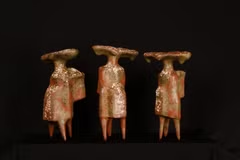
The work "Khong gian cua nui" (The Space of Mountains) by Le Lang Luong. (Photo: Published by VNA)

Vietnam-Japan sculpture exhibition to bring artists together in Kanagawa

The “Dialogue” exhibition in Japan's Kanagawa prefecture from November 8-11 will feature more than 30 works by artists from both countries, including 26 pieces by 13 contemporary Vietnamese sculptors from different generations. These artists have developed distinctive artistic languages and made their own marks on Vietnam’s contemporary art scene.

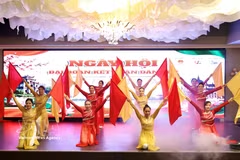
A performance at the event (Photo: VNA)

Vietnamese in Hungary stage first Great National Unity Festival

The event also served as a showcase for Vietnamese culture, customs, cuisine and traditions, in step with Vietnamese Culture Day. It encouraged Vietnamese of all generations to hold onto their cultural identity while spreading the image of Vietnam and its people among Hungarians, adding to people-to-people exchanges and mutual understanding between the two countries.

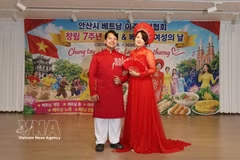
An ao dai fashion show at the festival. (Photo: VNA)

Vietnamese culture shines at festival in RoK

A celebration marking the seventh founding anniversary of the Vietnamese Migrant Women’s Association (VMWA) in Ansan, Gyeonggi province, the Republic of Korea, took place on October 18, featuring cultural exchanges and activities to mark Vietnamese Women’s Day (October 20).

Vietnam harnesses culture as growth driver

Vietnam harnesses culture as growth driver

Under a March 17, 2026 action plan from the municipal Party Committee, which follows the Politburo’s Resolution 80-NQ/TW dated January 7, 2026, on Vietnamese cultural development, the city is moving beyond preservation alone. It is now upholding heritage values while developing cultural products, spaces and markets tied to innovation and global integration.

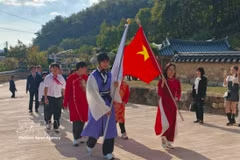
The Ao dai parade passes through Bankstown Plaza and Bankstown Station before returning to the Bryan Brown Theatre. (Photo: VNA)

Sydney hosts first Vietnamese Ao dai street parade

Colourful traditional Vietnamese Ao dai (traditional long dresses) brought a festive touch to the streets of Bankstown, Sydney, on October 17, as more than 20 Vietnamese people from different generations took part in an Ao dai street parade held as part of the Viet Soul 3 Festival.